Pharmaceutical Prices across Different Countries: What You Really Pay for Medications Around the World
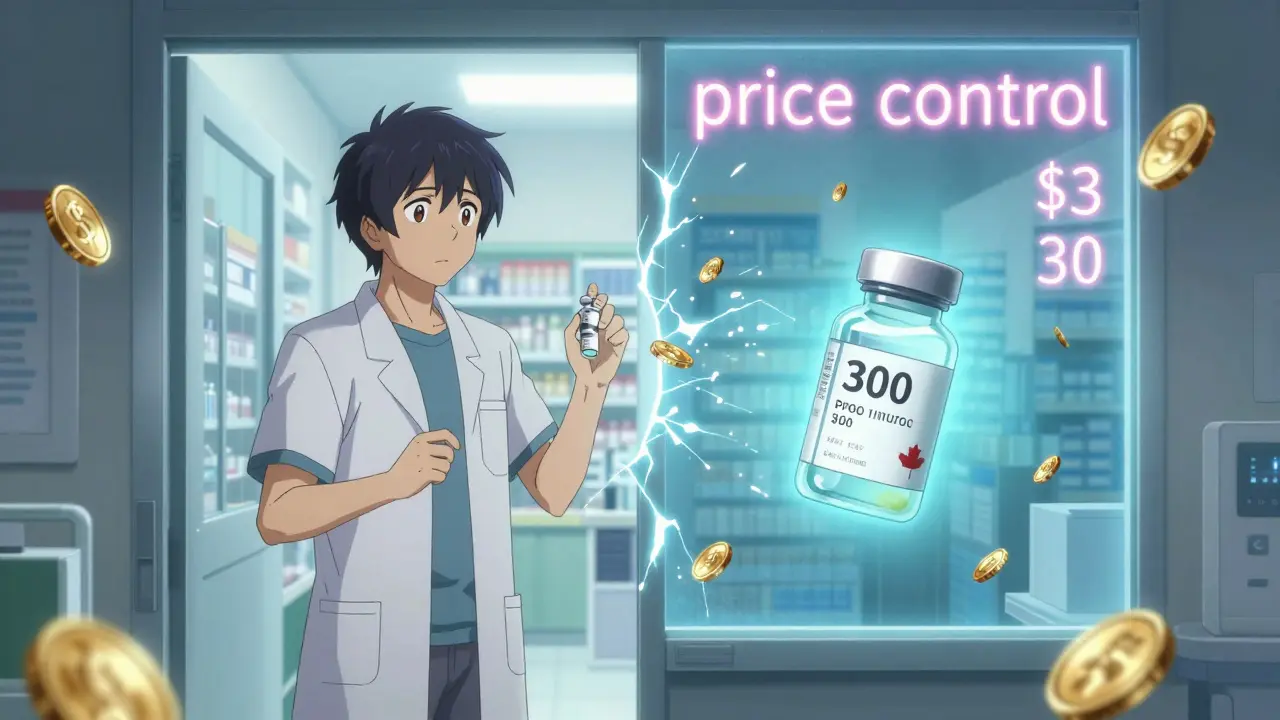
Have you ever checked the price of your prescription at the pharmacy and felt like you were being charged for a luxury car? You’re not alone. A bottle of insulin that costs $30 in Canada might set you back $300 in the U.S. - and that’s just one example. Across the globe, the same medicine can cost anywhere from a few dollars to hundreds, depending on where you live. Why does this happen? And who’s really paying the price?
Why Drug Prices Vary So Much
It’s not about how much it costs to make the drug. A pill that costs 50 cents to produce can sell for $100 in one country and $5 in another. The real difference comes down to policy, not production. Countries like Japan, France, and Australia use reference pricing - meaning they look at what other countries pay and set their own prices accordingly. If Germany pays $20 for a drug, France won’t pay more than that. The government steps in and negotiates directly with drugmakers. In contrast, the U.S. has historically let private insurers and pharmacy benefit managers (PBMs) handle negotiations. That means no single buyer has enough power to drive prices down across the board. The U.S. Department of Health and Human Services found that in 2022, brand-name drug prices in the U.S. were nearly three times higher than in other wealthy nations. But here’s the twist: when you look at the total cost of all prescriptions - including generics - the U.S. actually spends less per person than many European countries. Why? Because 90% of prescriptions filled in the U.S. are for generic drugs, and those are cheap. Like, really cheap. Generic metformin for diabetes? It can cost under $5 for a 30-day supply. In Germany, the same pill might cost $15.The U.S. Double Standard: High Brand Prices, Low Generic Prices
The U.S. doesn’t have one drug pricing system - it has two. One for brand-name drugs, and one for generics. And they work completely differently. Brand-name drugs in the U.S. are priced like luxury goods. Take Ozempic, for example. In 2022, Medicare Part D spent $4.6 billion on it. That’s because the list price was over $1,000 per month. In Australia, the same drug cost about $300. In Japan? Around $250. Yet in the U.S., most patients don’t pay the full list price. Insurance and rebates bring the net cost down. But here’s the catch: those rebates don’t always help patients at the pharmacy counter. They mostly line the pockets of insurers and PBMs. Meanwhile, the generic side of the market is a different story. Thanks to intense competition and large-scale manufacturing, U.S. generic prices are among the lowest in the world. A 30-day supply of atorvastatin (Lipitor generic) costs about $10 in the U.S. In the UK, it’s $25. In France, $35. That’s because U.S. pharmacies buy generics in bulk from manufacturers in India and China, where production costs are low and regulations are less restrictive.Medicare’s New Power to Negotiate
For decades, the U.S. government was legally barred from negotiating drug prices for Medicare. That changed with the Inflation Reduction Act of 2022. In 2023, Medicare picked its first 10 drugs to negotiate prices for - and the results were eye-opening. Take Jardiance, a diabetes drug. Medicare negotiated a price of $204 per month. In Japan, the same drug costs $52. In Australia, $58. In Germany, $89. Medicare’s price is still over three times what other countries pay. But it’s a massive drop from the original list price of $600+. The same pattern holds for Entresto (heart failure), Eliquis (blood thinner), and Stelara (psoriasis). In every case, Medicare’s negotiated price was higher than in Australia, Japan, or France - but lower than what U.S. patients paid before. This isn’t fixing the system. It’s just poking a hole in the biggest leaks.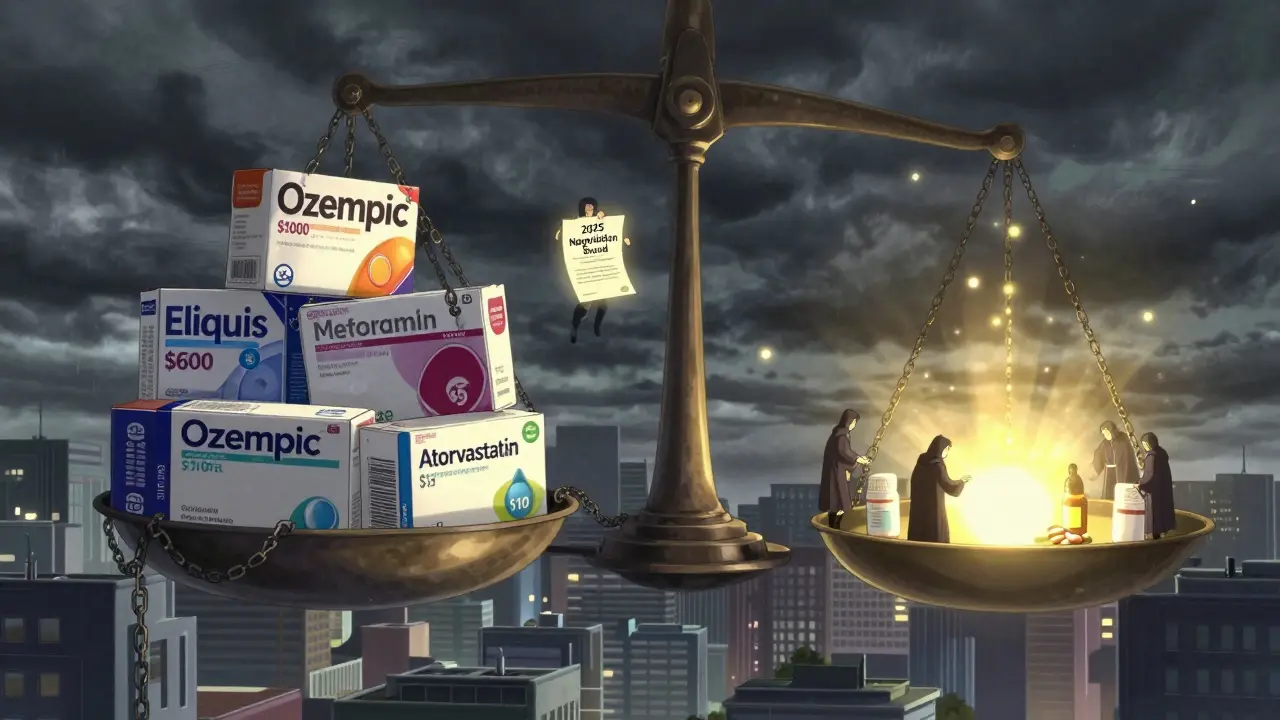
Who Pays the Least? Japan, Australia, and France
If you’re looking for the lowest prices on brand-name drugs, look to Japan, France, and Australia. These countries don’t just negotiate - they have strict price caps and won’t pay more than what they believe a drug is worth. Japan’s government sets prices based on cost-effectiveness. If a new cancer drug extends life by only two months, they’ll refuse to pay more than a few hundred dollars a month. Australia uses a similar model through its Pharmaceutical Benefits Scheme (PBS). If a drug isn’t deemed cost-effective, it’s not subsidized. That means patients either pay full price or go without. In France, the government negotiates prices annually. If a drugmaker won’t agree to the price, the drug gets pulled from the public formulary. That’s why you rarely see brand-name drugs in France priced above $100 per month, even for cutting-edge treatments.Why the U.S. Still Pays More - Even for Generics
You might think, “If generics are so cheap in the U.S., why does my prescription still cost so much?” The answer is simple: most people aren’t taking generics. About 60% of Americans are on at least one brand-name drug, often because their doctor prescribes it, or their insurance won’t cover the generic version. Even when generics are available, pharmacies sometimes charge more than they should. A 2024 study found that some U.S. pharmacies charged up to 40% more for generic lisinopril than the average wholesale price. That’s not because of manufacturing costs - it’s because of poor price transparency and lack of competition among pharmacies. Also, the U.S. doesn’t have a national drug formulary. Every insurer, every pharmacy chain, every Medicare Advantage plan has its own rules. That creates confusion, inconsistency, and higher prices.Global Pricing Systems Compared
| Country | Price Control Method | Brand-Name Drug Price (Avg. Monthly) | Generic Drug Price (Avg. Monthly) | Government Negotiation? |
|---|---|---|---|---|
| United States | Private negotiation, rebates | $500-$1,200+ | $5-$15 | No (until 2025 for 10 drugs) |
| Australia | Pharmaceutical Benefits Scheme (PBS) | $50-$150 | $4-$10 | Yes |
| Japan | Government price setting | $40-$120 | $3-$8 | Yes |
| France | Annual negotiation, cost-effectiveness | $60-$180 | $5-$12 | Yes |
| Germany | Reference pricing, fixed reimbursement | $100-$250 | $10-$25 | Yes |
| Canada | Patented Medicine Prices Review Board | $150-$300 | $15-$30 | Yes |
What This Means for Patients
If you’re in the U.S., you’re living in a system that rewards innovation - but at a steep cost. The high prices for brand-name drugs help fund research for new treatments. But they also leave millions of people choosing between medication and rent. In countries like Japan and Australia, patients get access to almost all essential medicines at low cost. But they wait longer for new drugs. A cancer drug approved in the U.S. in 2023 might not be available in Australia until 2025 - because the government needs time to review its value. There’s no perfect system. But there are better ones. The U.S. could learn from how other countries use price controls without cutting off innovation. Instead of letting drugmakers set prices blindly, the government could set a fair cap - like Canada does - and let competition work on generics.What’s Next? The 2025 Negotiation Round
By February 1, 2025, Medicare will announce the next 10 drugs it plans to negotiate prices for. These will likely include more high-cost drugs for diabetes, heart disease, and autoimmune conditions. If the pattern holds, Medicare’s new prices will still be higher than in Japan or Australia - but lower than what Americans pay today. That’s progress. But it’s not a revolution. The real fix? A national drug pricing framework that treats medication like a public good - not a profit center.How to Save on Medications Right Now
You don’t have to wait for policy changes to save money. Here’s what works:- Ask your doctor for a generic version - even if it’s not the first drug they suggest.
- Use GoodRx or SingleCare to compare prices at local pharmacies.
- Buy 90-day supplies - many insurers offer lower copays for longer prescriptions.
- Check if your drug is on a patient assistance program. Many drugmakers offer free or discounted meds to low-income patients.
- Consider importing from Canada - it’s legal for personal use in small amounts, and many Americans do it.
Medication shouldn’t be a luxury. But right now, it is - in the U.S., at least. The rest of the world knows how to fix that. The question is: will we?
Why are drug prices so much higher in the U.S. than in other countries?
The U.S. doesn’t have government price controls on brand-name drugs. Instead, drugmakers set list prices, and insurers negotiate discounts behind the scenes. This system favors profits over affordability. Other countries, like Japan and Australia, use direct government negotiation and price caps to keep costs low.
Are generic drugs cheaper in the U.S. than elsewhere?
Yes. The U.S. has the lowest generic drug prices in the world, thanks to intense competition and bulk imports from countries like India and China. For example, generic metformin costs under $5 in the U.S., while it’s $15-$30 in Europe. But brand-name drugs are still far more expensive here.
Can I legally buy medications from Canada?
Yes, it’s legal for individuals to import a three-month supply of prescription medication from Canada for personal use, as long as it’s not for resale. Many U.S. patients do this to save money, especially for insulin, heart medications, and antidepressants. The FDA doesn’t actively enforce this rule for personal imports.
What’s the difference between list price and net price?
List price is the manufacturer’s sticker price - what you see on a drug’s website. Net price is what the insurer or government actually pays after rebates and discounts. In the U.S., the list price is often 2-3 times higher than the net price. But patients still pay based on the list price unless their insurance covers the difference.
Why don’t all countries just copy the U.S. system?
Because it’s expensive. Other countries have chosen to prioritize affordability and access over profits. The U.S. system funds more drug innovation, but at the cost of leaving millions underinsured. Most countries decide that universal access is more important than funding the next blockbuster drug.
Will Medicare negotiation lower prices for everyone?
Only for Medicare beneficiaries. But drugmakers often lower prices nationwide to avoid creating a two-tier system. So even if you’re not on Medicare, you might see lower prices if a drug is negotiated. It’s not guaranteed, but it’s happened before with insulin.