
Dextromethorphan and MAOIs: What You Need to Know About the Dangerous Cough Medicine Interaction

MAOI and Cough Medicine Safety Calculator
Is Your Cough Medicine Safe?
This tool helps you determine if it's safe to use cough medicine containing dextromethorphan based on your MAOI use history. Remember: dextromethorphan combined with MAOIs can cause life-threatening serotonin syndrome.
It’s easy to grab a bottle of cough syrup when you’re feeling under the weather. But if you’re taking an MAOI antidepressant, that simple choice could put your life at risk. The combination of dextromethorphan - the active ingredient in popular OTC cough medicines like Robitussin, Delsym, and DayQuil - and monoamine oxidase inhibitors (MAOIs) like Nardil, Parnate, or selegiline can trigger serotonin syndrome, a dangerous and sometimes fatal condition. This isn’t a rare edge case. It’s a well-documented, high-risk interaction that kills people every year - and many don’t even realize they’re in danger.
Why This Interaction Is So Dangerous
Dextromethorphan works by quieting the cough reflex in your brain. But it also acts as a weak serotonin reuptake inhibitor. That means it stops your brain from clearing out serotonin, a chemical that helps regulate mood, sleep, and muscle control. MAOIs do something similar: they block the enzyme that breaks down serotonin in the first place. When you take both, serotonin builds up fast - too fast. Your nervous system gets overloaded. Serotonin syndrome isn’t just a headache or a stomach upset. It’s a medical emergency. Symptoms include:- High fever (over 103°F)
- Muscle rigidity or twitching
- Confusion, agitation, or hallucinations
- Rapid heartbeat and high blood pressure
- Shivering, sweating, or seizures
The Science Behind the Risk
The problem isn’t just serotonin. Dextromethorphan is broken down by a liver enzyme called CYP2D6. MAOIs don’t directly block this enzyme - but many of the antidepressants taken alongside them, like fluoxetine or paroxetine, do. When CYP2D6 is inhibited, dextromethorphan levels in your blood can spike by 300% to 400%. One study showed that people on certain antidepressants had dextromethorphan concentrations high enough to cause hallucinations - even at normal cough syrup doses. And it’s not just the dose. The timing matters too. If you stop an MAOI, you can’t just start cough syrup the next day. The enzyme inhibition lingers. The Therapeutic Goods Administration of Australia and the U.S. FDA both recommend waiting at least two weeks after your last MAOI dose before using dextromethorphan. Some guides, like MyActiveHealth, say 14 days. Either way, you can’t rush it.Who’s at Risk - And Who Doesn’t Realize It
Most people taking MAOIs know they have to avoid certain foods like aged cheese or red wine. But very few know that their cough medicine could be just as dangerous. A 2019 survey by the American Society of Health-System Pharmacists found that 78% of patients on MAOIs had no idea common OTC cough syrups contained dextromethorphan. And it’s not just the elderly. MAOI use is rising. Since 2020, prescriptions for these drugs have increased 22% as doctors turn to them for treatment-resistant depression and anxiety. That means more people are walking around with this hidden risk. Reddit threads and patient forums are full of horror stories. One user on r/MAOI described being hospitalized after taking DayQuil while on selegiline: “I had a 104°F fever, couldn’t move my legs, and thought I was dying.” Another wrote, “I didn’t even read the label. I thought ‘cough suppressant’ meant safe.” The FDA’s adverse event database recorded 237 cases of serotonin syndrome linked to dextromethorphan and MAOIs between 2010 and 2022. Nearly half of those cases required hospitalization.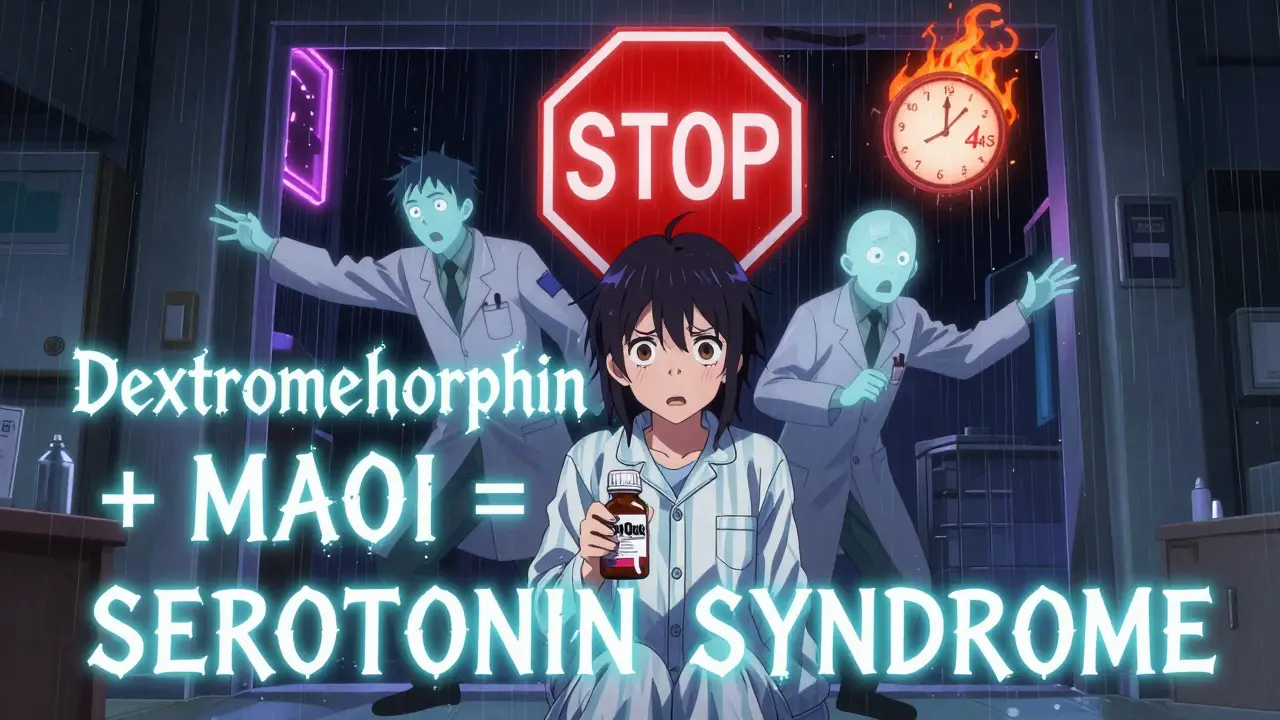
What’s Being Done - And What’s Still Missing
The FDA first warned about this interaction back in 1976. But labeling hasn’t kept up. A 2021 analysis found only 38% of dextromethorphan products clearly warn about MAOIs on the front label. Most warnings are buried in tiny print on the side or back. Even worse, many generic brands don’t include the warning at all. The FDA proposed new rules in 2022 to require larger, bolder warnings - and they’re expected to be enforced by late 2024. Until then, you can’t rely on the label. Pharmacists are the last line of defense. A 2021 study showed that when pharmacists actively asked patients about cough medicine use, accidental combinations dropped by 67%. But not every pharmacy does this. If you’re on an MAOI, don’t wait for them to ask. Bring up the topic yourself.What to Use Instead
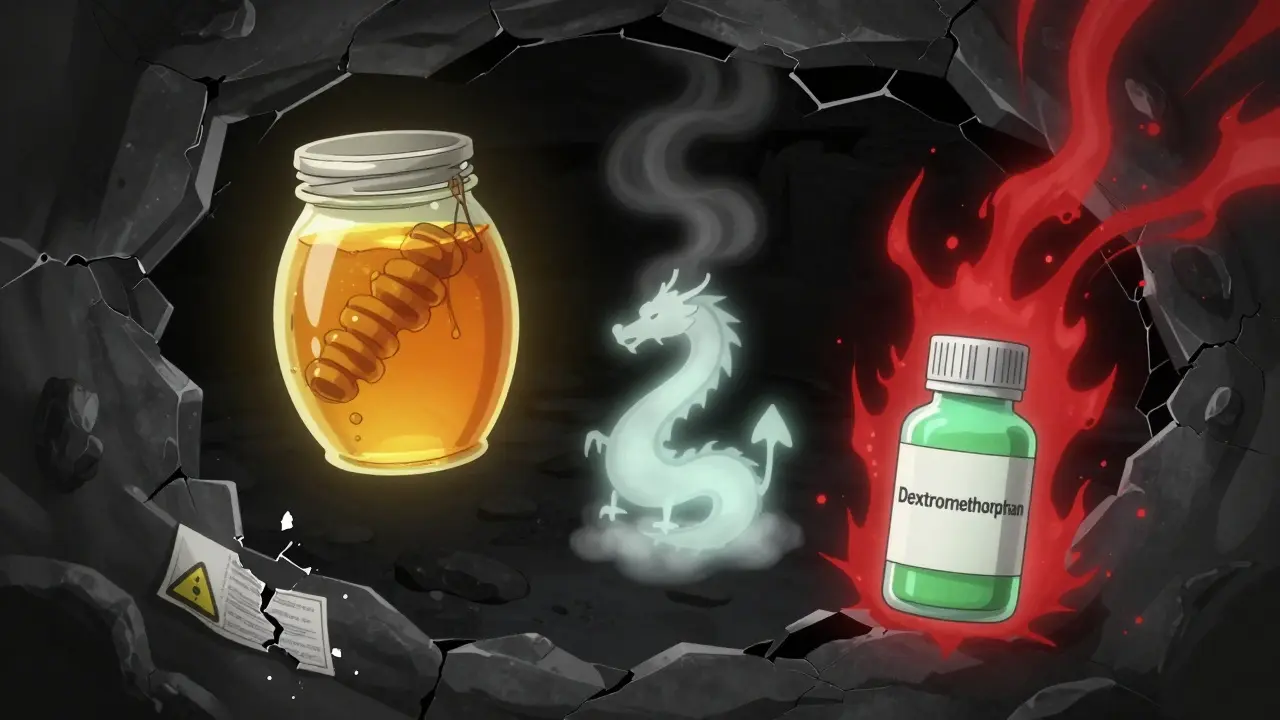
You don’t have to suffer through a cough. There are safer options:- Guaifenesin - This is an expectorant, not a suppressant, but it helps loosen mucus. Look for products labeled “guaifenesin only” - no dextromethorphan.
- Honey - A teaspoon of honey before bed can reduce nighttime coughing. Studies show it works as well as some OTC syrups. Just avoid honey products with added herbs or tyramine-rich ingredients.
- Steam and hydration - Warm fluids, humidifiers, and saline nasal sprays help soothe irritated airways without any drug risk.
What to Do If You Accidentally Mix Them
If you’ve taken dextromethorphan within two weeks of your last MAOI dose and you feel off - even slightly - don’t wait. Call your doctor. Go to the ER. Don’t assume it’s “just a cold.” Serotonin syndrome doesn’t get better on its own. In severe cases, it can kill before the drugs leave your system. Treatment involves stopping both drugs, cooling the body, and sometimes using medications like cyproheptadine to block serotonin receptors. But the best treatment? Prevention.Bottom Line
This isn’t a “maybe” risk. It’s a confirmed, documented, and deadly interaction. If you’re on an MAOI - whether it’s for depression, Parkinson’s, or another condition - dextromethorphan is off-limits. Period. No exceptions. No “just this once.” Talk to your pharmacist. Show them your medication list. Ask: “Is this cough medicine safe with my MAOI?” If they’re unsure, don’t take it. Your life isn’t worth the gamble.Can I take dextromethorphan if I stopped my MAOI a week ago?
No. Even if you stopped your MAOI a week ago, the enzyme inhibition can still be active in your body. Both the Therapeutic Goods Administration (TGA) and the FDA recommend waiting at least 14 days - and some sources say 2 weeks - before using dextromethorphan. Don’t assume you’re safe just because you feel fine. The risk of serotonin syndrome doesn’t disappear just because you stopped the MAOI.
Are all cough medicines dangerous with MAOIs?
No - only those containing dextromethorphan. Many cough syrups, especially single-ingredient ones, contain only guaifenesin (an expectorant) or honey. Always check the “Active Ingredients” list. If it says dextromethorphan, avoid it. If it says only guaifenesin, it’s generally safe. But be careful: some combination products hide dextromethorphan under names like “DM” or “cough relief.”
What about cough drops or throat sprays?
Most cough drops and throat sprays contain dextromethorphan too - especially those marketed as “strong” or “fast-acting.” Even if it’s a small amount, it can still add up, especially if you’re using it frequently. If you’re on an MAOI, avoid all dextromethorphan-containing products, regardless of form. Stick to saltwater gargles, lozenges with honey or menthol only, and hydration.
Is it safe to take dextromethorphan if I’m on a different kind of antidepressant?
It depends. Dextromethorphan is generally safe with SSRIs like sertraline or fluoxetine - but not always. Both dextromethorphan and SSRIs increase serotonin, so combining them can still raise the risk of serotonin syndrome, especially at high doses. The risk is highest with MAOIs, but it’s not zero with other antidepressants. Always talk to your doctor before mixing any cough medicine with antidepressants.
Why don’t more people know about this interaction?
Because the warning labels are often hidden, and doctors don’t always talk about it. A 2023 study found that only 43% of patients starting MAOI therapy received proper counseling about OTC drug risks. Pharmacies don’t always screen. Patients assume OTC means “safe.” But dextromethorphan is one of the most common causes of fatal drug interactions in MAOI users. Lack of awareness isn’t a sign of safety - it’s a danger.
Can I use natural remedies like elderberry or echinacea instead?
Be cautious. Some herbal supplements, including elderberry and echinacea, can affect liver enzymes or interact with MAOIs in ways we don’t fully understand. While they don’t contain dextromethorphan, they’re not risk-free. Honey and steam are the safest, most studied options. Avoid unregulated supplements unless your doctor has reviewed them.

This is wild. I had no idea cough syrup could kill you if you're on an MAOI. I thought it was just for colds. Now I'm checking every bottle in my cabinet. 😳
I took DayQuil last winter and I'm on selegiline... I'm gonna call my pharmacist tomorrow. 😬
I'm so glad someone put this out there. My mom almost didn't make it last year from this exact thing. She didn't even know the label mattered. Always read the fine print. 💔
It's crazy how many things we assume are safe just because they're OTC. Like, we trust the system too much. This interaction is one of those silent killers. We need better labeling. 🌱
i swear i read the label but i just skipped the active ingredients bc it looked like a bunch of giberish. now i know to look for dm or dextro. also honey works better than any syrup anyway lol
If you're on an MAOI and you take dextromethorphan, you're basically playing Russian roulette with your brain. And the gun's loaded. 🎯💀
Pharmacists are the real MVPs here. I work at a pharmacy and we now ask EVERYONE on antidepressants if they've used cough meds. We've stopped 3 near-misses this month. Don't wait for them to ask. Ask first.
The real tragedy isn't the interaction-it's the systemic failure. Why is this still not on every single bottle? Why aren't pharmacists legally required to screen? We treat OTC drugs like candy. We need regulation, not just awareness.
This is why you can't trust Big Pharma. They don't care if you die as long as they sell the syrup. The FDA waited 48 years to fix this. They're not protecting you. They're protecting profits.
I appreciate the clarity here. For those on MAOIs, the rule is simple: if it says dextromethorphan, don't take it. If you're unsure, ask your pharmacist. And yes, honey works. I've used it for years. It's not glamorous, but it's safe.
i just wanna say thank you for this post. i've been on nardil for 8 years and i never knew about this. i've been using cough drops like crazy. now i'm switching to saltwater gargles. also i love you for writing this
America is soft. You want to cough? Hold your breath. Drink hot water. Stop taking pills for everything. This isn't a medical crisis-it's a cultural one. Stop being so dependent on chemicals.