
How Patients Can Prevent Medication Errors and Stay Safe
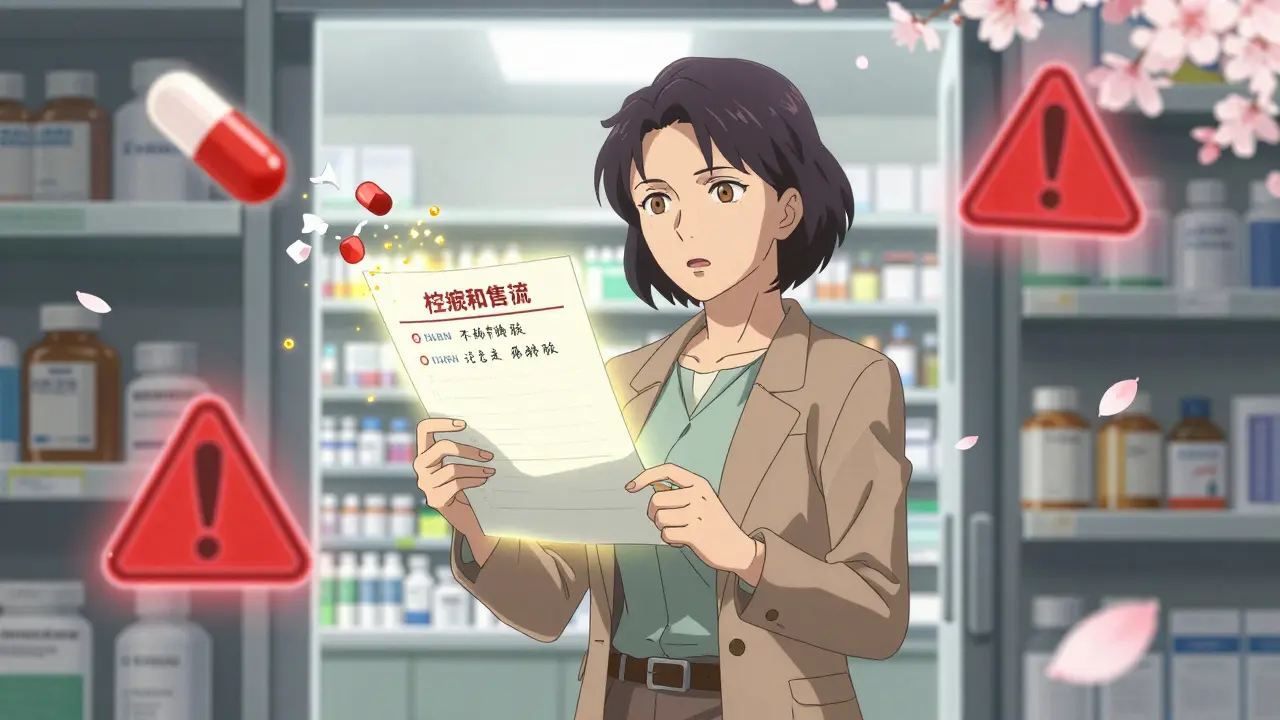
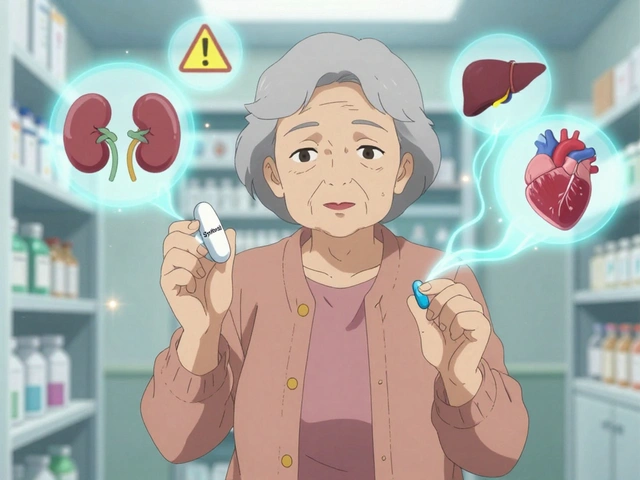
Think about the last time you picked up a prescription. Did you check the label? Did you ask why this pill looked different from last time? Did you know exactly what it was for? Most people don’t. But here’s the truth: you are the last line of defense against dangerous medication mistakes.
Every year, millions of people worldwide take the wrong dose, mix harmful drugs, or get pills they never asked for. These aren’t rare accidents. They’re preventable. And the biggest reason they still happen? Healthcare systems assume patients are passive. But you’re not. You’re the one who takes the pills. You’re the one who notices something’s off. You’re the one who lives with the consequences.
What You Can Do Right Now
You don’t need a medical degree to keep yourself safe. You just need to be curious and a little stubborn. Start with these five simple actions:
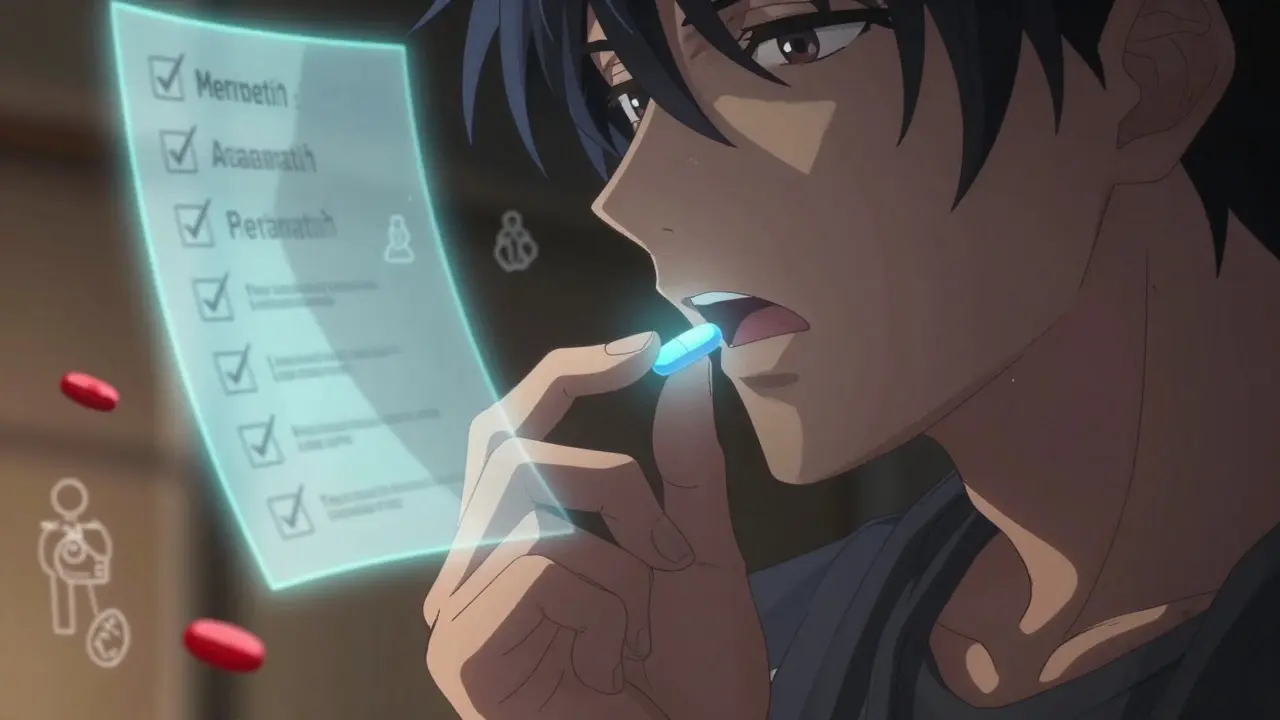
- Keep a real, updated list of everything you take. Not just prescriptions. Include vitamins, herbal supplements, over-the-counter painkillers, and even that daily fish oil. Write it down. Keep it in your wallet or phone. When a doctor changes your meds, show them this list. Studies show patients who do this cut medication errors by 42% during hospital transfers.
- Know the name and purpose of each pill. Don’t just say, “The blue one.” Know it’s metformin for your diabetes, not “the sugar pill.” If you can’t explain why you’re taking it, ask again. Patients who know their meds reduce errors by 35%.
- Check the pill before you swallow it. If it looks different-color, shape, markings-ask. Pharmacies swap brands all the time. A 2022 study found that 19% of dispensing errors were caught because patients said, “This doesn’t look right.”
- Ask about side effects. Not just “What are the side effects?” but “Which ones should I call you about right away?” Knowing what’s normal versus dangerous lets you act fast. In 63% of cases where patients spotted early warning signs, they avoided serious harm.
- Question changes. If your doctor suddenly adds a new pill or changes the dose, ask: “Why now?” “Is this permanent?” “What happens if I don’t take it?” Patients who ask questions catch 15% of prescription errors that providers miss.
Why Your Voice Matters
Doctors and nurses are busy. They’re juggling charts, calls, and emergencies. They can’t watch every pill you take. But you can. In fact, research shows patients detect 41% of medication errors that healthcare staff never notice. That’s not a coincidence. It’s because you’re the one who lives with the meds-day after day.
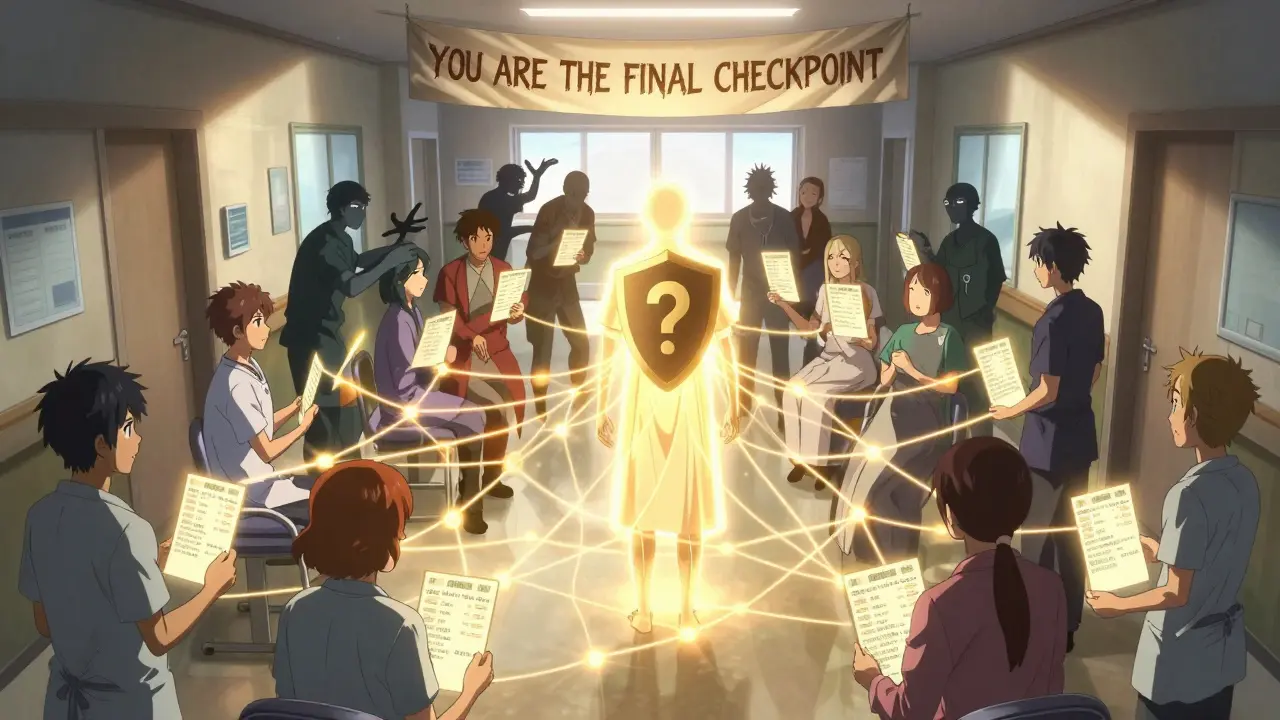
Dr. Tejal Gandhi, president of the Institute for Healthcare Improvement, says patients serve as the final safety checkpoint in 83% of near-miss events. Think about that. That’s not luck. That’s you being alert.
One woman in Melbourne, on Reddit, shared how she caught her child’s antibiotic dose being off by 10 times. The pharmacist had misread the prescription. She didn’t panic. She just asked: “Why is this bottle so full?” That simple question saved her child from liver damage.
But here’s the dark side: too many patients get shut down. One man in Sydney told his doctor he felt dizzy after a new blood pressure pill. The doctor said, “It’s just side effects. You’ll adjust.” He didn’t. He ended up in the ER with dangerously low blood pressure. He wasn’t wrong. He was dismissed.
What Gets in the Way
It’s not just about being brave. There are real barriers.
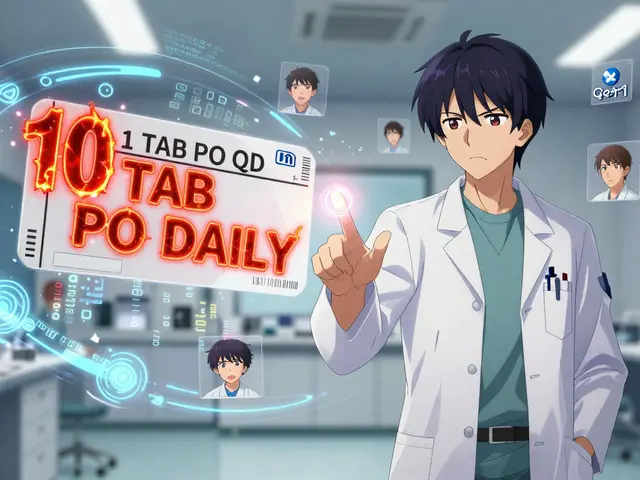
- Health literacy. Nearly 36% of U.S. adults have trouble understanding medical info. If you’ve ever stared at a prescription label and thought, “What does ‘QD’ mean?”-you’re not alone. The solution? Ask for plain language. Use the Universal Medication Schedule-a simple system that groups doses into four times a day: morning, noon, evening, bedtime. It cuts confusion by 44%.
- Digital divide. Apps like MyMedSchedule help 78% of people under 45. But only 44% of those over 65 use them. If tech feels overwhelming, stick to paper. A written list works just as well.
- Medication math. One in five adults struggle with basic math needed to split pills or measure liquid doses. If you’re unsure, ask your pharmacist to show you with a spoon or syringe. Don’t guess.
And let’s be honest: some people fear being called “difficult.” But asking questions isn’t being difficult. It’s being smart. The American Medical Association says structured safety training at every visit should be standard. That means your doctor should expect you to ask.
How to Talk to Your Doctor
Here’s a script that works: “I want to make sure I’m taking this right. Can we go over my list?” Then hand them your written list. Ask: “What’s this for?” “What happens if I miss a dose?” “What should I watch out for?”
Use the “Ask Me 3” method:
1. What is my main problem?
2. What do I need to do?
3. Why is it important?
That’s it. Three questions. No jargon. No pressure. Just clarity.
Studies show this approach reduces medication errors by 31% compared to standard discharge instructions. That’s not magic. That’s communication.
What’s Changing for the Better
Change is happening. In 2023, the FDA launched a “Patient Safety Ambassador” program that trained over 12,000 people across the U.S. to teach others how to spot errors. In Australia, hospitals are now required to offer medication reconciliation-where staff compare your list with what they think you’re taking-at every admission.
Regulations are shifting too. Medicare now ties 8% of hospital payments to how well they involve patients in safety. That means hospitals are finally incentivized to train you-not just tell you.
By 2027, 85% of healthcare organizations plan to have formal programs where patients are treated as safety partners. That’s huge. It means your role won’t be optional anymore. It’ll be expected.
What You Shouldn’t Do
Don’t assume your pharmacist knows everything. They’re not mind readers. Don’t rely on memory. Don’t skip a dose because you feel fine. Don’t take someone else’s leftover pills. And don’t be afraid to say: “I need more time to understand this.”
Medication safety isn’t about being perfect. It’s about being consistent. One checklist. One question. One moment of pause before you swallow.
What’s Next
Start today. Grab a notebook. Write down every pill, supplement, and liquid you take. Include the dose and why. Keep it with you. Next time you see a doctor, bring it. Ask one question. Just one.
You’re not just a patient. You’re a partner. And your role in keeping yourself safe isn’t optional. It’s essential.
This post is straight fire. You don't need a degree to save your life. Just write down what you take. Keep it in your wallet. Show it to the doc. Boom. 42% fewer errors. Simple. No fluff. I do this every time I get a script. My pharmacist knows me by name now. And I'm not even sick.
The pharmacovigilance architecture is fundamentally misaligned when patient agency is treated as an ancillary variable rather than a core safety node. The data is unequivocal: patient-reported discrepancies yield a 41% detection rate for iatrogenic events. We're not talking about anecdotal outliers here-we're talking about systemic redundancy that's been empirically validated across multiple healthcare paradigms.
OMG I LOVE THIS. I used to just swallow whatever they handed me like a zombie. Then one day I looked at my pill and was like... 'this ain't the same blue bean I got last time.' Turned out they gave me my neighbor's blood thinner. I almost took it. Now I keep a lil notebook in my purse with emojis. 💊📝👁️🗨️ My doc says I'm 'annoying' but my liver says THANK YOU.
This is the most important thing I’ve read all year. I nearly died because I didn’t ask. I got a new blood pressure med. Felt dizzy. Said something. Doctor said, 'It’s just side effects.' I didn’t push. I didn’t fight. I didn’t say a word. Three days later, I was in the ER, hooked to an IV, my BP at 68/42. They said I was lucky to be alive. I wasn’t lucky. I was stupid. Don’t be stupid.
I started doing the 'Ask Me 3' thing after my mom had a bad reaction. It changed everything. 🙌 Now I write everything down. I even take pics of the pill bottles. My grandma thinks I'm weird but she's alive. And I just got my first 'patient safety partner' badge at my clinic!! 🎉 So proud. You guys are doing the work. Keep going. You're not being difficult-you're being DANGEROUSLY SMART.
Yeah right. Like doctors are gonna listen to some lady with a notebook. I tried this. Asked why my pill looked different. Nurse said, 'We switched brands.' I said, 'But the last one had a little heart on it.' She laughed. I left. Still took it. Still feel like crap. Guess I'm just the sacrifice.
The fundamental premise of modern healthcare is flawed. It assumes passivity as a virtue. But safety is not a gift bestowed by institutions-it is a practice cultivated by individuals. Every pill swallowed without inquiry is a silent concession to systemic fragility. Your vigilance is not an inconvenience. It is the last functional component in a system designed to forget you exist.
Oh, so now we’re supposed to be amateur pharmacists? Cool. I’ll just Google 'is this pill gonna kill me?' while my doctor’s on Zoom with 17 other patients. And let’s not forget the 36% of people who can’t read 'QD'-they’re just supposed to wing it? This post sounds great on paper. In real life? It’s a luxury. Not everyone has time, energy, or a damn notebook.
I appreciate the intent behind this. Truly. But let’s acknowledge the emotional labor here. Asking questions isn't just logistical-it’s psychological. Many patients fear being labeled 'difficult,' 'hysterical,' or 'noncompliant.' The system doesn't reward curiosity. It punishes it. Until that changes, we're asking the vulnerable to fix a broken machine with their tears.
I’ve been on 7 different meds in the last 18 months. I keep a spreadsheet. Colour-coded. With footnotes. I’ve caught 3 errors. One was a 500% overdose on a thyroid med. The pharmacist apologized. Said they 'missed the decimal.' I didn’t scream. I just said, 'Can we go over this again?' And we did. It’s not drama. It’s duty.
I used to be one of those people who just took the pills. Then I almost died. I didn't ask. I just trusted. Now? I ask. I write. I take pictures. I call the pharmacy. I text my sister. I have a spreadsheet. I’m not 'difficult.' I’m alive. And I’m not sorry.
This is a well-intentioned but dangerously oversimplified narrative. The assumption that patients can reliably detect medication errors ignores structural inequities-lack of access, language barriers, cognitive load, and provider bias. It places undue burden on the marginalized while absolving institutions of accountability. Safety cannot be outsourced to the vulnerable.
I’m a nurse. And I’m telling you-this works. I’ve seen it. A guy came in with a handwritten list. 17 meds. 4 supplements. 2 OTC painkillers. We caught a dangerous interaction no one else saw. He didn’t even know it was a problem. Just wrote it down. That’s it. You don’t need to be perfect. Just show up. And bring the list.