
Over-the-Counter Medications: NSAIDs, Acetaminophen, and Antihistamines Explained
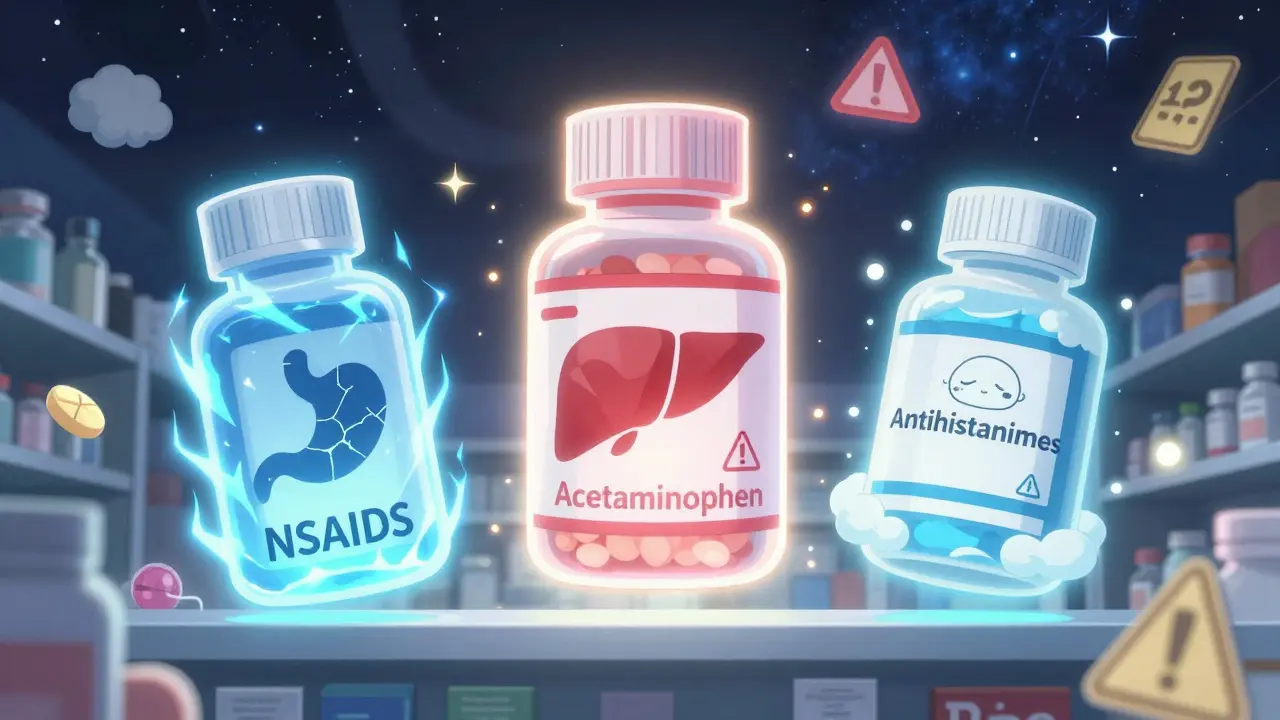
Every year, millions of people reach for an OTC pill without thinking twice. A headache. A stuffy nose. A sore knee. It’s quick, easy, and cheap. But here’s the thing: just because you don’t need a prescription doesn’t mean these meds are harmless. In fact, the most dangerous mistakes people make with medications happen with the ones you can buy off the shelf.
NSAIDs: More Than Just Painkillers
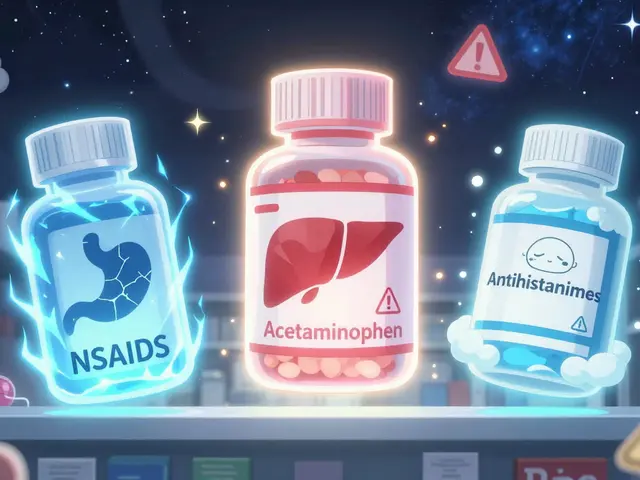
NSAIDs - short for nonsteroidal anti-inflammatory drugs - include ibuprofen (Advil, Motrin IB), naproxen (Aleve), and aspirin. These aren’t just pain relievers. They reduce swelling, which is why they work better than acetaminophen for sprains, arthritis, or menstrual cramps. A 2021 meta-analysis found ibuprofen is about 50% more effective than acetaminophen for inflammatory pain. That’s why 68% of people in a 2022 Pharmacy Times survey picked ibuprofen for muscle pain.
But here’s the catch: NSAIDs mess with your stomach lining. Regular use over 1,200mg daily - that’s six 200mg ibuprofen tablets - increases your risk of internal bleeding by 2.5 times. If you’ve ever had an ulcer, are on blood thinners, or have high blood pressure, NSAIDs can be risky. Even worse, about 10-20% of people with asthma get serious breathing problems after taking aspirin or other NSAIDs. That’s called aspirin-exacerbated respiratory disease. And if you’re over 65? Your kidneys handle NSAIDs less efficiently. Dose too much, and you could end up in the ER.
OTC ibuprofen comes in 200mg tablets or 1% topical gel. The gel is great for localized pain like a sore elbow, with less risk to your stomach. Naproxen lasts longer - up to 12 hours - so you don’t have to take it as often. But it stays in your system longer, too. That means if you accidentally double up, the risk builds up quietly.
Acetaminophen: The Quiet Killer
Acetaminophen (Tylenol) is the most popular painkiller in the U.S. It’s in over 600 products - cold meds, sleep aids, migraine tablets, even combo pills for flu. That’s why it’s responsible for 56,000 emergency room visits every year. Most of them? Accidental overdoses.
Here’s how it happens: You take one Tylenol for a headache. Later, you grab a cold tablet because your nose is stuffed. That cold tablet also has acetaminophen. Then you take another Tylenol. Before you know it, you’ve hit 4,000mg - the official daily limit. But many experts now say 3,000mg is safer. The FDA is even considering lowering it to 3,250mg in 2026.
Acetaminophen doesn’t hurt your stomach like NSAIDs do. That’s why 68% of seniors use it. But it’s brutal on your liver. One 10g dose - just 20 regular tablets - can cause liver failure. And it doesn’t care if you’re a heavy drinker or not. Even moderate alcohol use raises the risk. No warning signs until it’s too late. Fatigue. Nausea. Then jaundice. By then, it’s often irreversible.
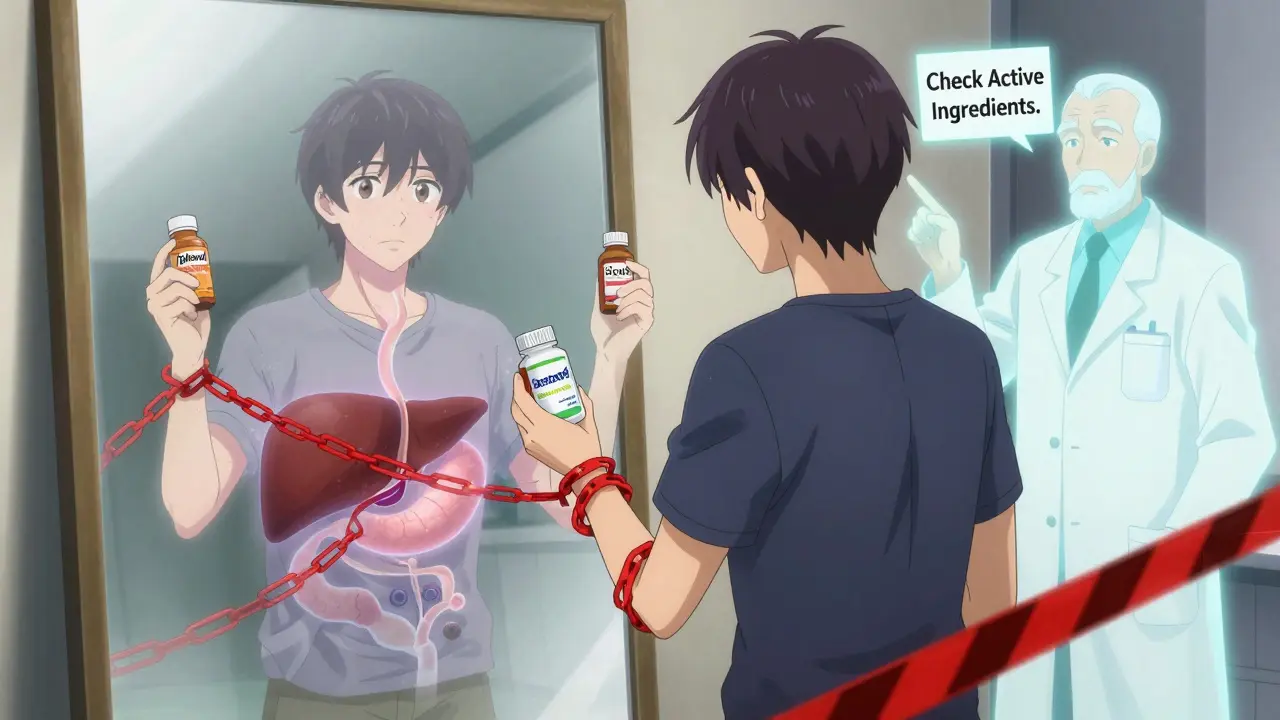
Check every bottle. Look for “acetaminophen” or “APAP.” If you’re taking more than one product, add up the milligrams. And never take it with alcohol. Ever. The FDA found 20% of pediatric overdoses happen because parents confuse teaspoons with tablespoons. Always use the dosing cup that comes with the medicine. Never guess.
Antihistamines: Sleepy vs. Alert
Allergies? Antihistamines are your go-to. But not all are created equal. First-generation ones - diphenhydramine (Benadryl) and chlorpheniramine - work fast. Onset in 15-30 minutes. But they cross into your brain. And that makes you drowsy. A 2022 Consumer Reports survey found 50% of users felt too sleepy to drive. In older adults, this raises fall risk by 50%. One JAMA Internal Medicine study linked these meds to memory problems and confusion in seniors.
Second-generation antihistamines - loratadine (Claritin), cetirizine (Zyrtec), and fexofenadine (Allegra) - are different. They barely touch the brain. Only 8% of users report drowsiness. That’s why Claritin holds 41% of the allergy market. They last 24 hours. One pill a day. No need to time it around your schedule.
But here’s the twist: not everyone responds the same. A Reddit thread with 1,800+ upvotes from an allergist explained that genetic differences mean 20% of people respond better to one antihistamine over another. If Zyrtec doesn’t work, try Claritin. If Claritin makes you itchy, try Allegra. It’s trial and error. Don’t give up after one try.
Also, watch for hidden ingredients. Some allergy pills include decongestants (like pseudoephedrine) or pain relievers. Those can raise your blood pressure or cause insomnia. If you’re not sure what’s in the pill, read the label. Or ask a pharmacist. They’re trained to spot these traps.
What You’re Not Being Told
OTC doesn’t mean “safe for everyone.” It means “safe enough for most people if used correctly.” But most people don’t use them correctly.
Here’s what you need to know:
- Don’t mix OTC meds. One Tylenol + one cold pill = accidental overdose.
- Check for duplicate ingredients. If two products list the same active ingredient, don’t take both.
- NSAIDs aren’t for long-term daily use. If you’re taking them for more than 10 days straight, talk to a doctor.
- Acetaminophen has no anti-inflammatory effect. If you’re treating swelling, it won’t help.
- Antihistamines aren’t sleep aids. Using Benadryl to fall asleep? You’re asking for next-day grogginess and balance issues.
And here’s the real kicker: OTC versions often have lower doses than prescription ones. Prilosec OTC is 20mg. The prescription version is 40mg. That’s fine for heartburn. But if you’re using it for something else - like healing ulcers - you might not be getting enough. Same with some nasal sprays and allergy pills. The OTC version is designed for short-term relief. Not chronic conditions.
When to Skip the Shelf and See a Pharmacist
You don’t need to be a doctor to know when something’s off. If you’re taking OTC meds for more than 10 days without improvement, it’s time to stop. If you’re on other meds - especially for blood pressure, diabetes, or depression - OTC drugs can interact. Ibuprofen can make blood pressure meds less effective. Antihistamines can make depression meds more sedating.
Pharmacists see this every day. They notice when someone’s taking three different cold pills. They catch when a 70-year-old is using Benadryl every night. They’re trained to spot the hidden risks. And they’re right there - no appointment needed. Walk in. Ask. Say: “I’m taking this for X. Is it safe with my other meds?”
And if you’re a caregiver for an elderly parent? Double-check every bottle. Many seniors take 5-10 OTC meds daily. One misstep - a wrong dose, a hidden ingredient - can send them to the hospital.
What’s Changing in 2026
The OTC market is evolving. In 2022, the FDA approved a 3% diclofenac gel for arthritis pain - stronger than the old 1% version. In 2023, the FDA proposed lowering the max daily acetaminophen dose from 4,000mg to 3,250mg. And next up? Low-dose atorvastatin (Lipitor) might go OTC. If it does, it’ll be the biggest shift since Prilosec went over-the-counter.
Meanwhile, digital tools are helping. Walgreens’ ‘Find Care’ app gives personalized OTC suggestions based on symptoms. Beta users rated it 82% satisfied. That’s a sign of where things are headed: personalized OTC advice, not one-size-fits-all.
But the biggest change? Awareness. More people are learning that OTC doesn’t mean “no risk.” It means “read the label.” It means “know your limits.” It means “ask before you assume.”
Can I take ibuprofen and acetaminophen together?
Yes, you can take them together - and many people do for better pain relief. Ibuprofen handles inflammation, acetaminophen handles pain and fever. But stick to recommended doses. Don’t exceed 3,000mg of acetaminophen and 1,200mg of ibuprofen in 24 hours. Space them out: take one, wait 4-6 hours, then take the other. Never take them at the same time on a regular basis without checking with a pharmacist.
Is it safe to use NSAIDs every day for arthritis?
Daily NSAID use for arthritis isn’t recommended without medical supervision. Long-term use increases stomach bleeding, kidney damage, and heart attack risk. The American College of Rheumatology suggests trying acetaminophen first, especially for osteoarthritis. If that doesn’t work, use the lowest NSAID dose for the shortest time possible. Topical gels (like Voltaren) are safer than pills because they’re absorbed through the skin, not your gut.
Why does my antihistamine stop working after a few weeks?
It’s not that the medicine stops working - it’s that your body adapts. Allergies don’t disappear, but your response to the drug can change. Try switching to another second-generation antihistamine. If loratadine stops helping, switch to cetirizine or fexofenadine. Some people respond better to one due to genetic differences in histamine receptors. Don’t increase the dose - that won’t help and could cause side effects.
Can children take OTC pain relievers?
Yes, but dosing by weight matters more than age. Tylenol and Advil both have pediatric versions with clear dosing charts based on weight. Never use adult pills for kids. Liquid forms are safest - always use the dosing syringe or cup that comes with the product. Never use kitchen spoons. The FDA says 20% of pediatric overdoses happen because parents use tablespoons instead of teaspoons. If you’re unsure, ask a pharmacist.
Are generic OTC brands as good as name brands?
Yes. Generic ibuprofen, acetaminophen, and loratadine have the same active ingredients as name brands like Advil, Tylenol, or Claritin. The only differences are filler ingredients, packaging, and price. Store brands are often 30-50% cheaper. But always check the active ingredient list. Some generics skip important features - like delayed-release or child-resistant caps. If you’re using them long-term, make sure the product meets safety standards.
Been taking ibuprofen for my knee for years. Didn’t realize 1,200mg daily was the threshold for bleeding risk until I read this. Scary stuff. I’ve cut back to every other day and switched to the topical gel. No more stomachaches. Also, never knew NSAIDs could trigger asthma attacks. My cousin had a near-fatal reaction last year. Always thought it was just ‘bad allergies.’
It’s fascinating how we treat OTC drugs like candy. We don’t think twice about popping a pill, yet we’d never casually ingest a prescription drug without consulting a professional. The cognitive dissonance is almost poetic. We’ve normalized risk because it’s convenient. And convenience, as we know, is the enemy of awareness.
So…acetaminophen is the quiet killer? Yeah, no kidding. It’s in everything. I once took Tylenol for a headache, then had a cold med later. Didn’t even check the label. Thought ‘cold medicine’ meant ‘just for runny nose.’ Turns out, I hit 4,000mg. Felt fine. Still feel fine. But now I read every. single. label. Like a paranoid librarian.
While I appreciate the attempt to educate, this article is alarmist. People have been taking OTC meds for decades. The number of ER visits is statistically negligible compared to total usage. The real issue? People who don’t read labels. Not the drugs. The users. And yes, I’m talking to you, the one who takes Benadryl as a sleep aid. Stop it. You’re not helping yourself.
Yessss this is so needed! 🙌 I used to mix Tylenol and Advil like it was nothing. Then I found out my grandma ended up in the hospital because she didn’t realize her ‘allergy pill’ had acetaminophen in it. Now I keep a little notebook. Active ingredient. Dose. Time taken. It’s weirdly satisfying. Like a health journal but for pills. Also, generics are totally fine. I save like $15 a month. 🤑
Man, I used to think NSAIDs were just for muscle pain. Then I found out they’re basically napalm for your stomach. I’ve been chugging Aleve like water since college. Now I’m down to one every 3 days. And I use the gel for my elbow. Feels like magic. Also, never knew Zyrtec and Claritin were different. I used to think they were just fancy names for the same thing. Turns out my body hates Zyrtec. Claritin? Perfect. Like a cool breeze.
Let me get this straight: the FDA is considering lowering the acetaminophen limit…because people can’t read? That’s not a regulation problem. That’s a parenting problem. A literacy problem. A societal problem. Why not just ban OTC meds and make everyone see a doctor? Then we’d finally have accountability. Until then, we’re just bandaging a hemorrhage with glitter.
From a pharmacovigilance standpoint, the cumulative exposure to multi-ingredient OTC formulations is a significant contributor to hepatotoxicity and GI hemorrhage. The lack of standardized labeling across manufacturers exacerbates polypharmacy risks, particularly in geriatric populations. The proposed reduction of acetaminophen to 3,250mg/day aligns with emerging data on CYP450 enzyme saturation thresholds. A 2023 meta-analysis in JAMA Internal Medicine supports this threshold for risk mitigation.
OMG I just realized I’ve been taking Benadryl to sleep for YEARS 😱 I thought it was ‘harmless’ because it’s OTC. Now I’m switching to Zyrtec and trying sleep hygiene stuff. Also, I got my mom to stop mixing her blood pressure med with Advil. She’s 72 and thought ‘it’s just one pill.’ We’re all doing better now. 💪 You’re all amazing for sharing this!!
Big Pharma doesn’t want you to know this. The real reason OTC meds are so dangerous? They’re designed to be addictive. The pain relief gives you a dopamine hit. Then you need more. Then you need stronger. Then you’re hooked. And who profits? The corporations. The FDA? Complicit. The pharmacists? Paid off. Read the fine print. The ‘safe for most’ disclaimer? It’s a loophole. Don’t be fooled.
So we’re supposed to read every label now? What’s next? Check the expiration date on toothpaste? This is just another way to make people feel guilty for existing. I’ve been fine for 30 years. Why change now?
Knowledge is power. Understanding what’s in the pills we take daily is one of the simplest, most powerful acts of self-care. A small amount of attention can prevent a lifetime of regret. Don’t wait for a crisis to learn. Start today. Read one label. Ask one question. It matters.
Someone mentioned generics. Let me tell you something: I used to buy name-brand Claritin because I thought it was ‘better.’ Then I switched to store brand. Same active ingredient. Same results. Saved $20/month. I even called the manufacturer. They said, ‘Yep, it’s identical.’ Why pay more? Also, I keep a list in my phone: ‘What’s in this?’ I’ve saved myself from 3 accidental overdoses. Just sayin’.
OTC drugs are not safe. They are poison with a smiley face. People die because they trust labels. Trust no one. Don’t take anything. Go to a doctor. Or don’t take anything at all. Simple.
Regarding the 2026 acetaminophen limit change: the data from the 2023 Lancet study shows a 17% reduction in hepatic injury in populations that voluntarily adhered to 3,250mg/day. The real win isn’t the regulation-it’s the behavioral shift. We’re moving from ‘take as needed’ to ‘take as *safe*.’ That’s progress. Also, topical NSAIDs? Game-changer. My knee pain vanished. No stomach drama. I’m a believer.