
How to Compare OTC Pain Relievers: Acetaminophen vs. NSAIDs

When you have a headache, sore muscles, or a fever, reaching for an OTC pain reliever seems simple. But not all painkillers work the same way. Acetaminophen and NSAIDs - like ibuprofen and naproxen - are the two most common choices, yet they’re built for completely different jobs. Knowing which one to pick can mean the difference between quick relief and avoidable side effects.
How Acetaminophen Works
Acetaminophen, sold under brands like Tylenol, doesn’t touch inflammation. That’s the big secret. It works deep inside your brain and spinal cord, quieting pain signals before they reach your awareness. It’s also great at lowering fever. But if you have swollen joints, a sprained ankle, or menstrual cramps caused by inflammation, acetaminophen won’t reduce that swelling. It just makes the pain feel less sharp.
The dose matters. The official maximum is 4,000 mg per day - that’s eight extra-strength tablets. But experts now recommend staying under 3,000 mg, especially if you drink alcohol, have liver issues, or take other meds. Why? Because acetaminophen is easy to overdose on - and it’s silent until it’s too late. Liver damage can happen even at normal doses if you combine it with other products. Many cold medicines, sleep aids, and combo pain relievers contain acetaminophen. You might not realize you’re doubling up. The FDA estimates 15,000 hospital visits each year come from accidental overdoses.
How NSAIDs Work
NSAIDs - nonsteroidal anti-inflammatory drugs - work everywhere. Ibuprofen (Advil, Motrin), naproxen (Aleve), and aspirin block enzymes called COX-1 and COX-2 that produce prostaglandins. These chemicals cause pain, fever, and swelling. So NSAIDs don’t just mask pain - they attack the root cause of inflammation.
This makes them far more effective for arthritis, tendonitis, back pain, or period cramps. Clinical studies show NSAIDs reduce pain scores by 30-50% in osteoarthritis patients, while acetaminophen only drops it by 10-20%. They’re also better for acute injuries like sprains or bruises where swelling is part of the problem.
But they come with trade-offs. NSAIDs irritate the stomach lining. About 2-4% of regular users develop ulcers each year. That’s why you’re told to take them with food. Some people need to add an acid-reducing drug like famotidine just to use them safely. And there’s a hidden risk: heart problems. The FDA warns that chronic use of ibuprofen can raise heart attack risk by 10-50%. Naproxen is a bit safer here - it’s the least likely NSAID to affect the heart, according to 2021 European Heart Journal data.
Which One Is Safer?
For most people, acetaminophen wins on safety - if you stick to the dose. It doesn’t hurt your stomach, kidneys, or heart like NSAIDs can. That’s why doctors often suggest it as the first try for mild pain, especially in older adults or those with stomach sensitivities.
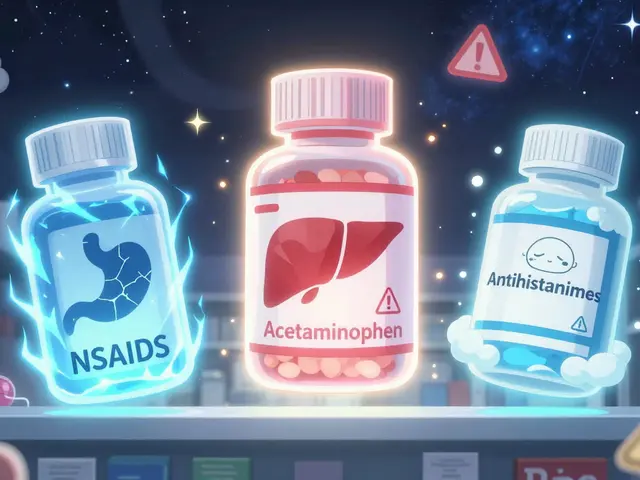
But here’s the catch: acetaminophen is dangerous if you mess with the dose. One study found 40% of acetaminophen-related liver injuries happen because people took multiple products without realizing they all contained it. Read labels. Always. A cold tablet + a pain pill = too much.
NSAIDs are riskier long-term, but for short-term use - say, a week for a bad back - they’re fine for healthy people. The real danger is daily use without medical oversight. If you’re taking ibuprofen every day for months, you’re playing Russian roulette with your stomach and heart.
When to Choose Acetaminophen
- You have a headache or fever
- You’re pregnant (NSAIDs are not recommended after 20 weeks)
- You’re giving pain relief to a child under 12
- You have a history of stomach ulcers or kidney disease
- You’re on blood thinners (NSAIDs can interfere)
- You’re not sure what’s causing the pain
Acetaminophen is the only OTC painkiller approved for babies as young as two months. It’s also the go-to for people with high blood pressure or heart failure, because it doesn’t raise blood pressure like NSAIDs can.

When to Choose NSAIDs
- You have arthritis, bursitis, or tendonitis
- You’re dealing with swelling - think sprained ankle or inflamed gums
- You have menstrual cramps
- You have muscle pain from overuse or injury
- You’ve tried acetaminophen and it didn’t help
NSAIDs are also better for inflammatory conditions like gout or lupus flare-ups. If your pain comes with redness, heat, or puffiness, you’re likely dealing with inflammation - and that’s where NSAIDs shine.
Can You Take Both Together?
Yes - and sometimes you should. Harvard Health and the Mayo Clinic both say combining a low dose of acetaminophen with a low dose of an NSAID can give you better pain control than either alone. For example: 650 mg of acetaminophen + 200 mg of ibuprofen every 6 hours. This lets you use less of each, lowering your risk of side effects.
But never take two NSAIDs at once. Mixing ibuprofen and naproxen doesn’t help - it just doubles your stomach and heart risks. And don’t mix NSAIDs with aspirin unless your doctor says so. Aspirin is an NSAID too, and it can interfere with heart-protective effects in some people.
Dosing Guidelines (2026)
| Medication | Typical Dose | Max Daily Dose | Frequency |
|---|---|---|---|
| Acetaminophen | 325-650 mg | 3,000 mg (recommended) 4,000 mg (absolute max) |
Every 4-6 hours |
| Ibuprofen | 200-400 mg | 1,200 mg | Every 4-6 hours |
| Naproxen | 220 mg | 660 mg | Every 8-12 hours |
| Aspirin | 325-650 mg | 3,250 mg | Every 4-6 hours |
These numbers are for healthy adults. If you’re over 65, have kidney or liver disease, or take other medications, talk to a pharmacist. Doses may need to be lower.
What Experts Say
Doctors agree on one thing: start with acetaminophen for mild, non-inflammatory pain. It’s safer for your stomach and heart. If it doesn’t work, switch to an NSAID. If you’re dealing with inflammation, skip straight to the NSAID.
Pharmacists in Australia and the U.S. now routinely ask patients: "Are you taking more than one painkiller?" That’s because hidden acetaminophen is the #1 cause of accidental overdose. And for NSAIDs, they ask: "How long have you been taking this?" Chronic use without monitoring is a red flag.
One thing you won’t hear: "Just take what works." That’s lazy advice. Your body’s response to pain isn’t one-size-fits-all. What helps your neighbor’s back pain might do nothing for yours - or cause problems.
What’s New in 2026
Labeling has gotten stricter. All acetaminophen packages now have bold, red warnings about liver damage. NSAID boxes carry clear alerts about heart risks and stomach bleeding. The FDA also updated its 2022 guidance to say: "No OTC painkiller is risk-free with long-term use."
Research is moving fast. The National Institutes of Health is funding 17 new trials looking at pain pathways beyond COX enzymes. We might see safer alternatives in the next 5-10 years. But for now, acetaminophen and NSAIDs are still the gold standard - if you use them right.
Final Rule: Know Your Body
There’s no universal best painkiller. It depends on your pain, your health, and your habits.
- Use acetaminophen for fever, headaches, or when you need something gentle.
- Use NSAIDs for swelling, joint pain, or injuries where inflammation is the culprit.
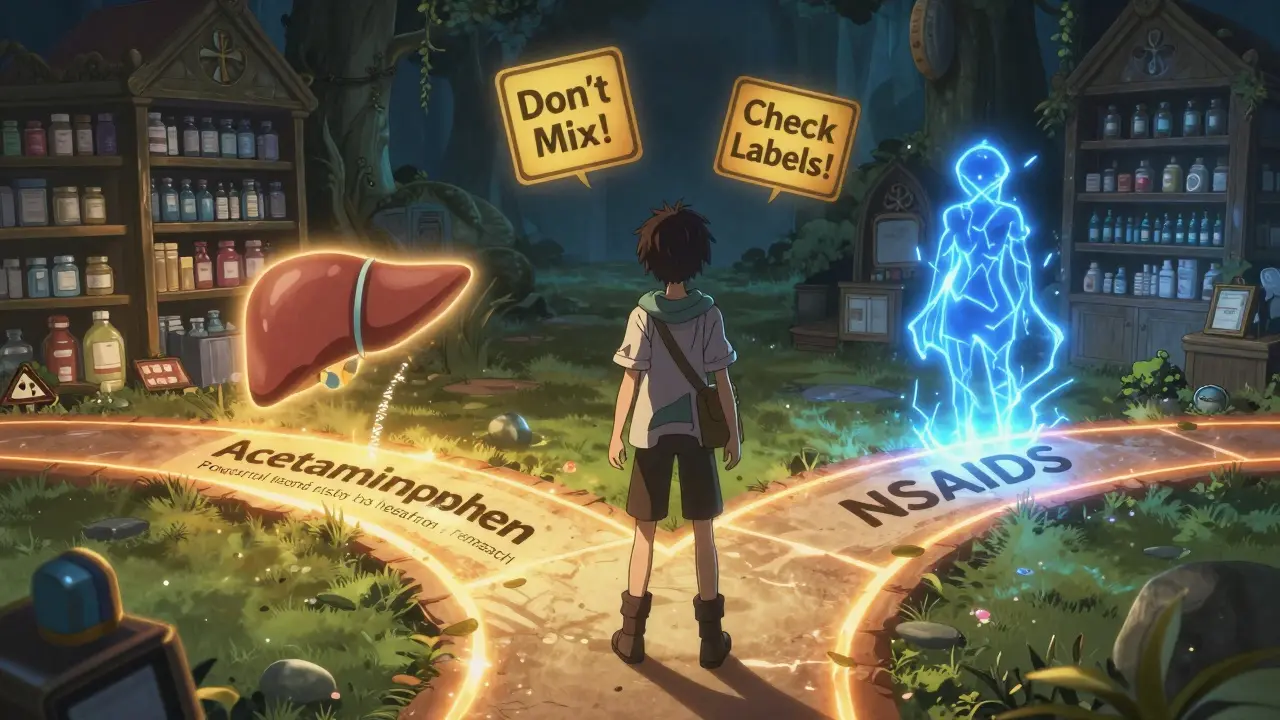
- Never mix NSAIDs. Never exceed the daily limit. Always check labels.
- If pain lasts more than 10 days, see a doctor. OTC meds aren’t meant for long-term use.
- When in doubt, start low. Acetaminophen is your safest first step.
Pain relief shouldn’t come with hidden costs. The right choice isn’t about what’s strongest - it’s about what’s safest for you.
Can I take acetaminophen and ibuprofen together?
Yes, for short-term use. Taking 650 mg of acetaminophen and 200 mg of ibuprofen at the same time can give better pain relief than either alone, while keeping doses low. Just don’t do it every day, and avoid alcohol. Always space out doses - don’t take them at the same time if you’re already near your daily limit.
Is naproxen safer than ibuprofen?
For heart health, yes. Naproxen has a lower risk of raising blood pressure or triggering heart attacks compared to ibuprofen. It also lasts longer - one dose can work for 8-12 hours. But it’s harder on the stomach, so take it with food. For people with heart disease, naproxen is often the preferred NSAID.
Why is acetaminophen the only option for kids?
NSAIDs like ibuprofen and aspirin can cause rare but serious complications in children, including Reye’s syndrome (linked to aspirin) and kidney stress. Acetaminophen has been studied for decades in infants and children and is considered safe at proper doses. Always use a pediatric formulation and follow weight-based dosing: 10-15 mg per kilogram of body weight per dose.
Can I use NSAIDs if I have high blood pressure?
Generally, no - especially not long-term. NSAIDs can raise blood pressure and interfere with blood pressure medications. Acetaminophen is the safer choice. If you need stronger pain relief, talk to your doctor about alternatives. Don’t assume OTC means safe for everyone.
What happens if I take too much acetaminophen?
Liver damage starts quietly - nausea, fatigue, and loss of appetite. By the time jaundice or confusion shows up, it’s often too late. The damage can be permanent or fatal. If you suspect an overdose, go to the ER immediately. There’s an antidote (NAC), but it only works if given early. Never wait for symptoms.
Are generic brands as good as name brands?
Yes. Generic acetaminophen and ibuprofen contain the exact same active ingredients as Tylenol or Advil. The only differences are price and inactive ingredients like fillers or coatings. Generic acetaminophen costs as little as $0.03 per tablet. You’re not paying for better pain relief - just the brand name.
Should I avoid NSAIDs if I’m pregnant?
Yes, after 20 weeks. NSAIDs can affect fetal kidney development and reduce amniotic fluid. They may also delay labor. Acetaminophen is the only recommended OTC painkiller during pregnancy. Always check with your OB-GYN before taking anything, even if it’s "just" an OTC pill.

This is literally the most comprehensive OTC painkiller breakdown I've ever seen. 🤯 I used to just grab whatever was cheapest until my stomach screamed at me for 3 weeks. Now I read labels like a forensic accountant. NSAIDs are my go-to for knee pain, but I stick to naproxen now-ibuprofen made me feel like my heart was doing jazz hands. 🚫💔
YESSSS this is exactly what my pharmacist said last week when I came in clutching 3 different bottles 😅 She looked at me like I’d tried to juggle chainsaws. Seriously though-combining acetaminophen and naproxen? Game changer for my migraines. I go 650 + 220 every 8 hours. No more passing out on the couch. 🙌 You’re basically a pain relief superhero for writing this.
i wasnt even gonna comment but i have to say i just found out my advil had acetaminophen in it and i was like ??? lol. this article saved me. i take it for back pain and honestly didnt even know the risks. now i check every bottle like its a bomb defusal mission. thanks for the heads up!
You say naproxen is safer for the heart but ignore that it’s 3x more likely to cause GI bleeds than ibuprofen. Also, ‘FDA estimates 15,000 hospital visits’-source? That’s a recycled 2018 stat. And you call 3,000 mg the ‘recommended’ max? That’s not evidence-based-that’s a precautionary fiction pushed by pharma. Acetaminophen is still the #1 cause of acute liver failure. Period.
This is just basic pharmacology 101. If you didn’t know this, you shouldn’t be self-medicating.
I’ve been saying this for years. Big Pharma doesn’t want you to know that acetaminophen is just a slow-acting poison disguised as a ‘safe’ option. They hide the liver damage behind ‘recommended doses’-but if you’re on any meds, drinking, or even just stressed? You’re one pill away from a transplant. And NSAIDs? They’re just chemical warfare on your gut. They’re not ‘medicines’-they’re band-aids on a bullet wound. Wake up.
I used to be the guy who took 4 Advil and a Tylenol every time I had a headache. Then I got a liver enzyme scare. Now? I do acetaminophen 650mg max once a day, and only use naproxen 220mg for flare-ups. I feel like I’m finally listening to my body instead of my old habits. This guide? It’s the reason I didn’t end up in the ER. Thank you.
As someone from Canada who has lived through both the US and Canadian OTC systems, I must commend this article. The clarity, structure, and emphasis on label reading is not just informative-it is a public health necessity. In our healthcare system, we are taught to consult pharmacists before self-administering even the most common remedies. This piece captures that ethos perfectly. Thank you for the rigor and care in presenting this information.
I'm all for reading labels but come on. You're telling me I can't take ibuprofen after a long day of lifting? That's just weak. My grandpa took aspirin every day since 1972 and he's still alive. You people are too scared to live. Just take the damn pill and stop overthinking it.
I have chronic migraines. I’ve tried everything. This is the first time I’ve seen someone actually explain why combining acetaminophen and naproxen works neurologically. Not just ‘do this.’ But WHY. I’m crying. This changed my life.
To everyone who said this saved them-thank you for sharing. That’s why we do this. Knowledge isn’t power-it’s peace. And peace means you can sleep, move, and live without fear of the next pill. Keep listening to your body. You’ve got this.