
Why Not All Drugs Have Authorized Generics - And What It Means for Your Prescription Costs
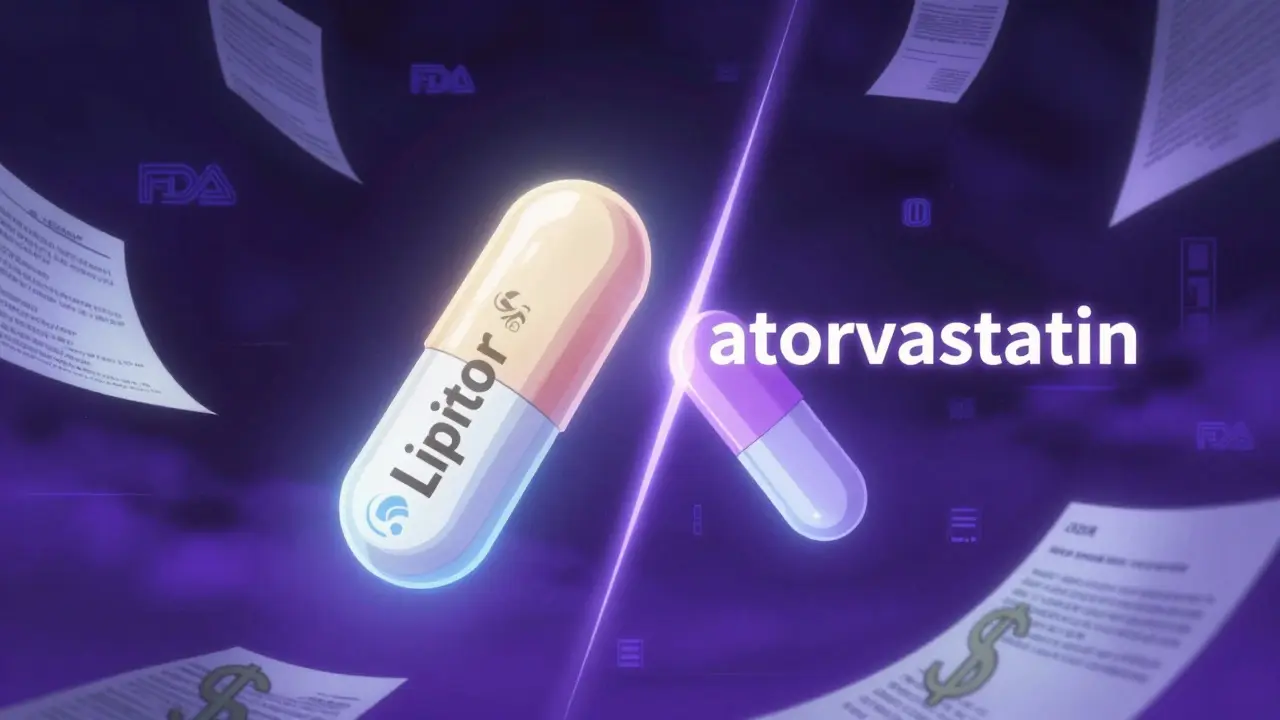
When you pick up a prescription, you might assume the generic version is just as good as the brand name - and usually, it is. But here’s something most people don’t know: not all drugs have authorized generics. Even when a brand-name drug loses patent protection, there’s no guarantee you’ll get a cheaper version that’s made by the same company using the exact same formula. That’s because authorized generics aren’t a legal requirement - they’re a business decision.
What Exactly Is an Authorized Generic?
An authorized generic is the exact same drug as the brand-name version, down to the pill color, inactive ingredients, and manufacturing process. The only difference? It’s sold without the brand name on the label. It’s made by the original drug company - not a separate generic manufacturer - and sold at a lower price. Think of it like a company selling the same coffee under two labels: one with a fancy logo, and one with a plain white bag. Same beans, same roast, different price tag. Unlike traditional generics, which must prove they’re bioequivalent to the brand through testing (a process that can take years), authorized generics skip all that. They’re produced under the original New Drug Application (NDA), so they enter the market instantly. That’s why some authorized generics hit shelves within weeks of a patent expiring - or even before.Why Do Some Drugs Have Them and Others Don’t?
The short answer: money. Brand-name drugmakers only launch authorized generics when it makes financial sense. If a drug brings in over $500 million a year, it’s likely to get an authorized generic. Why? Because the company wants to control the market. If a rival generic company gets the first shot at selling a cheaper version, they can lock in 180 days of exclusive sales. That’s worth hundreds of millions. To prevent that, the brand company might launch its own generic version - an authorized generic - right away. Take Mylan’s EpiPen. In 2016, Mylan launched an authorized generic while the brand was still under patent. The price dropped nearly 50%. It wasn’t charity - it was strategy. By doing this, Mylan kept control of the market and blocked competitors from gaining a foothold. The same thing happened with Pfizer’s Lyrica and Teva’s Protonix. In each case, the authorized generic wasn’t about helping patients - it was about protecting profits. But for smaller drugs? Drugs that make less than $100 million a year? Almost never. There’s no financial incentive to launch an authorized generic. So if you’re taking a lower-cost medication - say, a generic blood pressure pill made by a small company - you’re unlikely to ever see an authorized version. The brand company just doesn’t care enough to bother.Authorized Generics vs. Traditional Generics: The Real Difference
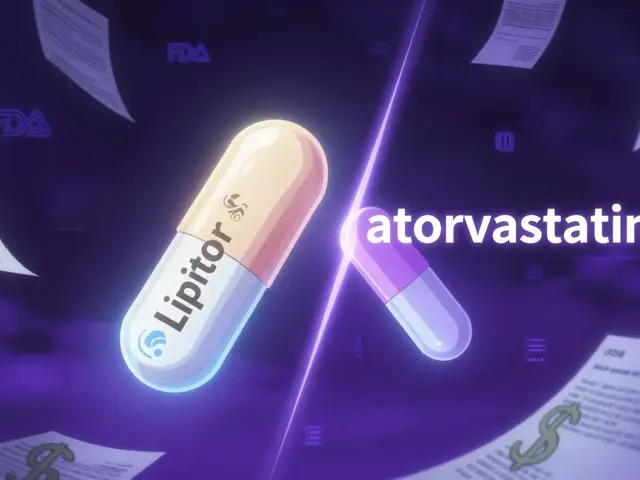
Many people think all generics are the same. They’re not. Traditional generics are made by separate companies. They have to go through the FDA’s Abbreviated New Drug Application (ANDA) process. That means they need to prove they work the same way as the brand. It takes 3 to 4 years on average. The result? A cheaper drug, but one that might come from a different factory, with different fillers, and sometimes even different pill shapes. Authorized generics? Same factory. Same equipment. Same batch records. Same quality control. Just a different label. That’s why pharmacists report confusion - patients get the same pill in two different boxes. One says “Lipitor,” the other says “atorvastatin.” But they’re identical. That’s not a mistake. That’s by design. The FTC found that when an authorized generic enters the market during the 180-day exclusivity window, it slashes the first generic’s revenue by 40% to 52%. That’s not just competition - it’s a preemptive strike.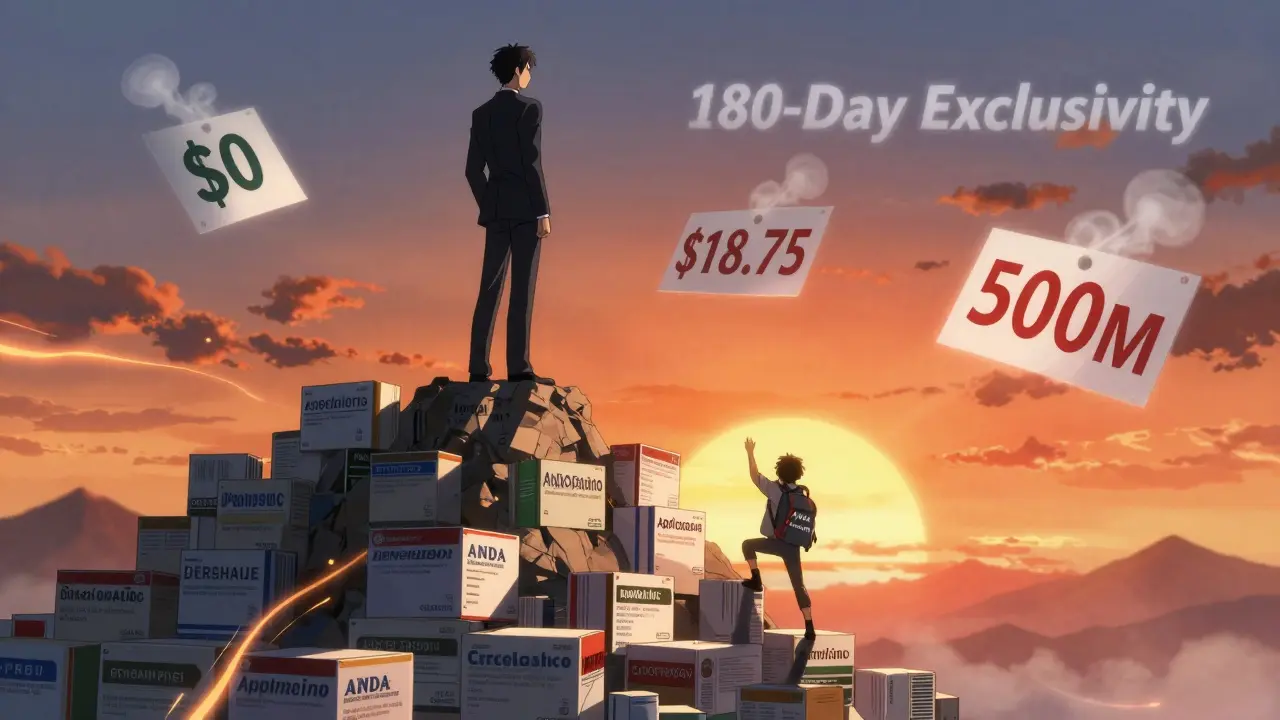
Who Benefits? And Who Gets Left Behind?
At first glance, authorized generics look like a win for patients. Prices drop. Savings? The FTC says 4% to 8% at retail, 7% to 14% at wholesale. AARP found patients saved an average of $18.75 per prescription when an authorized generic was available. But here’s the catch: those savings are temporary. Once the 180-day exclusivity period ends, the authorized generic often disappears. The brand company pulls it off the market to make room for the traditional generic. Or worse - they never launch one at all. So patients get a short-term price break, then go back to paying full price for the brand. And for the drugs that never get an authorized generic? Patients get nothing. No price drop. No competition. Just the brand, still at full cost. That’s the case for dozens of high-cost drugs each year - especially those with complex formulations, like inhalers, injectables, or biologics.The Hidden Cost: Stifling Real Generic Competition
Authorized generics don’t just lower prices - they kill incentives. Why would a small generic company spend $5 million and wait four years to challenge a patent if the brand company can just launch its own version and crush their profits before they even start? Harvard researcher Aaron Kesselheim found that the presence of an authorized generic reduces the chance a generic company will even file a patent challenge. Without the threat of competition, brand companies can extend their monopoly longer than intended. The FTC calls this a “deterrent effect.” In their 2011 report, they showed that when an authorized generic is expected, a generic company needs a 10% chance of winning a patent lawsuit to justify the cost. Without it, they’d only need a 4% chance. That’s a massive barrier. And it’s not theoretical. In 2016, after Mylan launched its EpiPen authorized generic, competitor Perrigo filed an FTC complaint accusing Mylan of anti-competitive behavior. The FTC agreed - but didn’t stop the practice.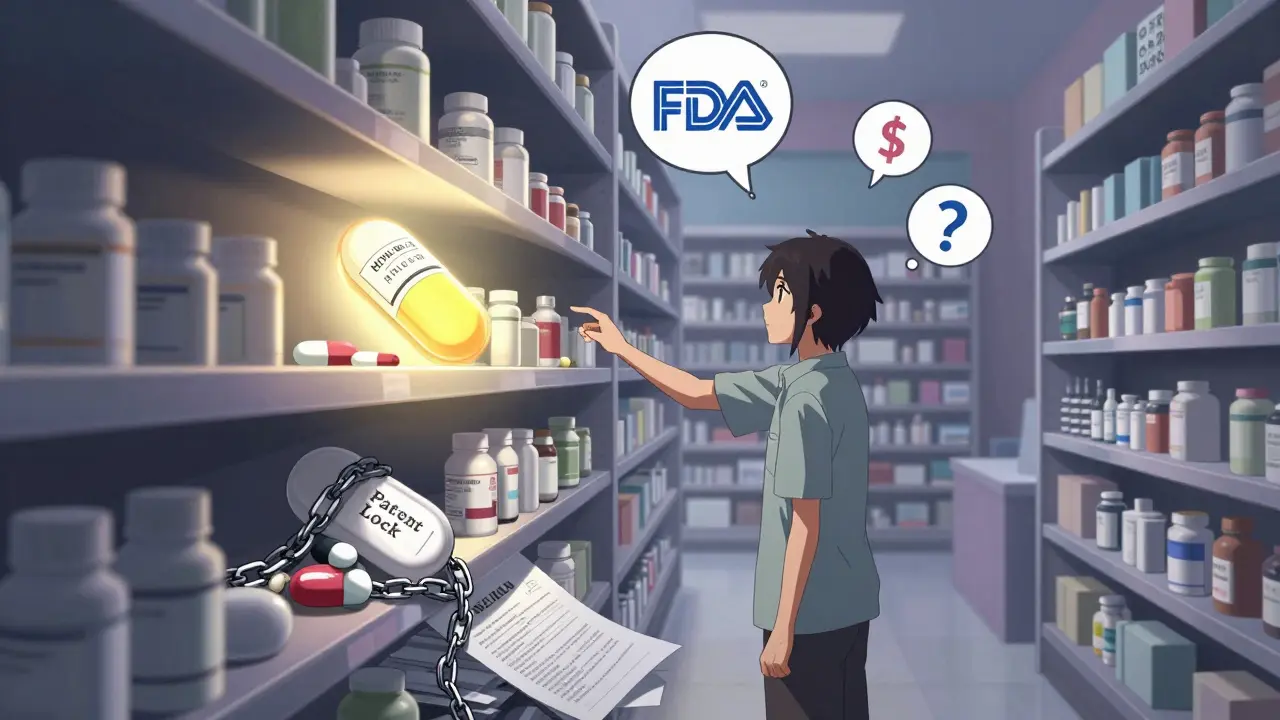
Just asked my pharmacist about my blood pressure med last week - turns out there’s an authorized generic I didn’t even know existed. Saved me $22 a month. Honestly? I’m mad I didn’t ask sooner. You’d think drugstores would tell you this stuff, but nope. You gotta dig for it.
Now I check every script. It’s a small win, but when you’re on a fixed income, every dollar counts.
Big pharma’s playing chess while we’re just trying to pay rent.
THEY WANT YOU TO THINK THIS IS ABOUT HEALTH BUT ITS ALL ABOUT CONTROL. THE GOVT IS IN BED WITH BIG PHARMA. THEY LET THEM LAUNCH FAKE GENERICS SO YOU THINK YOU’RE GETTING A DEAL BUT REALLY THEY JUST KEEP YOU LOCKED IN. WATCH THE VIDEO ON YOUTUBE ABOUT THE FDA WHISTLEBLOWER WHO GOT SIILENCED. THEY’RE LYING TO YOU. EVERY DAY.
so like… people actually care about this? i mean yeah i get it the prices are high but like… if you cant afford your meds maybe dont be on them? or get a job? i dont know. its not like they’re forcing you to take Lipitor. just dont be poor i guess.
also why is everyone so mad at corporations? they’re just trying to make money. shocking i know.
OMG I JUST REALIZED MY ANTIBIOTIC HAS AN AUTHORIZED GENERIC 😱 I’M SO HAPPY RIGHT NOW. LIKE… I’M CRYING. NOT EVEN KIDDING. THIS IS THE FIRST TIME I’VE EVER SAVED MONEY ON A PRESCRIPTION AND IT FEELS LIKE WINNING THE LOTTERY 🤑💊
PS: pharmacist was kinda shady about telling me. like… why are they hiding this? 🤔
Authorized generics are legally identical to brand-name drugs under the NDA, meaning they share the same manufacturing site, batch records, and quality controls. The FDA requires no bioequivalence testing for them because they’re not a different product - just a rebranded one.
Traditional generics, by contrast, must demonstrate bioequivalence via ANDA, which involves pharmacokinetic studies, stability testing, and sometimes clinical trials for complex formulations.
The FTC’s 2011 report confirmed that authorized generics reduce generic entry by 60–70% in markets where they’re deployed preemptively. This isn’t competition - it’s market capture under the guise of affordability.
Patients should request authorized generics by brand name + ‘authorized generic’ in writing. Pharmacies are legally required to fill them if available and in stock.
Also: check the FDA’s list quarterly. It’s updated every three months, but many pharmacists don’t know it exists.
why are we even talking about this its not like you have a choice if you need the drug
theyre not forcing you to take it but if you do you pay
end of story
stop being dramatic
It’s wild how something so technical - authorized generics - ends up being this quiet little war between patients and corporations.
I used to think the system was broken. Now I think it’s working exactly as designed. The ‘savings’ are just distractions to keep us from asking for real reform.
Kinda like getting a free sample of water while the company sells you bottled air.
Still… I’m glad I found out about my asthma inhaler’s authorized version. Even if it’s a bandaid, it’s a bandaid that works.
As someone who’s worked in global health logistics, I’ve seen this play out in 12 countries. The U.S. is unique in letting pharma self-regulate generics. In Canada and Germany, authorized generics are mandated by law. Patients get lower prices, companies still profit, and competition isn’t strangled.
It’s not rocket science. It’s policy. And we’re choosing not to fix it.
Maybe it’s time to stop blaming the system and start demanding a better one.
This isn’t about ‘savings’ - it’s about power. The fact that a company can legally launch a product that’s identical to its own brand, under a different label, to kill competition before it even starts… that’s not capitalism. That’s monopolistic sabotage.
And the worst part? We’re taught to be grateful when we get a $5 discount on a $200 pill.
Stop celebrating crumbs. Demand the whole damn table.
And if your pharmacist doesn’t know what an authorized generic is? Find a new one. They’re not doing their job.
I’ve been on the same generic for six years. Never knew there was a version made by the original company. Found out last month. Switched. Saved $37 a month. No side effects. Same pill. Same bottle. Just a different name.
Why didn’t anyone tell me? Why is this so hidden? Why does it feel like I had to hack the system just to get what I’m already paying for?
It’s not just expensive. It’s humiliating.