
Colorectal Cancer Screening and Chemotherapy: What You Need to Know at 45 and Beyond
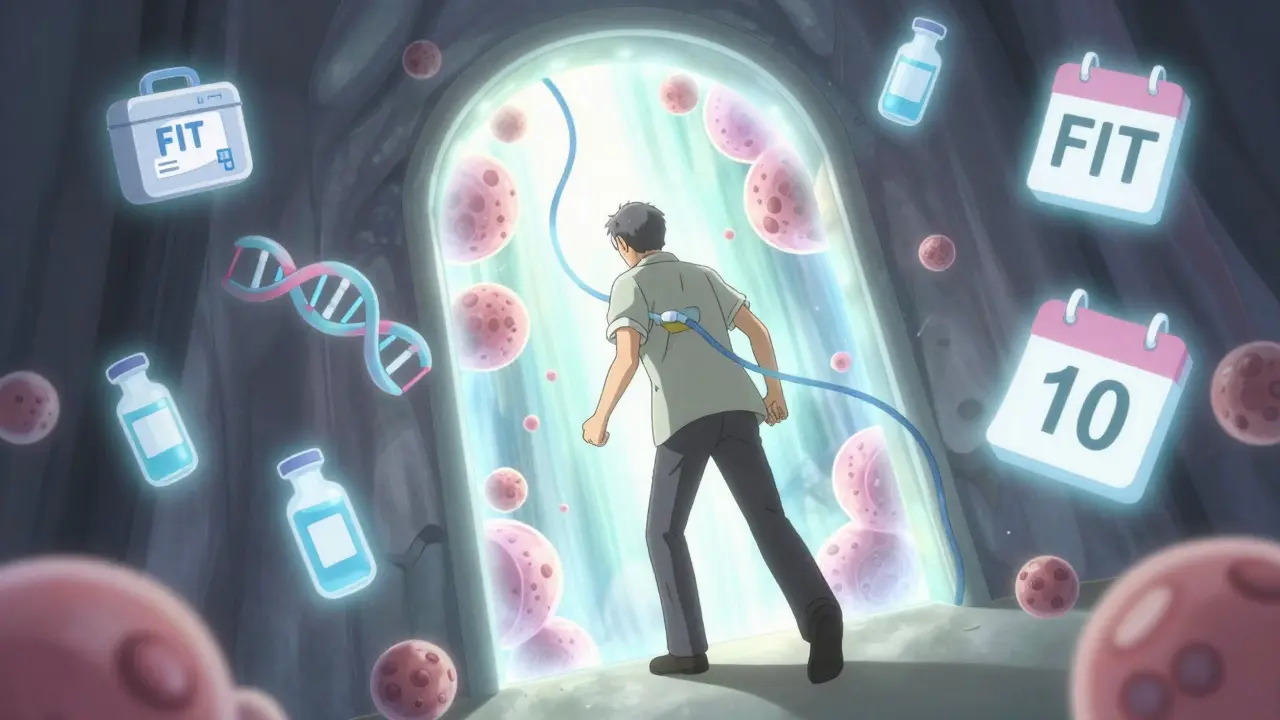
Colorectal cancer is one of the most preventable cancers-if you catch it early. But too many people wait until symptoms appear, and by then, it’s often too late. The good news? Screening works. Colonoscopy can find and remove precancerous polyps before they turn deadly. And if cancer is found, modern chemotherapy regimens have improved survival rates dramatically. This isn’t about fear. It’s about action.
Why Screening Starts at 45 Now
For decades, colorectal cancer screening began at age 50. That changed in 2021 when the U.S. Preventive Services Task Force lowered the starting age to 45. Why? Because more people under 50 are being diagnosed. Between 1995 and 2019, cases in adults under 50 rose by 2.2% every year. Rectal cancer, in particular, is climbing fast. African Americans face even higher risks-20% more cases and 40% higher death rates than White Americans. Starting screening at 45 isn’t just a recommendation; it’s a life-saving shift.The CDC, American Cancer Society, and American College of Gastroenterology all agree: if you’re 45 to 75 and at average risk, get screened. For those 76 to 85, talk to your doctor. Your health, family history, and past screenings matter more than your birthday.
Colonoscopy: The Gold Standard
Colonoscopy is still the most effective screening tool. It doesn’t just detect cancer-it stops it. During the procedure, doctors can spot and remove polyps right away. Studies show this cuts colorectal cancer incidence by 67% and deaths by 65%. That’s not a small win. It’s a game-changer.The catch? You need to prep. Drinking a full liter of laxative solution isn’t fun. Most people say it’s the worst part. But the procedure itself? Most patients report little to no pain, especially with sedation. The risk of complications is low-about 1 in 1,000 to 1,500 procedures. Perforation or bleeding happens rarely, and most centers handle it quickly.
After a normal colonoscopy, you’re good for 10 years. If polyps are found, your next one might be in 3 to 5 years. That’s why documentation matters. Your doctor should record the size, number, and type of polyps. Without that, you might get called back too soon-or too late.
Alternatives to Colonoscopy
Not everyone wants a colonoscopy. That’s okay. There are other options.- Fecal Immunochemical Test (FIT): A simple at-home stool test that checks for hidden blood. It’s 79-88% accurate at finding cancer, but you have to do it every year. Adherence is better than colonoscopy in low-income groups-67% complete it versus 42% for colonoscopy.
- Multi-target Stool DNA Test (sDNA-FIT): This one looks for both blood and DNA changes linked to cancer. It’s 92% sensitive for detecting cancer, better than FIT alone. But it’s less specific-13% false positives mean more people get unnecessary colonoscopies.
- Flexible Sigmoidoscopy: Looks only at the lower third of the colon. Less prep, no sedation. Reduces distal cancer by 26%, but misses polyps higher up. Needs repeating every 5 years.
- CT Colonography: A virtual colonoscopy using X-rays. No sedation, but you still need bowel prep. Radiation exposure is low (1-10 mSv), but if they find anything, you still need a colonoscopy to remove polyps.
Stool tests are easier. They’re cheaper. And they help reach people who avoid clinics-Hispanic patients, rural residents, those without insurance. But they’re not perfect. A negative result doesn’t mean you’re off the hook. You still need to repeat them on schedule.
Who Needs Earlier or More Frequent Screening?
If you have a family history of colorectal cancer or polyps, you don’t wait until 45. If a parent or sibling had it before 60, start screening at 40-or 10 years before their age at diagnosis, whichever comes first.People with inflammatory bowel disease (Crohn’s or ulcerative colitis) need colonoscopies every 1-2 years after 8 years of disease. Those with Lynch syndrome or familial adenomatous polyposis (FAP) often start in their 20s. Genetic testing can confirm these risks.
And yes-African Americans should be screened earlier and more aggressively. Even without a family history, their risk is higher. Colonoscopy is the preferred method, not stool tests.
Chemotherapy for Colorectal Cancer: What’s Used Today
If cancer is found, treatment depends on the stage. Stage I? Surgery alone is often enough. Stage II? Sometimes chemo is added if high-risk features are present. Stage III? Chemo is standard. Stage IV? It’s about control, not cure.The most common chemo regimens today are:
- FOLFOX: Fluorouracil (5-FU), leucovorin, and oxaliplatin. Used for stage III and some stage IV cases. Side effects include nerve damage (tingling in hands/feet), fatigue, and low blood counts.
- CAPOX (XELOX): Capecitabine (an oral pill version of 5-FU) and oxaliplatin. Easier for some patients because they don’t need IV infusions every two weeks. Still causes nerve side effects.
- FOLFIRI: 5-FU, leucovorin, and irinotecan. Often used if FOLFOX stops working. More diarrhea and low white blood cells.
For advanced cancer, targeted drugs are often added:
- Bevacizumab (Avastin): Blocks blood vessel growth to tumors.
- Cetuximab (Erbitux) and Panitumumab (Vectibix): Used only if the tumor is RAS wild-type (a genetic marker).
Immunotherapy works for about 5% of patients-those with MSI-H or dMMR tumors. Drugs like pembrolizumab can lead to long-term remission in this group. Genetic testing of the tumor is now standard before starting chemo.
Side effects are real. Nausea, fatigue, hair loss, numbness. But many patients manage them well. Newer anti-nausea drugs, nerve pain medications, and nutritional support make treatment more tolerable than it was 10 years ago.

Barriers to Screening-and How to Beat Them
Despite all the evidence, only 67% of adults 50-75 are up to date on screening. That’s not good enough. The gap is even wider for uninsured people (58% screened) versus those with private insurance (78%).Why? Cost, fear, lack of access, bad prep instructions. Many clinics still don’t have patient navigators-staff who help people schedule tests, understand results, and follow up. Rural areas are especially underserved. Only 32% of rural clinics offer navigation services, compared to 87% in big cities.
Simple fixes work:
- Automated text reminders boost screening rates by 28%.
- Having a navigator increases completion by 35%.
- Offering FIT kits by mail cuts no-shows and increases participation, especially among minorities.
Doctors need better tools too. Only 58% of gastroenterology practices use standardized reporting templates. That means missed details, inconsistent follow-up, and confusion for patients.
What’s Next in Screening?
The future is getting smarter. Blood tests that detect tumor DNA are on the horizon. The Guardant SHIELD test showed 83% sensitivity in a 10,000-person trial. If approved, it could be a simple blood draw instead of a stool sample or scope.AI is already helping. The GI Genius system, approved by the FDA in 2021, uses artificial intelligence to flag polyps during colonoscopy. It boosts detection by 14%. That means fewer cancers missed.
Soon, screening might be personalized. Instead of everyone getting a colonoscopy at 45, your risk level-based on genes, diet, weight, and lifestyle-could determine your plan. One study suggests this could cut unnecessary procedures by 30% without missing cancers.
Real Impact: One Test Can Change Everything
A 47-year-old African American man had no family history. He didn’t have symptoms. He got a colonoscopy at 45 because his doctor recommended it. They found a small, early-stage tumor. He had surgery. Five years later? He’s cancer-free. His survival chance? 95%.Compare that to someone diagnosed at stage IV-the average survival rate is 14%. That’s the difference between prevention and desperation.
Screening isn’t about being scared. It’s about being smart. Whether you choose a colonoscopy, a stool test, or another option-do it. Your body will thank you.
At what age should I start colorectal cancer screening?
If you’re at average risk, start at age 45. If you have a family history of colorectal cancer or polyps, start earlier-often at age 40 or 10 years before the age your relative was diagnosed. African Americans and those with inflammatory bowel disease should also begin screening earlier and may need more frequent testing. Always talk to your doctor about your personal risk.
Is colonoscopy the best screening method?
Yes, for most people. Colonoscopy is the only test that can both detect and prevent cancer by removing polyps during the procedure. It reduces cancer risk by 67% and death by 65%. Other tests like FIT or stool DNA are good alternatives if you can’t or won’t have a colonoscopy, but they don’t prevent cancer-they only detect it. You still need a colonoscopy if any of those tests come back positive.
What are the side effects of chemotherapy for colorectal cancer?
Common side effects include fatigue, nausea, diarrhea, and low blood counts. Nerve damage (peripheral neuropathy) from drugs like oxaliplatin can cause tingling or numbness in hands and feet. Some people lose hair. Newer medications help manage these effects better than before. Targeted therapies and immunotherapy have different side effect profiles, often less severe than traditional chemo. Your care team will monitor you closely and adjust treatment as needed.
Can I avoid chemotherapy if I catch cancer early?
Yes. If the cancer is caught at stage I-confined to the inner lining of the colon-surgery alone is usually enough. For stage II, chemo may be recommended if there are high-risk features like poor tumor differentiation, lymphovascular invasion, or inadequate lymph node sampling. Stage III almost always requires chemo after surgery to kill any remaining cancer cells. The decision depends on the tumor’s biology and your overall health.
Are at-home stool tests as good as colonoscopy?
They’re not as good at preventing cancer, but they’re good at detecting it. FIT finds 79-88% of cancers. The multi-target stool DNA test finds 92%. But neither can remove polyps. If either test is positive, you must have a colonoscopy. Stool tests are better than nothing-especially for people who avoid clinics. But if you can do a colonoscopy, it’s the best option for long-term protection.
What happens if I miss my screening window?
Don’t panic, but don’t delay. If you’re due for a colonoscopy and it’s been 11 years, get one now. If your FIT was due last year, do it this month. The longer you wait, the more chance there is for a polyp to grow into cancer. Screenings are not yearly checkups-they’re prevention tools. Even if you’re late, doing it now is better than never.
Does insurance cover colorectal cancer screening?
Yes, under the Affordable Care Act, most insurance plans cover colonoscopy and FDA-approved stool tests with no out-of-pocket cost if you’re 45 or older. Medicare covers colonoscopy every 10 years for average risk, or every 2 years if you’re high risk. FIT and sDNA tests are also covered annually or every 3 years, depending on the test. Check with your plan, but in most cases, you shouldn’t pay anything for screening.
How do I know if I’m high risk for colorectal cancer?
You’re high risk if you have: a first-degree relative (parent, sibling, child) with colorectal cancer or advanced polyps before age 60; a personal history of inflammatory bowel disease (Crohn’s or ulcerative colitis); a genetic syndrome like Lynch syndrome or familial adenomatous polyposis (FAP); or if you’re African American. If any of these apply, talk to your doctor. You may need to start screening before 45 and get tested more often.
Colorectal cancer doesn’t have to be a death sentence. It’s one of the few cancers you can stop before it starts. The tools are here. The guidelines are clear. The only thing left is for you to act.
colonoscopies are just big money grabs anyway. i got mine at 40 and they found nothing. now they want me back in 5 years? nah. i'll stick with my stool samples and prayer.
The structural inequities embedded in preventive healthcare infrastructure are not merely logistical-they are epistemological. The very notion of a 'one-size-fits-all' screening protocol ignores the phenomenological variance of bodily experience across racialized and classed populations. A colonoscopy is not a medical procedure; it is a neoliberal ritual of compliance.
i get what ur saying about screening but honestly the prep is the worst part. like why does it have to be so brutal? i did a stool test last year and it was fine. if they could just make the prep taste like soda i'd do it every year
they're lying about the stats. the real reason they lowered the age to 45 is so insurance companies can push more tests. they make billions off this. and don't even get me started on the radiation from CT scans. they're poisoning us slowly and calling it prevention.
i had chemo for stage 3. FOLFOX was a nightmare. my hands felt like they were wrapped in barbed wire for months. but here's the thing-i'm alive. my buddy skipped screening because he 'didn't want to be scared.' died at 48. don't be him. do the thing. suffer the prep. live.
It is imperative that individuals aged forty-five and above prioritize evidence-based preventive health measures. The overwhelming consensus among authoritative medical bodies supports early colorectal cancer screening as a cornerstone of public health strategy. Failure to adhere to these guidelines constitutes a significant and avoidable risk to personal and familial well-being.
Oh wow, another feel-good story about colonoscopies. Let me guess-next you’ll tell us that eating kale prevents gravity. The fact that you think a $2,000 procedure with a 1 in 1,000 chance of perforation is somehow 'heroic' is laughable. Meanwhile, the real problem? The FDA approves AI polyp detectors but won’t touch a $10 blood test that works just as well. Coincidence? Or corporate greed?
I think what’s missing here is the human side. I’ve talked to people who’ve avoided screening because they’re terrified of being alone in the room during prep. Or they’re undocumented and scared of the bill. Or they’ve had trauma from past medical procedures. The tech is great, but if we don’t build trust, no test will matter. We need more navigators, more empathy, not just more guidelines.
did u know the laxative they give u has sucralose in it? that stuff is linked to gut bacteria death. i did a stool test and it came back positive but i refused the colonoscopy. now i eat only raw foods and my poop is perfect. maybe the real cure is not the scope but the diet?
If you're still getting colonoscopies after 75, you're not being proactive-you're being reckless. Your body is winding down. Why spend your last years getting poked and prodded for a cancer that won't kill you before old age does? Let nature take its course.