
Salt and Blood Pressure Medications: How Sodium Lowers Drug Effectiveness
Sodium Reduction Calculator
How Sodium Affects Your Medication
According to the JAMA study, reducing sodium by 2,300 mg can lower systolic blood pressure by 5-6 mm Hg - equivalent to starting a first-line blood pressure medication.
When you're on blood pressure medication, every bite of food matters-especially if it's salty. Many people think their pills are doing all the work, but if they're eating too much sodium, those medications might as well be half-empty. A major 2023 study published in JAMA showed that cutting back on salt can lower systolic blood pressure by 6 mm Hg-the same drop you’d get from starting a first-line drug like an ACE inhibitor. That’s not a small win. That’s the difference between staying out of the hospital and winding up in one.
Why Salt Makes Your Blood Pressure Meds Less Effective
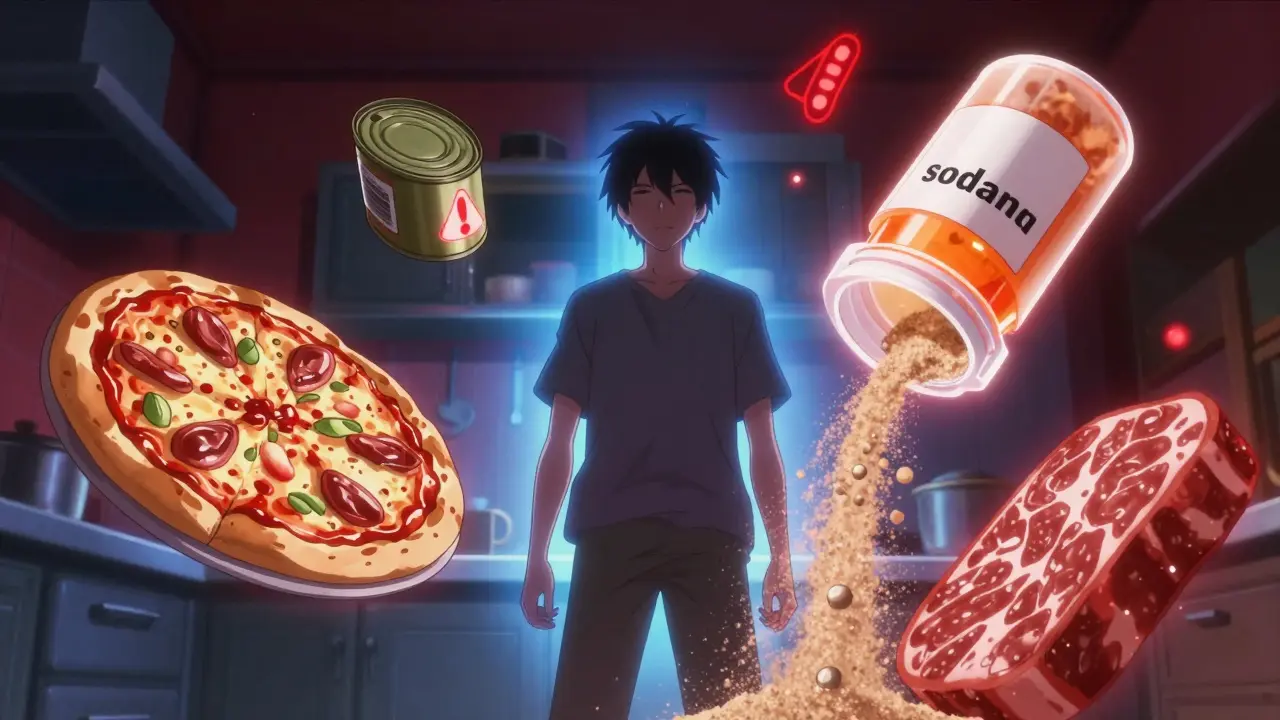
Your blood pressure medications don’t just float around in your body waiting to work. They interact with your physiology. Sodium pulls water into your bloodstream, increasing your blood volume. That extra fluid pushes harder against your artery walls. Now imagine your doctor prescribed you a diuretic to flush out that extra fluid. If you keep eating salty chips, pizza, or canned soup, your body keeps holding onto water-and the diuretic can’t keep up. The same goes for ACE inhibitors and ARBs. These drugs relax your blood vessels, but high sodium makes your vessels stiff and resistant. It’s like trying to open a door while someone’s pushing back from the other side.Research from Vanderbilt, Northwestern, and UAB tracked 213 adults with an average age of 61. Half were on blood pressure meds. All were asked to eat a low-sodium diet (500 mg per day) for one week, then return to their normal intake (around 4,500 mg). The results? Blood pressure dropped an average of 6 mm Hg on low sodium-even in people already taking medication. That’s not a fluke. That’s a direct, measurable effect.
Who Benefits the Most From Cutting Salt?
Not everyone responds the same way. About 25-30% of people are what doctors call “non-salt sensitive”-their blood pressure barely budges when they cut sodium. But that doesn’t mean they shouldn’t try. The other 70-75%? They see real changes. And those changes are strongest in certain groups:- People over 50
- Black adults (who tend to have higher baseline blood pressure and greater salt sensitivity)
- Those already diagnosed with hypertension
- People with diabetes or kidney disease
For someone with high blood pressure, cutting sodium by 100 mmol per day (roughly 2,300 mg) can drop systolic pressure by over 5 mm Hg. That’s more than what many first-time prescriptions achieve. For someone with normal blood pressure? The drop is smaller-about 2.5 mm Hg-but still meaningful over time.
Where the Salt Is Hiding (And How to Find It)
Most people think the salt shaker is their biggest problem. It’s not. The FDA says 70% of dietary sodium comes from packaged and restaurant food. That means your “healthy” salad dressing, your whole-grain bread, your canned beans, your frozen dinner-they’re all loaded.Here’s what to look for on labels:
- Aim for under 140 mg of sodium per serving-that’s the FDA’s threshold for “low sodium.”
- Don’t trust “reduced sodium.” That just means 25% less than the original. If the original had 800 mg, now it has 600 mg. Still too high.
- Watch for hidden names: monosodium glutamate (MSG), baking soda, sodium nitrate, sodium benzoate, sodium citrate.
- Restaurant meals? They often have 2,000-3,000 mg of sodium in a single dish. A single order of chicken teriyaki can hit 4,000 mg.
Start by swapping out one processed item a week. Replace canned soup with low-sodium broth and canned tomatoes. Choose fresh chicken instead of deli meats. Pick unsalted nuts. These small changes add up fast.
How Fast Can You See Results?
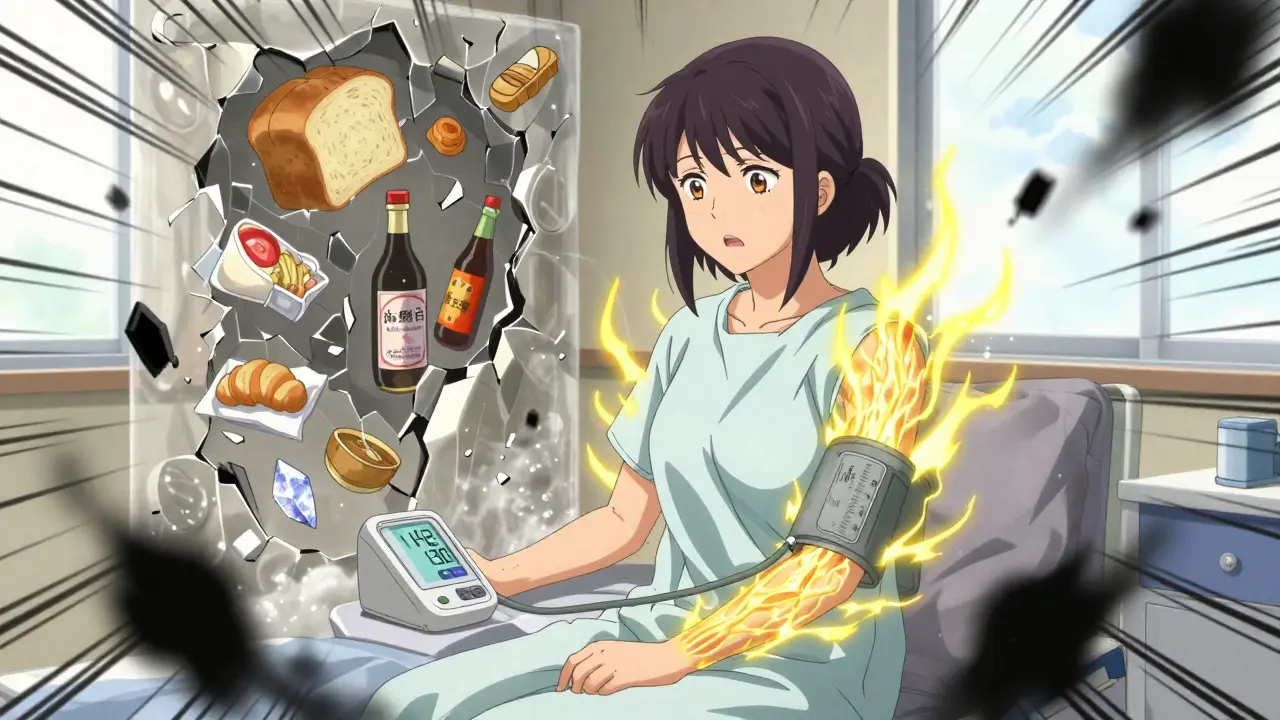
You don’t have to wait months. The JAMA study showed measurable drops in blood pressure within seven days of switching to a low-sodium diet. That’s faster than most medications take to reach full effect. One participant, a 68-year-old woman on two blood pressure pills, saw her systolic pressure fall from 142 to 130 after just five days of cutting salt. Her doctor was able to lower her dose of one medication without losing control.That’s the power of synergy. When you reduce sodium, your meds work better. That means:
- Possible dose reductions
- Less risk of side effects from higher doses
- Better long-term protection for your heart, kidneys, and brain
What About Salt Substitutes?
Potassium chloride salt substitutes are popular-and for good reason. They taste like salt but don’t raise blood pressure. In fact, potassium helps your body excrete sodium. But they’re not for everyone.If you have kidney disease, diabetes, or are on certain meds like ACE inhibitors or spironolactone, too much potassium can be dangerous. High potassium can cause irregular heartbeat-or worse. Always check with your doctor before switching. For healthy people without kidney issues, potassium salt can be a safe, effective tool. Just use it in moderation.

Why This Matters Beyond Blood Pressure Numbers
Lowering sodium doesn’t just help your blood pressure. It protects your organs. High salt intake increases protein in your urine-a sign your kidneys are under stress. That’s especially bad if you have diabetes or chronic kidney disease. Your ACE inhibitors or ARBs are supposed to reduce that protein leakage. But if you’re eating a lot of salt, those drugs can’t do their job properly.Think of it this way: your medication is trying to repair damage, but you’re still pouring salt on the wound. Cut the salt, and your body can actually heal.
The American Heart Association estimates that if everyone in the U.S. cut sodium to 2,000 mg per day, we could prevent 280,000 to 500,000 cardiovascular deaths over the next decade. That’s not theoretical. That’s based on CDC modeling.
What Doctors Really Want You to Know
Dr. Egan, a hypertension specialist, put it bluntly: “When they eat more sodium, a lot of their blood pressure medications don’t work as well.”And it’s not just about pills. The 2023 guidelines from the American Heart Association and the Joint National Committee now list sodium reduction as a Class I recommendation-the strongest possible level-for all hypertensive patients. That means it’s not optional advice. It’s part of your treatment plan.
Doctors aren’t asking you to go cold turkey. They’re asking you to be aware. To read labels. To cook more at home. To swap out the salty snacks for something better. It’s not about perfection. It’s about progress.
What’s Next? Digital Tools Are Coming
Researchers at Vanderbilt are already building a mobile app that tracks your sodium intake in real time and alerts you if your salt consumption might interfere with your meds. It’s in Phase II trials with 500 people across three medical centers. In the next few years, your phone might tell you: “Your blood pressure pill works better if you skip this sandwich.”Meanwhile, the FDA is pushing food companies to reduce sodium in 163 product categories. By 2026, they hope to bring average U.S. sodium intake down to 3,000 mg per day. But experts say that’s still too high. The ideal target? 1,500 mg. That’s a stretch-but it’s the goal.
The message is clear: sodium isn’t just a seasoning. It’s a medical factor. And if you’re on blood pressure medication, managing your salt intake isn’t a lifestyle choice-it’s part of your treatment.
Can I still eat salt if I’m on blood pressure medication?
Yes-but you need to limit it. Most people on blood pressure meds should aim for under 2,300 mg per day, and ideally under 1,500 mg. Even small reductions help your meds work better. Cutting back by just one teaspoon of salt daily can lower your blood pressure as much as starting a new pill.
Does cutting salt help even if I’m already taking medication?
Absolutely. A 2023 study showed that people on blood pressure medication still saw a 6 mm Hg drop in systolic pressure when they reduced sodium. That’s equivalent to adding another drug to your regimen. Salt doesn’t cancel out meds-it weakens them. Lowering intake helps them do their job.
How long does it take to see results after cutting salt?
You can see measurable drops in blood pressure within 7 days. The body responds quickly to sodium changes. One study showed systolic pressure fell by 7-8 mm Hg after switching from a high-sodium to a low-sodium diet in just one week.
Are salt substitutes safe to use with blood pressure meds?
Potassium-based salt substitutes can help, but they’re not safe for everyone. If you have kidney disease, diabetes, or are taking ACE inhibitors, ARBs, or spironolactone, too much potassium can be dangerous. Always talk to your doctor before switching. For healthy people, they’re a good alternative-but use them carefully.
What foods are the worst for sodium?
Processed foods dominate: canned soups, frozen meals, deli meats, bread, pizza, soy sauce, and restaurant meals. One serving of canned soup can have 800-1,000 mg of sodium. A single slice of store-bought bread can have 200 mg. Check labels for “mg of sodium,” not % daily value. Aim for under 140 mg per serving.
Can reducing salt help me lower my medication dose?
Yes, in many cases. If your blood pressure drops significantly after cutting sodium, your doctor may be able to reduce your dose-especially for diuretics, ACE inhibitors, or ARBs. This reduces side effects like dizziness, fatigue, or electrolyte imbalances. Never adjust your meds on your own. Always work with your provider.
Is it true that some people don’t respond to salt reduction?
About 25-30% of people are “non-salt sensitive,” meaning their blood pressure doesn’t drop much when they cut sodium. But that doesn’t mean salt doesn’t affect them. Even non-responders still benefit from reduced risk of kidney damage, stroke, and heart failure. Population-wide, sodium reduction saves lives-even if not everyone sees a big drop in BP.
so i cut out the canned soup and switched to homemade broth and my bp dropped 8 points in 10 days. no joke. my doc was like ‘did you change something?’ and i was like ‘yeah i stopped eating liquid salt’.
It’s not about willpower. It’s about physiology. Sodium doesn’t just raise pressure-it sabotages the very drugs meant to control it. The body isn’t broken. It’s responding exactly as evolution designed: hold water, survive drought. The problem isn’t you. It’s the food industry weaponizing that biology. We’ve turned a survival mechanism into a death sentence-and then blamed the patient when the meds stop working.
Doctors don’t tell you this because they’re busy. But if you’re on an ACE inhibitor and eating processed food, you’re essentially paying for a Ferrari and driving it with the parking brake on.
That 6 mm Hg drop? That’s not a ‘nice bonus.’ That’s the difference between a 20% and 40% risk of stroke over ten years. We treat hypertension like a numbers game, but it’s a war against molecular sabotage.
And yes, some people are ‘non-sensitive.’ But even they benefit from reduced kidney strain, lower inflammation, and less arterial stiffening. This isn’t a diet. It’s a neurological reset.
The FDA’s 2026 goal of 3,000 mg? That’s a corporate compromise. The WHO says 2,000. The AHA says 1,500. The science says: less is always better. You don’t need perfection. You need awareness. One less slice of bread. One less can of beans. One less ‘healthy’ granola bar with 300 mg of sodium.
It’s not about salt shakers. It’s about systems. And if you’re on meds, you’re already in the system. Might as well make it work for you.
they’re all lying. the real reason meds don’t work is because the pharma companies want you to keep taking them. they paid off the jama study. they don’t want you to know you can fix it with lemon water and yoga. i read it on a blog. also, salt is natural. the body needs it. they’re just trying to control us with ‘low sodium’ propaganda.
People who eat chips and then wonder why their meds aren’t working are just making bad choices. You don’t get to have your cake and your blood pressure too. If you’re too lazy to read labels, don’t blame the doctor. You’re not sick because of genetics-you’re sick because you chose to eat like a college student on a budget.
And don’t even get me started on salt substitutes. Potassium? That’s just another chemical trap. Your kidneys aren’t magic. They can’t handle it. You think you’re being smart? You’re just poisoning yourself slowly.
I’ve seen this too many times. People get mad when their BP doesn’t drop. Like it’s the system’s fault. No. It’s yours.
so let me get this straight. the solution to corporate food poisoning… is to cook more? wow. revolutionary. next you’ll tell me water is wet and gravity exists.
also, i love how every article on this topic assumes i have time, money, and a kitchen that doesn’t smell like regret. my ‘low sodium’ lunch? A $12 ‘healthy’ bowl from the grocery store with 1,200 mg of sodium. thanks, capitalism.
but sure, let’s keep acting like this is just about willpower. meanwhile, my paycheck is 12% lower than it was in 2010 and the price of fresh veggies went up 40%. go ahead, blame me.
I’m a nurse. I’ve seen this daily. Patients come in on three meds, BP still 160/95. We ask about diet. They say, ‘I eat healthy.’ Then we look at their food log. Three cans of soup. Two bags of pretzels. A frozen lasagna. One slice of bread. That’s 5,000 mg right there.
They’re shocked. They didn’t realize. We explain. They cry. Then they change. Within a week, their BP drops. Sometimes they get taken off one med. Sometimes they just feel better. No magic. Just science.
It’s not about being perfect. It’s about being aware. One less processed item a week. That’s it. That’s the whole plan.
And yes, I’ve had patients on potassium substitutes. One guy had a cardiac arrest because his doctor didn’t check his labs. Don’t be that guy.
Let’s cut through the fluff. This isn’t about ‘lifestyle.’ It’s about power. The food industry controls your biology. They engineer salt into everything because they know it creates dependency. You crave more. You eat more. Your BP rises. You need more meds. They profit. You deteriorate.
The JAMA study? It’s a band-aid. The real problem? The USDA’s dietary guidelines are written by lobbyists. The FDA’s ‘low sodium’ threshold? 140 mg? That’s a joke. A single serving of canned tuna has 300. A bag of ‘low-sodium’ chips? 200. You can’t eat anything without hitting 2,000 before lunch.
And don’t tell me to ‘cook more.’ What about single parents? Elderly people on fixed incomes? People without cars? You think they’re choosing this? They’re surviving.
This isn’t a personal failure. It’s systemic exploitation. And until we regulate sodium like we regulate lead in paint, we’re just rearranging deck chairs on the Titanic.
Meanwhile, your ‘doctor’ is paid by pharma to keep prescribing. The system is rigged. And you? You’re the product.
From a clinical perspective, sodium’s impact on RAAS activation is non-negotiable. When sodium intake exceeds 2,300 mg/day, angiotensin II upregulation persists despite pharmacologic blockade of ACE or AT1 receptors. This creates a state of relative drug resistance-particularly in volume-dependent hypertension.
Diuretics become less effective due to tubular sodium reabsorption. ARBs lose efficacy as vascular endothelial stiffness increases via endothelin-1 and oxidative stress pathways.
That 6 mm Hg reduction? That’s a 14% decrease in stroke risk. That’s not anecdotal-it’s meta-analytic. The SPRINT trial showed even greater benefit in high-risk populations.
And yes, potassium substitution is a viable adjunct in non-CKD patients. But monitor serum K+. Always.
This isn’t nutrition advice. It’s pathophysiology. And if you’re on meds, you’re already in the treatment cascade. Optimize the modifiable variable: sodium.
In South Africa, we have this saying: ‘You can’t fix a leak with a bigger bucket.’ That’s this whole thing. You’re pouring meds into a system that’s still leaking salt.
I grew up in a household where everything was salted-meat, beans, even the tea. My dad had a stroke at 58. He was on three meds. We didn’t know why they weren’t working.
After he passed, my mom started cooking with herbs. No salt. No stock cubes. Just garlic, onion, paprika. Within three weeks, her BP dropped. Her doctor lowered her dose. She’s 72 now. Still walking. Still cooking.
It’s not about perfection. It’s about rhythm. One meal at a time. One label at a time. One family at a time.
And yeah, it’s harder if you’re poor. But it’s not impossible. I’ve seen it. In Johannesburg. In Detroit. In rural Texas. The body doesn’t care where you live. It just cares if you give it a chance to heal.
just stop eating the stuff in boxes. that’s it. no fancy science needed. if it has a label with more than 5 ingredients, don’t eat it. fresh food = no problem. done.