
Pediatric Medication Safety: Special Considerations for Children
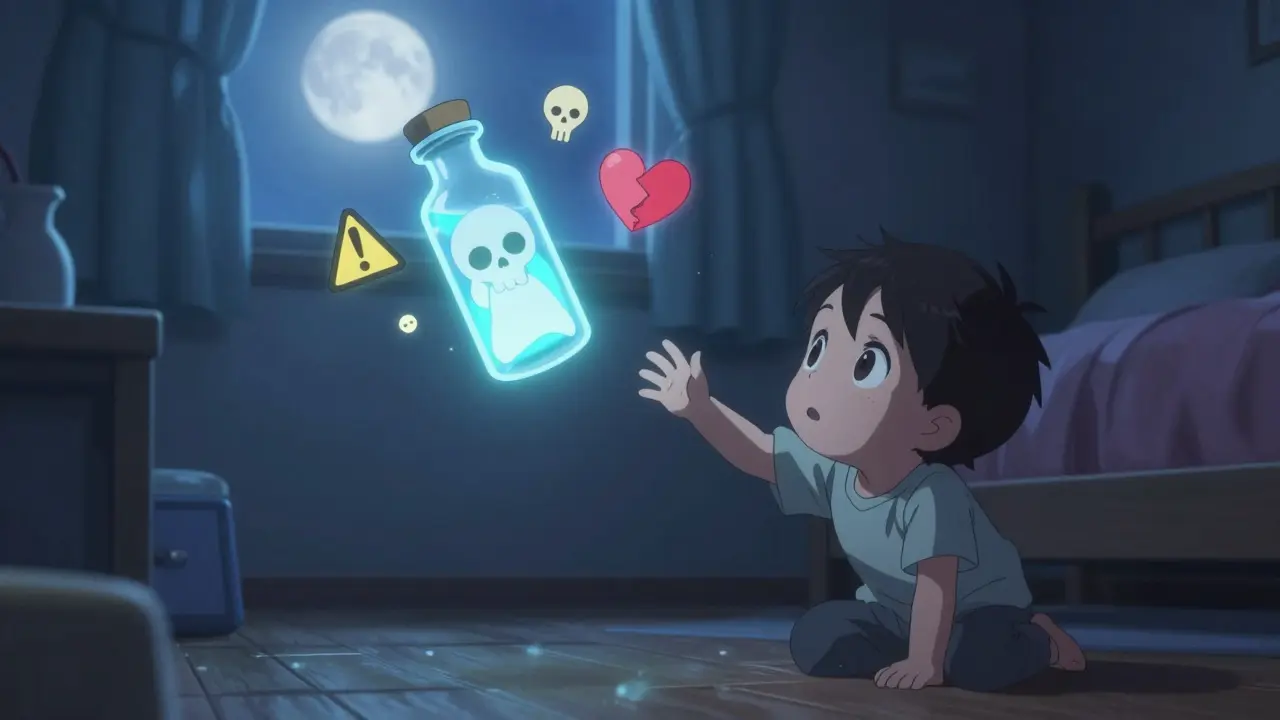
Pediatric Medication Dosing Calculator
How to Use This Tool
Enter your child's weight in kilograms. This tool calculates safe medication doses based on weight. Remember: Always use milliliters (mL), not teaspoons or tablespoons for accuracy.
Safe Medication Dose
Medication Safety Tips
Do NOT:
- Use teaspoons or tablespoons for liquid medicine
- Assume adult medicine can be cut for children
- Store medicine in the bathroom or within reach of children
- Describe medicine as "candy" to encourage children to take it
- Use only the dosing device provided with the medication
- Store all medicines locked up and out of sight
- Call Poison Control immediately if you suspect ingestion: 800-222-1222
Every year, 50,000 children under age 5 end up in emergency rooms because they got into medicine they shouldn’t have. Many of these cases aren’t accidents-they’re preventable mistakes rooted in assumptions that work for adults but are deadly for kids. Medication safety for children isn’t just about giving less of an adult dose. It’s a completely different system, with unique risks that most parents and even some healthcare workers don’t fully understand.
Why Kids Are Different
Children aren’t small adults. Their bodies process medicine in ways that change dramatically as they grow. A newborn weighing 3 kilograms and a 12-year-old weighing 45 kilograms might both need the same drug, but the amount can vary by more than 15 times. Get the dose wrong, and it’s not just a side effect-it could be life-threatening.Young children’s livers and kidneys are still developing. That means they can’t break down or flush out drugs the way adults do. A medication that’s safe for a teenager might build up to toxic levels in a 6-month-old. This isn’t theoretical. In 2018, a study in Pediatrics showed that children’s immature organ systems make them far more vulnerable to even small dosing errors.
And then there’s communication. Babies can’t say, “My stomach hurts.” Toddlers might not know what “dizzy” means. If a child has a bad reaction to a drug, they can’t tell you what’s wrong. That’s why symptoms like unusual sleepiness, vomiting, or rapid breathing need to be treated as red flags-not just “off days.”
Common Medication Errors That Hurt Kids
The biggest danger isn’t always the drug itself-it’s how it’s measured and given.One teaspoon equals 5 milliliters. But many parents use kitchen spoons, which vary wildly in size. Giving “one teaspoon” of liquid medicine with a regular spoon can mean you’re giving 7 or 8 milliliters-almost 50% too much. That’s enough to cause serious harm with common drugs like acetaminophen or cough syrup.
Even worse, confusing tablespoons with teaspoons is a leading cause of overdose. One tablespoon is three times bigger than one teaspoon. Giving a child a tablespoon of medicine when they need a teaspoon? That’s a 300% overdose. The Children’s Safety Network documented cases where this mistake led to seizures, liver failure, and even death.
Another hidden risk? Removing pills from child-resistant bottles. Adults often do this to make it easier to carry medicine or take it on the go. But if the cap isn’t snapped back on tightly, a curious toddler can open it in under 30 seconds. A 2020 study found that 45% of pediatric pill ingestions happened because the bottle wasn’t properly resealed.
What Hospitals Are Doing Right
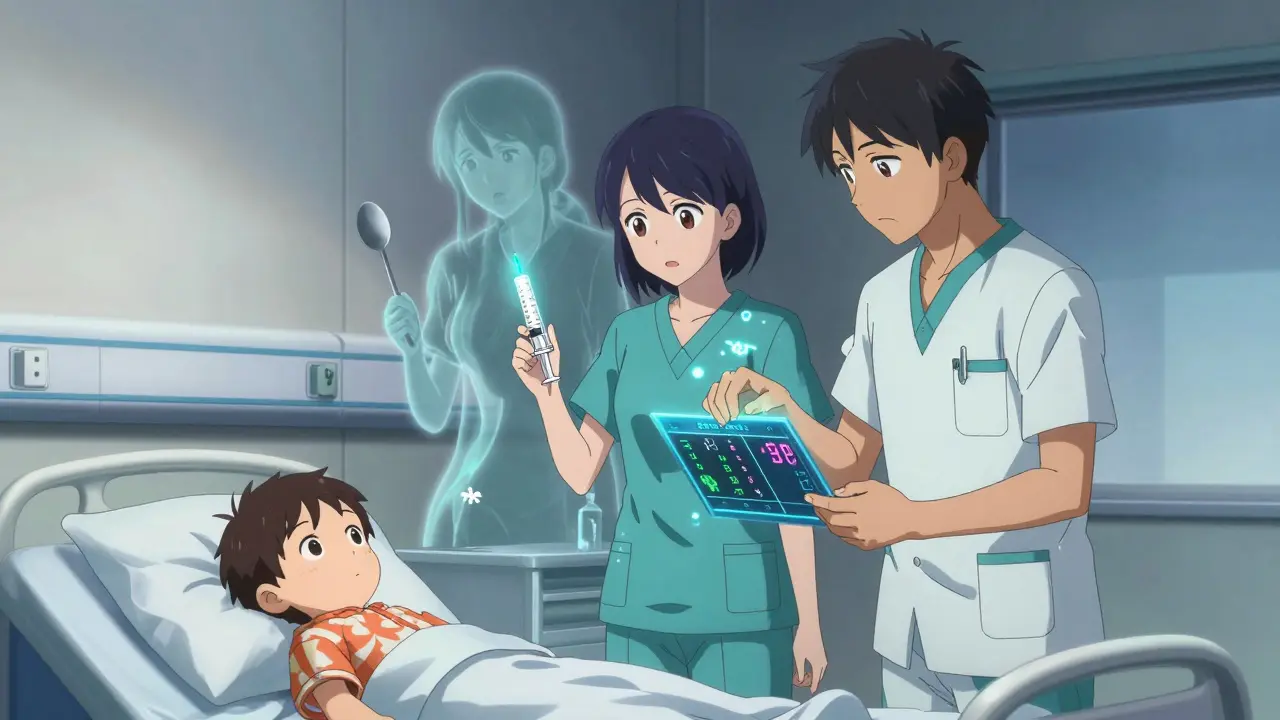
Children’s hospitals have learned from years of errors. The American Academy of Pediatrics laid out 15 key safety steps in 2018-and most top pediatric facilities now follow at least 12 of them.One of the most important? Kilograms only. No pounds. No conversions. Every child’s weight is recorded and used in kilograms. Why? Because mixing up pounds and kilograms is the #1 cause of fatal dosing errors. A child who weighs 20 pounds (9 kg) might get a dose meant for a 90-kilogram adult if someone misreads the scale. That’s a 10x overdose.
Hospitals now use standardized concentrations for high-risk drugs like insulin, morphine, and IV antibiotics. Instead of different strengths from different manufacturers, everything is the same. That cuts down on confusion. They also use “distraction-free zones” for preparing meds-no phones, no chatter, just the medication and the child’s chart.
For high-alert drugs, two trained staff members check the dose independently before giving it. That simple rule has reduced serious errors by nearly half in facilities that use it.
Home Safety: What Parents Need to Know
Most pediatric poisonings happen at home-not in hospitals. And many parents think they’re doing the right thing when they’re not.First, stop using teaspoons and tablespoons for medicine. Use only the dosing syringe, cup, or dropper that came with the bottle. If it’s missing, ask the pharmacist for one. They’re free and calibrated to the exact concentration of the drug.
Second, store all medicine-yes, even vitamins, eye drops, and diaper rash cream-up and away. Not on the counter. Not in a purse. Not in a drawer the child can reach. The CDC says 75% of poisoning cases happen because parents thought the medicine was “out of sight” when it was still within a child’s reach. A 2-year-old can climb a chair, pull open a drawer, and get into medicine faster than you can say “I’ll be right back.”
Third, never tell a child medicine is candy. It’s a common trick to get a reluctant toddler to take a bitter liquid. But that teaches them that pills are treats. Poison Control data shows this practice contributes to 15% of accidental ingestions. Instead, say: “This is medicine. It helps you feel better, but it’s not food.”
And don’t assume OTC cough and cold medicines are safe. The FDA and AAP strongly advise against giving them to children under 6. They don’t work well in young kids and carry serious risks like rapid heart rate, seizures, and breathing problems. For a stuffy nose, use a saline spray and suction bulb. For fever, use acetaminophen or ibuprofen-but only at the right dose.
Labeling and Dosing Tools That Actually Work
Medication labels are often confusing. “Give 1 tsp every 6 hours” sounds simple-but it’s dangerous.The gold standard now? Milliliter-only dosing. All liquid medicines for home use should be labeled in mL, not teaspoons. And they should come with a proper dosing device. Pharmacists are required to provide one. If they don’t, ask for it. If you’re handed a cup with no markings, refuse it. Use the syringe.
Another powerful tool? Pictogram instructions. These are simple pictures showing when to give the medicine (sunrise for morning, moon for night), how much (a syringe filling to a line), and what to do if you miss a dose. A 2018 study found that parents using pictograms were 47% more likely to give the correct dose than those reading text-only instructions.
For parents with low health literacy, or those who speak another language at home, pictograms are a game-changer. They don’t need to read English to understand a picture of a syringe and a clock.
When to Call for Help
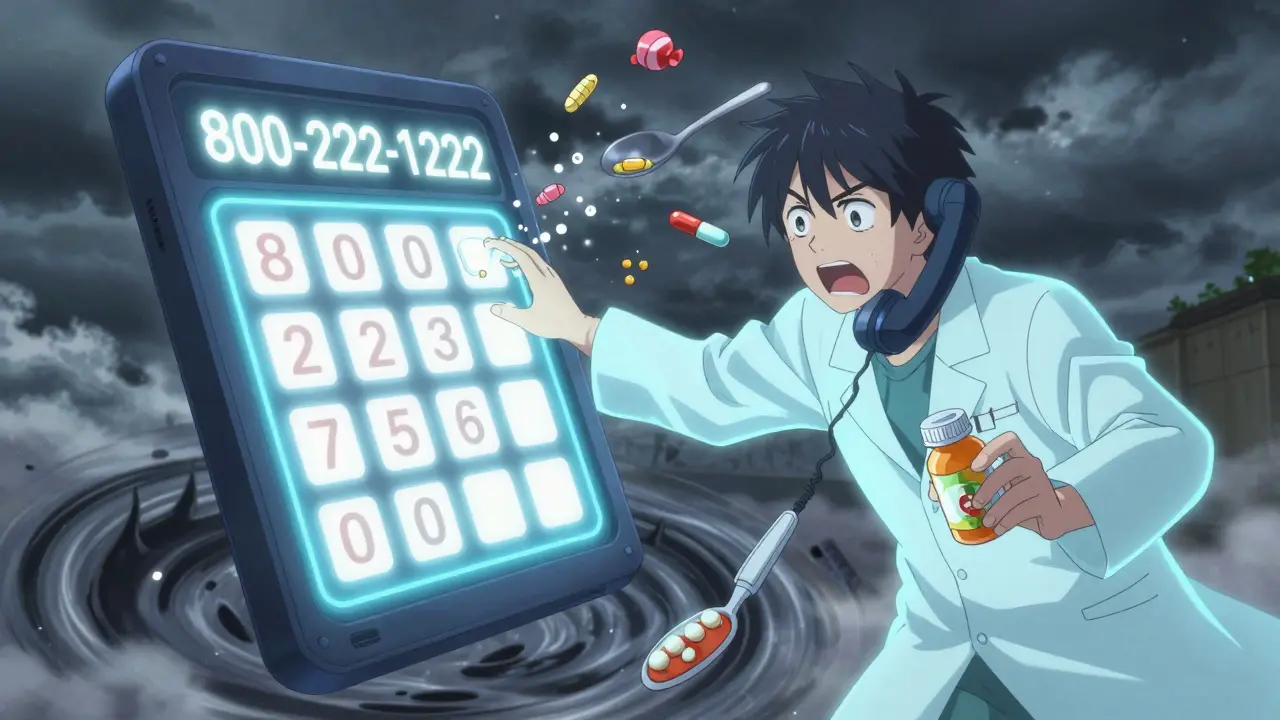
If you suspect your child has taken medicine they shouldn’t have, don’t wait. Don’t try to make them throw up. Don’t call your pediatrician first. Call Poison Control immediately: 800-222-1222.That number should be saved in your phone, programmed into your home phone, and written on your fridge. It’s free, 24/7, and staffed by experts who know exactly what to do. In 2023, the CDC’s PROTECT Initiative found that families who called Poison Control within 10 minutes of ingestion had a 60% lower chance of hospitalization.
Keep the medicine bottle handy when you call. The poison specialist will need to know the name, strength, and how much was taken. If you don’t know the name, bring the bottle. If it’s gone, describe the color, shape, or smell. Better yet-take a picture of the pill or liquid before calling.
Training and Culture Matter
Even in hospitals, errors happen when staff aren’t trained specifically for children. A 2019 study found that general hospitals with fewer than 100 pediatric patients per year had over 3 times the error rate of children’s hospitals. Why? Because they don’t practice it often enough.That’s why training is critical. Nurses, doctors, and pharmacists who work with kids need regular, hands-on pediatric medication safety drills. They need to practice weight conversions, dosing calculations, and emergency responses. Facilities that implemented dedicated pediatric safety curriculums saw an 85% drop in medication errors within a year.
And it’s not just about rules-it’s about culture. In high-performing pediatric units, staff speak up if something looks wrong. They double-check. They ask, “Is this right for a child?” That mindset saves lives.
The Future Is Standardized
The FDA is pushing for change. Since 2021, new pediatric drugs must come in standardized concentrations. That means no more 50 mg/mL, 100 mg/mL, and 200 mg/mL versions of the same drug. Just one. That will cut down on confusion and prevent many errors before they happen.More manufacturers are also designing child-safe packaging that’s harder to open but still easy for adults. Some new bottles have push-and-turn caps that require two motions-making them nearly impossible for a toddler to open but simple for a parent.
These changes are slow-but they’re happening. And every step forward means fewer children hurt by preventable mistakes.
Can I give my child adult medicine if I cut the dose in half?
No. Adult medications are not formulated for children. Even if you reduce the dose, the inactive ingredients-like dyes, preservatives, or flavorings-can be harmful to a child’s developing system. Always use medicine made specifically for children, or ask your doctor for a pediatric prescription. Never guess or wing it.
Is it safe to store medicine in the bathroom cabinet?
No. Bathrooms are humid, warm, and often within reach of children. Moisture can degrade medicine, and kids can easily open cabinets or climb on counters. Store medicine in a locked cabinet or high shelf in a cool, dry room-like a bedroom or kitchen pantry. Never rely on “out of sight” if it’s still within reach.
What should I do if my child spits out part of their medicine?
Don’t give another full dose. Wait and see if the child needs more. If they spit out most of it right after taking it, contact your doctor or pharmacist. Giving a second dose can lead to overdose. It’s better to be safe than sorry-call for advice before repeating the dose.
Are liquid medicines safer than pills for young kids?
Liquid medicines are easier to dose precisely for small children, but they’re not automatically safer. The danger comes from using the wrong measuring tool. A syringe with mL markings is best. Kitchen spoons, droppers without markings, or unclear labels can lead to dangerous overdoses. Always use the device that came with the medicine.
Why are vitamins considered a poisoning risk for children?
Many children’s vitamins look like candy-bright, flavored, and chewable. But they can contain iron, which is toxic in large amounts. Just a few chewable vitamins can cause vomiting, liver damage, or even death in toddlers. Treat vitamins like medicine: lock them up, count them, and never say they’re candy.
How do I know if my child’s medicine dose is correct?
Always check the dose based on your child’s current weight in kilograms. Ask your pharmacist to confirm the dose. Use only mL measurements. If the label says “teaspoon,” ask for a new label in mL. If you’re unsure, call your doctor or Poison Control at 800-222-1222. Better safe than sorry.
Most parents don’t realize that a kitchen spoon can be 30% off from a real teaspoon. I’ve seen it myself-mom gives ‘a teaspoon’ of Tylenol with a soup spoon, kid ends up in ER. It’s not negligence, it’s ignorance. The solution is simple: use the syringe. Always. No exceptions.
Pharmacists should hand out dosing tools like they hand out bags at the grocery store. Free, mandatory, no questions asked.
Oh my god. I just realized my cousin gave her 2-year-old ibuprofen with a tablespoon because ‘it was easier.’ She thought she was being ‘helpful.’ That’s not parenting-it’s a horror show waiting to happen. And don’t even get me started on the ‘medicine is candy’ thing. That’s not a parenting hack, that’s a death sentence wrapped in gummy bears.
Why do we still let this happen? Someone needs to slap a warning label on every bottle that says: ‘If you’re guessing, you’re killing.’
Love this post so much. I’m a nurse and I’ve seen too many kids come in from dosing errors. The part about kilos only? YES. I work in a clinic where they still use pounds sometimes. It’s scary.
Also-vitamins are NOT candy. My niece ate 8 chewable multivitamins because she thought they were gummies. Liver enzymes spiked. Took 3 days to recover. Lock them up. Seriously.
And pictograms? My mom couldn’t read English but she understood the sun and moon icons. Game changer.
Also, call Poison Control. Not your doctor. Not Google. 800-222-1222. Save it now.
PS: I’m not a doctor but I’ve been around this long enough to know what matters.
Used to work in pharmacy. Saw a guy bring in a bottle of liquid amoxicillin and ask if he could use his coffee spoon since he lost the cap. I nearly cried. Then he said, ‘But I measured it real good.’
People think they’re being careful. They’re not. They’re just lucky.
Also, why is it still legal to sell kids’ vitamins that look like Skittles? That’s not marketing, that’s a trap.
So true. In India too, many parents give adult medicine by cutting pills or guessing doses. We don’t have easy access to pediatric formulations. But still, we must try. I always ask my pharmacist for the right tool. Even if it takes two trips.
And yes, never say medicine is candy. My cousin’s kid swallowed 10 iron pills thinking they were candy. He’s fine now but it was terrifying.
Save 800-222-1222 in your phone. Seriously. 💙
Just read this while holding my 18-month-old who just swallowed a vitamin. 😳
Thank you for writing this. I’m calling Poison Control right now. I already saved the number. 🙏
Also-why do pharmacies still give out those stupid measuring cups with no lines? It’s 2025. We have syringes for a reason. 🤦♀️
This is why America needs better parenting standards. You can’t just let people give medicine like it’s cereal. If you can’t measure a teaspoon, you shouldn’t be allowed to have kids.
And why are we letting foreign companies make vitamins that look like candy? This is a national disgrace. We need laws. Now.
Also, why are we still using pounds? We’re not in the Stone Age. Use metric. Everyone else does. This isn’t hard.
My heart breaks every time I hear about a child poisoned by medicine. This is not just negligence-it is moral failure. In India, we have no choice but to rely on pharmacists because doctors are overworked. But here in the West? You have access to everything. Syringes. Labels. Pictograms. And still you mess up?
Stop blaming the system. Start blaming yourselves. Your child’s life is not a guessing game. Lock it up. Measure it right. Say no to candy-like vitamins. This isn’t optional. It’s survival.
And if you think calling your pediatrician first is okay? You’re already too late. Poison Control. Now. Save it. Share it. Live it.
There is a profound ethical responsibility in pediatric pharmacology that extends far beyond clinical protocols. The human element-parental anxiety, cultural norms, systemic undereducation-is the true locus of risk. Standardization of concentrations, mandatory dosing tools, and pictographic labeling are not merely logistical improvements; they are moral imperatives.
We must recognize that medication safety for children is not a technical problem, but a cultural one. It requires humility, systemic redesign, and above all, the abandonment of adult-centric assumptions.
The fact that we still rely on kitchen utensils to administer life-altering substances speaks volumes about our priorities. Let us not wait for another tragedy to act. Let us act because we can.
One sentence: If you’re not using a syringe with mL markings, you’re playing Russian roulette with your kid’s liver.
And yes, I’ve seen the results. It’s not pretty. Don’t be the person who says ‘I didn’t know.’ You do now.