
Orphan Drug Exclusivity: How Rare-Disease Medicines Get Market Protection
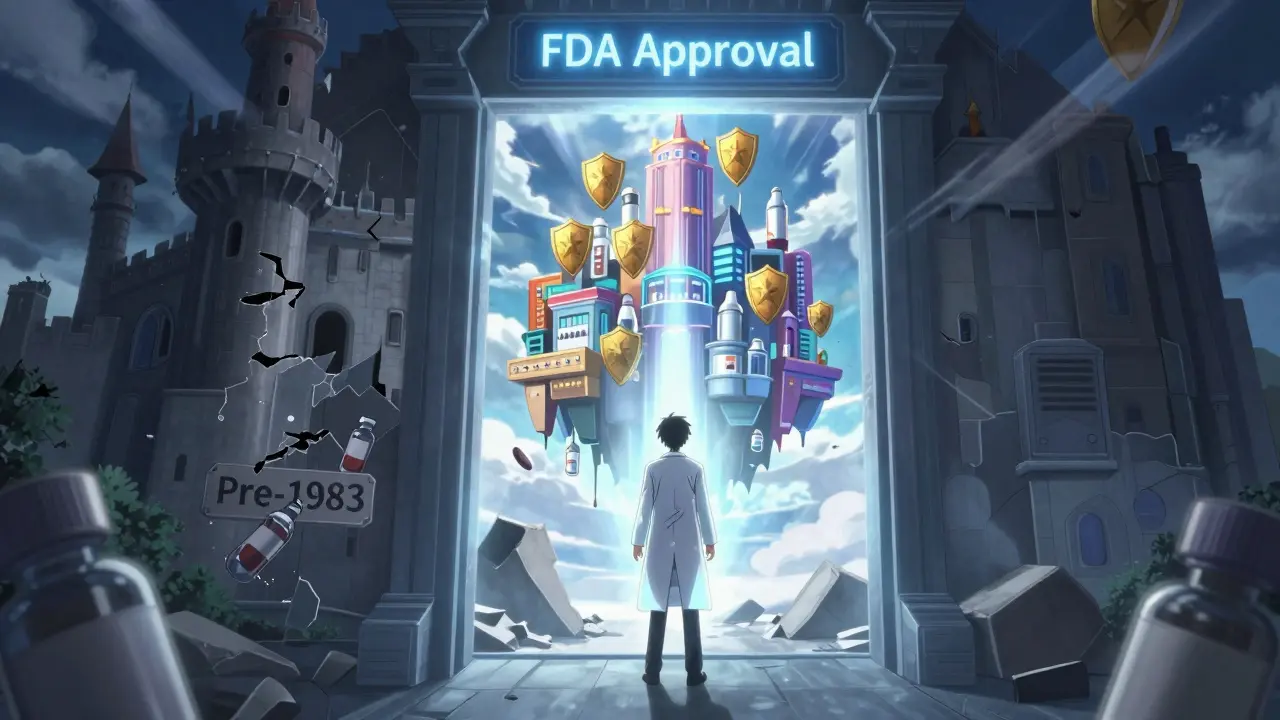
Before 1983, fewer than 10 treatments existed for rare diseases in the U.S. Today, more than 1,000 are approved. What changed? The orphan drug exclusivity system.
What Is Orphan Drug Exclusivity?
Orphan drug exclusivity is a legal shield given by the FDA to companies that develop medicines for rare diseases. It doesn’t mean the drug is patented-it means no other company can sell the exact same drug for the same rare condition for seven years after FDA approval. This rule comes from the Orphan Drug Act of 1983, signed by President Ronald Reagan. The goal? To fix a broken system.Back then, pharmaceutical companies had no reason to spend millions developing drugs for diseases affecting just a few thousand people. Why invest $150 million if you can only sell to 8,000 patients? The orphan exclusivity rule flipped that logic. It guaranteed a market window-no competitors, no price pressure-long enough to recover costs and make a profit.
How It Works: The Rules
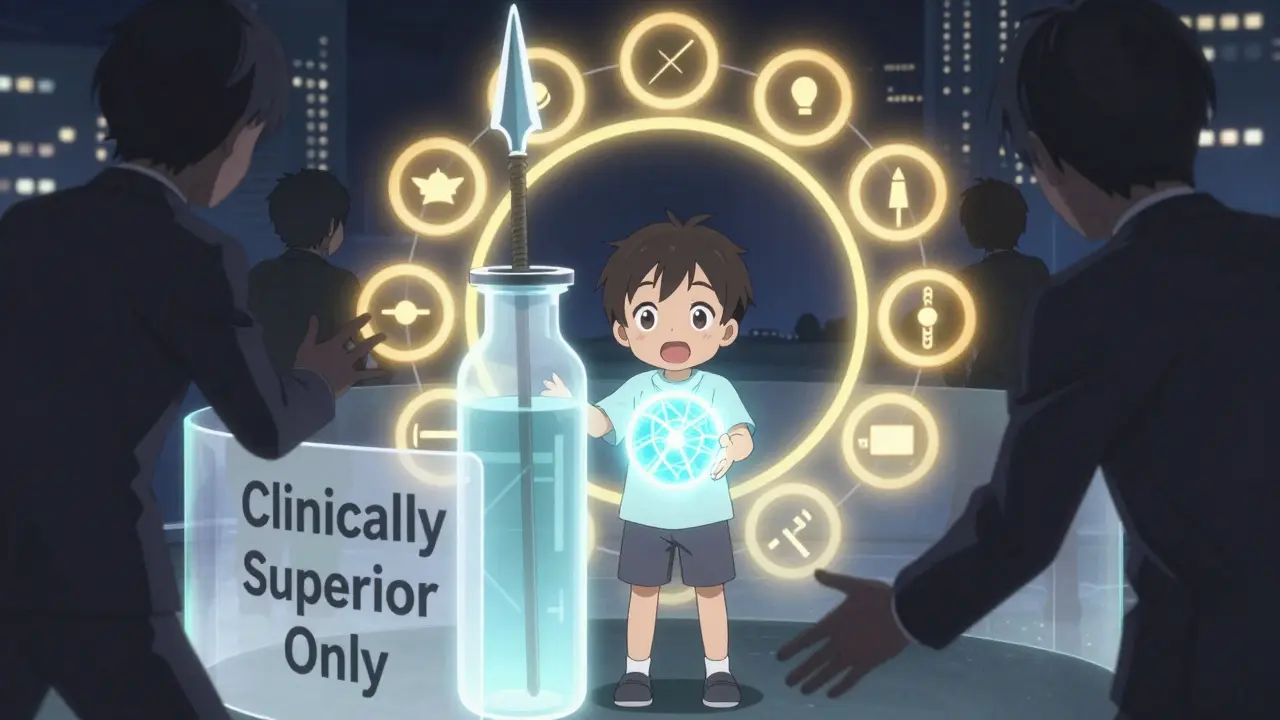
The exclusivity clock starts ticking on the day the FDA approves the drug for marketing. That’s when the seven-year clock begins. During that time, the FDA can’t approve another company’s version of the same drug for the same rare disease-unless that new version proves it’s clinically superior.“Clinically superior” means more than just being cheaper. It means better: fewer side effects, easier to take, more effective, or safer for kids or elderly patients. Since 1983, only three cases have met that bar.
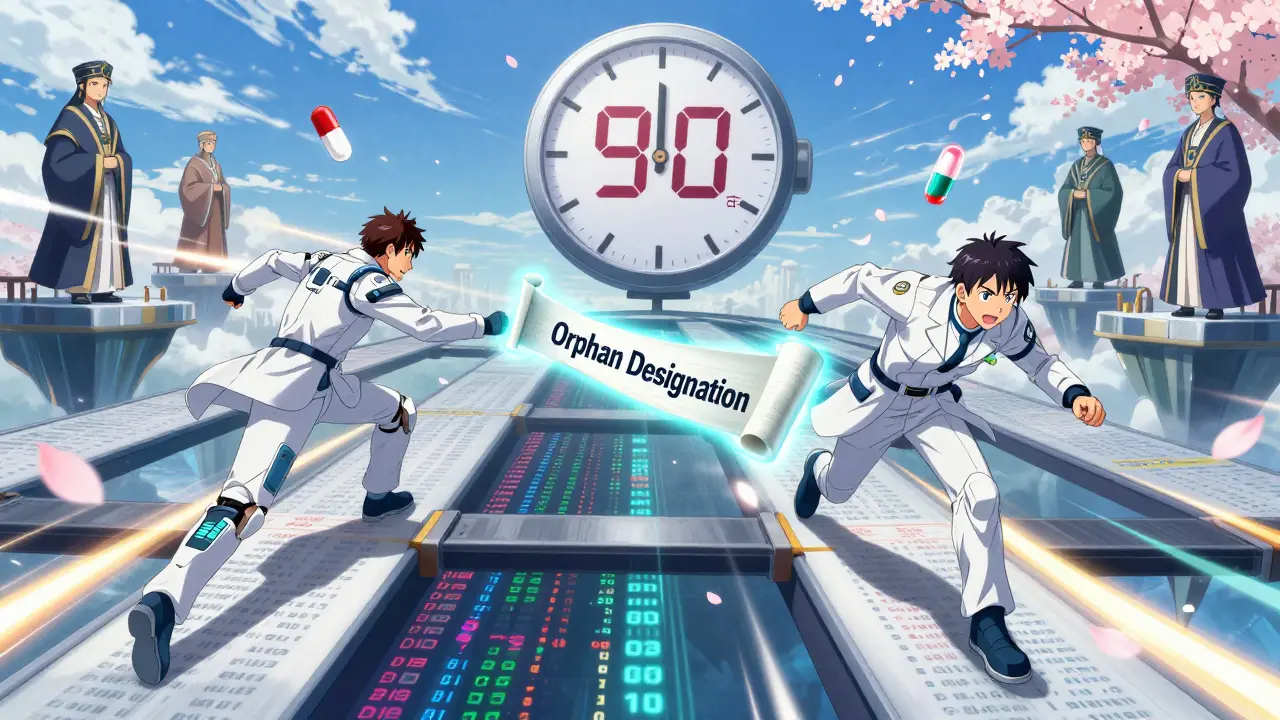
Here’s the twist: multiple companies can apply for orphan designation on the same drug and disease. But only the first one to get FDA approval wins the exclusivity. It’s like a race. You don’t need a patent. You just need to cross the finish line first.
And it’s specific. If a drug is approved for both a rare disease and a common one, the exclusivity only covers the rare use. For example, if a drug treats both a rare nerve disorder and regular back pain, generics can still come out for the back pain-but not for the rare condition.
Orphan Exclusivity vs. Patents
Most people assume patents are the main reason drugs stay expensive. But for orphan drugs, that’s not always true. According to IQVIA’s analysis of 503 approved orphan drugs, only 60 of them had orphan exclusivity that lasted longer than their patent. In 88% of cases, patents were the real barrier to generics.Why? Because patents protect the chemical structure or how the drug works. Orphan exclusivity protects only the use for one specific rare disease. So a company might hold a patent on a molecule, but if they never get orphan designation, they get no special market protection for the rare use.
That’s why many companies apply for both. Patents last 20 years from filing, but orphan exclusivity is seven years from approval. If a drug gets approved in year 12 of its patent, the exclusivity gives it a fresh seven-year runway after the patent expires.
How It Compares Globally
The U.S. gives seven years. The European Union gives ten. And in Europe, if a company does extra studies on how the drug affects children, they get two more years-so up to 12 total. The EU can also shorten exclusivity from ten to six years if the drug turns out to be wildly profitable, something the U.S. doesn’t do.That difference matters. Many companies now launch drugs in Europe first to lock in the longer protection. Others wait until after the U.S. approval to file in Europe, hoping to stack both systems.
Who Benefits? And Who Doesn’t?
Patients with rare diseases are the obvious winners. Before 1983, conditions like spinal muscular atrophy or Duchenne muscular dystrophy had no approved treatments. Today, dozens do. A 2022 survey by the National Organization for Rare Disorders found that 78% of patient advocacy groups say orphan exclusivity is essential to getting new drugs developed.But not everyone sees it that way. Generic drug makers argue the system is being abused. Take Humira, a blockbuster drug for rheumatoid arthritis and Crohn’s disease. It’s used by millions. Yet it received multiple orphan designations for rare off-label uses-like treating a rare form of eye inflammation. Critics say that’s gaming the system: using a rare disease label to extend monopoly power on a drug that already makes billions.
Regulatory insiders agree. A senior FDA official told a 2021 public hearing, “We’ve seen drugs with annual sales over $1 billion get orphan status for indications affecting fewer than 100 patients. That’s not the intent of the law.”
Industry Strategy: Timing and Tactics
Smart companies don’t wait until Phase 3 trials to apply for orphan designation. They file as early as Phase 1 or 2. Why? Because the FDA reviews these applications in about 90 days-and approves 95% of them if the disease truly affects fewer than 200,000 people in the U.S.Once designated, the company gets help from the FDA: free advice on trial design, reduced fees (up to $3.1 million saved), and tax credits for clinical trial costs. Many biotech startups rely on these perks just to survive.
But there’s a catch. If two companies are racing for the same orphan designation, the one with better data, faster trials, or smarter regulatory strategy wins. That’s why some firms spend 12 to 18 months preparing their application-gathering epidemiology data, lining up patient registries, and proving the disease meets the 200,000-person threshold.
The Numbers Don’t Lie
Since 1983, the FDA has granted over 6,500 orphan designations. About 1,085 of those became approved drugs. That’s a 16.6% approval rate-higher than the average for all drugs.Global sales of orphan drugs hit $217 billion in 2022-nearly a quarter of the entire prescription drug market. Oncology leads the pack, making up 44% of all orphan approvals. Neurology and metabolism follow. The top 10 orphan drugs brought in $95 billion in sales-Humira alone made $21 billion, even though its main use isn’t rare.
And the trend is accelerating. In 2010, the FDA gave out 127 orphan designations. In 2022, that number jumped to 434. Deloitte predicts that by 2027, 72% of all new drugs approved in the U.S. will have orphan status.
What’s Next? Controversy and Reform
The system is working-but not perfectly. Critics want changes. Some propose requiring companies to prove an “unmet medical need” before getting orphan status-not just a low patient count. Others want to cap how much a drug can charge, even with exclusivity.In May 2023, the FDA issued new draft guidance to clarify what counts as the “same drug.” That came after a messy case with Ruzurgi, a drug approved for a rare muscle disorder, while another company already sold the same chemical for a different rare condition. The FDA had to decide: was it the same drug? The answer affected exclusivity.
Europe is also reviewing its rules. In late 2023, the European Commission launched a public consultation on whether to reduce exclusivity from ten to eight years for drugs that sell better than expected.
Still, 94% of biopharma companies surveyed by McKinsey say orphan exclusivity is “critical” to their rare disease strategies. Without it, most of these drugs wouldn’t exist.
Why It Matters to You
If you or someone you know has a rare disease, orphan exclusivity is why new treatments are even possible. It’s why a child with a condition affecting 500 kids in the U.S. might get a life-changing drug in five years-not never.But it’s also why those drugs cost so much. The system works, but it’s not fair. Companies that use it to extend monopolies on blockbuster drugs hurt trust. Patients pay the price.
The real challenge isn’t stopping orphan exclusivity-it’s fixing how it’s used. Better rules. More transparency. Clearer standards. Because the goal isn’t just to make drugs. It’s to make them accessible.
How long does orphan drug exclusivity last in the U.S.?
In the United States, orphan drug exclusivity lasts seven years from the date the FDA approves the drug for marketing. This protection applies only to the specific rare disease indication the drug was approved for. During this time, the FDA cannot approve another company’s version of the same drug for the same condition unless it proves clinical superiority.
Can a drug have both a patent and orphan exclusivity?
Yes, most orphan drugs have both. Patents protect the chemical structure or method of use and typically last 20 years from the filing date. Orphan exclusivity protects the specific rare disease use and lasts seven years from FDA approval. Companies often rely on patents for long-term protection and use orphan exclusivity as a backup or extension-especially if the patent expires before approval.
What does ‘clinically superior’ mean in the context of orphan exclusivity?
‘Clinically superior’ means the new drug offers a significant improvement over the existing one-for example, better effectiveness, fewer side effects, safer for children or elderly patients, or easier to administer (like a pill instead of an IV). The FDA sets a very high bar. Since 1983, only three cases have met this standard, making it extremely rare for competitors to enter the market during the exclusivity period.
Can generics enter the market while orphan exclusivity is active?
Generics can enter only if they’re for a different use of the same drug. For example, if a drug is approved for a rare nerve disorder and also for common back pain, generics can be approved for back pain-but not for the rare condition. Orphan exclusivity only blocks copies for the same disease indication. It does not prevent generic versions for non-orphan uses.
Why do so many companies apply for orphan designation?
Because the benefits are huge: seven years of market exclusivity, free FDA guidance, waived application fees (worth up to $3.1 million), and tax credits for clinical trials. Even if the drug doesn’t get approved, the designation gives companies leverage with investors and partners. With over 400 designations granted in 2022 alone, it’s become a key part of the business strategy for biotech startups and big pharma alike.
Is orphan drug exclusivity only available in the U.S.?
No. The European Union offers ten years of exclusivity, with a possible two-year extension for pediatric studies. Other countries like Japan and Australia have similar programs, though the rules vary. The U.S. system was the first and remains one of the most influential, but global markets now have their own versions to encourage rare disease drug development.
Bro, this system is wild. Companies are literally gaming it-Humira for eye inflammation? That’s not rare disease medicine, that’s corporate greed in a lab coat. Seven years of monopoly on a drug that makes billions? No thanks. We’re paying for their R&D like it’s a charity when it’s just a tax write-off with a side of extortion.
One cannot help but observe the profound irony embedded within this legislative architecture: a mechanism conceived to uplift the voiceless, the statistically negligible, now serves as a velvet glove concealing the iron fist of market consolidation. The orphan designation, once a lifeline, has metamorphosed into a regulatory arbitrage tool-where the language of compassion is deployed to justify economic hegemony. The soul of the Orphan Drug Act is not dead; it is merely being strangled by the very hands it was meant to empower.
Just want to say-I’ve got a cousin with Duchenne’s. We got lucky. The drug that changed her life? Came from this exact system. I know the prices are insane, and yeah, some companies abuse it. But if you take this away, the next kid like her won’t get anything. Ever. There’s no ‘maybe’ here. It’s either this or nothing.
So many people don’t get it-this isn’t about big pharma being evil. It’s about incentives. No one was making these drugs before. Zero. Now there’s over a thousand. Yeah, some are overpriced. But without this, those kids with rare diseases wouldn’t even have a shot. I’m not saying it’s perfect. But killing the system won’t fix the price. It’ll just kill the drugs.
One must lament the grotesque perversion of legislative intent: the Orphan Drug Act, a noble endeavor, has been reduced to a cynical instrument of rent-seeking behavior by corporate entities that exploit semantic loopholes to extend monopolistic control over molecules with mass-market utility. The FDA’s acquiescence to such abuses-particularly in cases where annual revenues exceed $1 billion for indications affecting fewer than one hundred patients-is not merely negligent; it is an ethical catastrophe disguised as policy.
I read this whole thing with tears in my eyes. My daughter has a condition that affects 12 people in the whole country. She got her drug because of this law. I know it’s expensive. I know people get mad. But if you take this away, you’re not fixing the system-you’re erasing hope. I don’t care if the company makes money. I care that my kid breathes tomorrow.
Love how you guys are talking about this. 👏 Real talk: the system’s flawed, but the alternative is worse. Think of it like this-if you were a startup with $2M and a drug for 500 kids, would you risk it without this? Nah. You’d fold. This isn’t perfect, but it’s the only thing keeping the lights on for a lot of these tiny biotechs. Let’s fix the abuse, not the whole thing.
I live in India. We don’t have this system. Many kids here die because no one makes medicine for their disease. I am so happy this law exists. Even if it is expensive, at least someone is trying. Please don’t break it.
It’s worth noting that the EU’s 10-year exclusivity with pediatric extensions is a far more nuanced model-one that incentivizes not just market entry, but meaningful clinical advancement. The U.S. system, while groundbreaking in 1983, now lacks the adaptive rigor to address modern abuses. A sunset clause tied to revenue thresholds, or mandatory price transparency disclosures upon exclusivity grant, could restore balance without sacrificing innovation. The law was never meant to be a profit engine-it was meant to be a bridge. Let’s rebuild it with integrity.