
Medication-Related Bone Marrow Suppression: What You Need to Know About Low Blood Counts
Blood Count Checker
Your Blood Counts
Results
Enter your blood counts to see your status
When you take a medication to treat cancer, an autoimmune disease, or even a stubborn infection, you expect it to help. But for many people, the very drug meant to heal can quietly shut down one of your body’s most vital systems: your bone marrow. This isn’t rare. In fact, bone marrow suppression affects 60 to 80% of patients on standard chemotherapy. It’s not a side effect you can ignore-it can mean the difference between finishing treatment and having to stop it entirely.
What Exactly Is Bone Marrow Suppression?
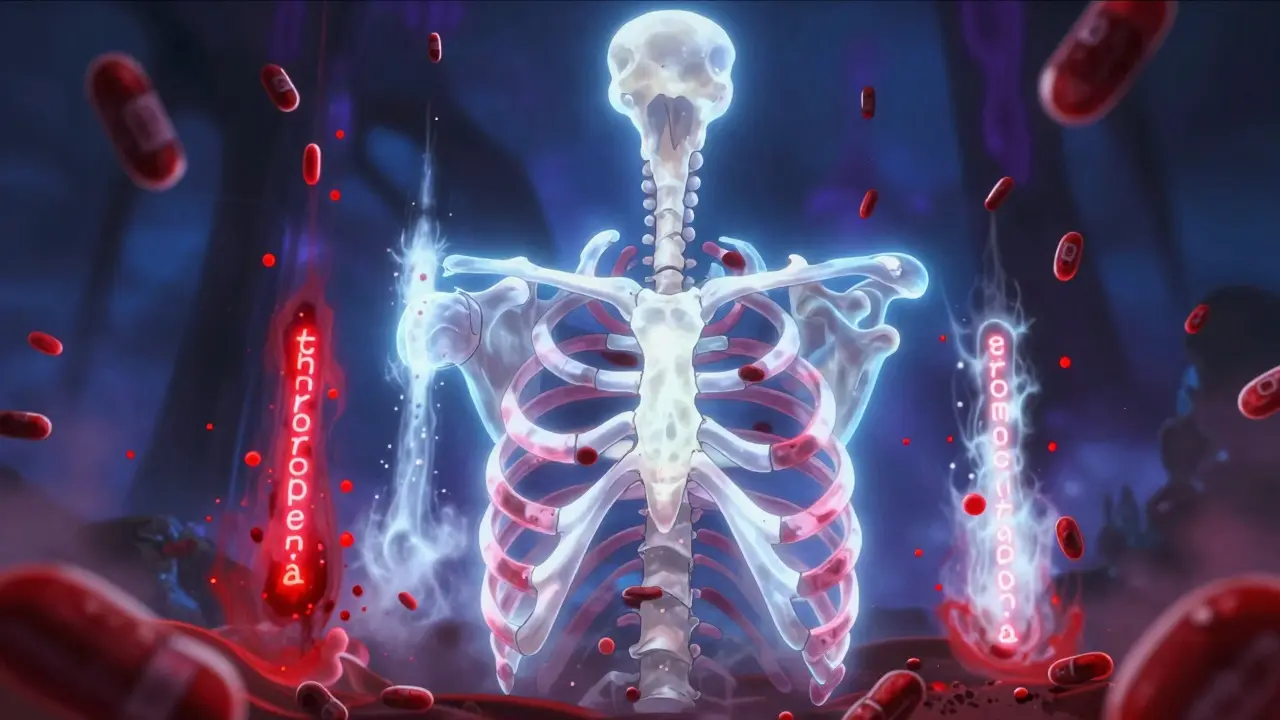
Your bone marrow is the soft, spongy tissue inside your bones. It’s where your body makes all your blood cells: red ones to carry oxygen, white ones to fight infection, and platelets to stop bleeding. When medications damage this system, your body can’t keep up with production. The result? Low blood counts-also called myelosuppression. This isn’t just a lab result. It’s a real, life-altering condition. When your white blood cell count drops (neutropenia), even a mild cold can turn dangerous. When platelets fall (thrombocytopenia), you might bruise from a light bump or bleed for no reason. And when red blood cells drop (anemia), you feel exhausted just walking to the kitchen. The numbers matter. Doctors define low counts precisely: an absolute neutrophil count below 1,500 cells/μL is neutropenia. Hemoglobin below 13.5 g/dL for men or 12.0 g/dL for women means anemia. Platelets under 150,000/μL are low, and under 50,000/μL is considered severe. These aren’t arbitrary lines-they’re thresholds where risk spikes.Which Medications Cause It?
Not all drugs affect bone marrow the same way. The biggest culprits are chemotherapy agents. About 70-80% of bone marrow suppression cases come from cancer treatments. Drugs like carboplatin cause severe thrombocytopenia in 30-40% of patients. Fludarabine knocks out lymphocytes in two out of three chronic lymphocytic leukemia patients. But it’s not just chemo. Immunosuppressants like azathioprine, used for organ transplants or lupus, cause suppression in 5-10% of users. Even common antibiotics like trimethoprim-sulfamethoxazole can trigger it in 2-5% of people. The risk isn’t always obvious. Someone on a routine antibiotic for a sinus infection might suddenly develop a fever and low platelets-and no one connects the dots until it’s too late. Timing matters too. Most cases hit 7-14 days after starting treatment. That’s when counts hit their lowest point-the nadir. If you’re feeling fine on day 5 but suddenly dizzy and feverish on day 10, it’s not coincidence. It’s the bone marrow catching up with the damage.How Is It Diagnosed?
You won’t feel bone marrow suppression until your blood counts are already down. That’s why regular blood tests aren’t optional-they’re lifesaving. A complete blood count (CBC) every week during treatment is standard. Some hospitals, especially for kids, check every 48-72 hours during active chemo cycles. If counts stay low after stopping the drug, or if the drop is unexplained, doctors may order a bone marrow biopsy. It sounds scary, but it’s a quick procedure that tells you whether the problem is the medication or something else-like leukemia or a vitamin deficiency. The key is catching it early. A fever above 38.3°C (101°F) during neutropenia is a medical emergency. It’s called neutropenic fever and can lead to sepsis within hours. That’s why patients are told to call their care team immediately if they feel warm, even if they don’t feel sick.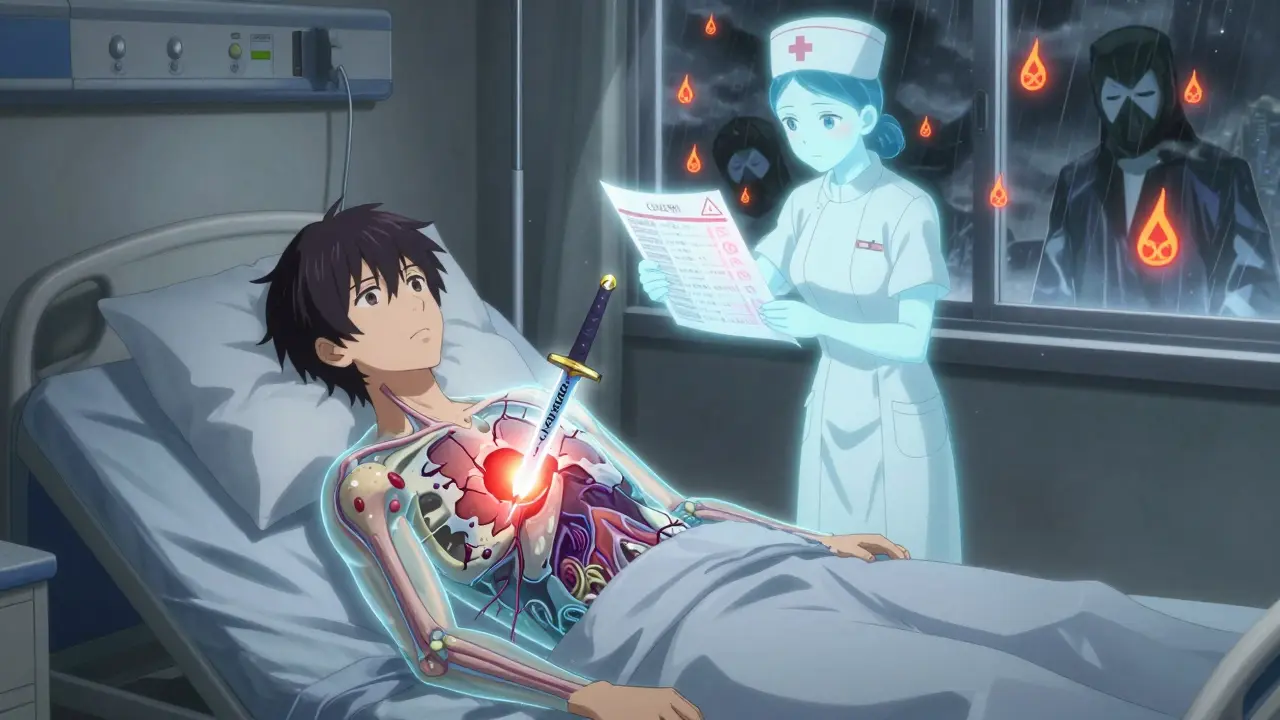
Treatment: From Monitoring to Transplants
Mild cases (grade 1-2) often just need a pause in treatment and close monitoring. Sometimes, lowering the dose is enough. But when counts drop too low, you need active intervention. For neutropenia, growth factors like filgrastim (Neupogen) or pegfilgrastim (Neulasta) are the go-to. These drugs signal your bone marrow to produce more white cells. Studies show they cut the duration of severe neutropenia by over three days. Patients on Neulasta report fewer hospital visits and less anxiety about infection. But there’s a catch: prolonged use may increase bone loss in older adults, according to a 2022 study in the Journal of Clinical Oncology. Trilaciclib (COSELA), approved in 2021, is a game-changer. It’s given before chemo and protects bone marrow cells from damage. In trials, it reduced myelosuppression by 47% in small cell lung cancer patients. It’s not for everyone, but for those who qualify, it means fewer delays and fewer transfusions. For low platelets, transfusions are used when counts fall below 10,000/μL or if there’s active bleeding. Red blood cell transfusions kick in when hemoglobin drops below 8 g/dL. These aren’t cures-they’re bridges. They buy time until the marrow recovers. If suppression doesn’t improve after stopping the drug, and counts stay dangerously low for months, stem cell transplant may be considered. Success rates are 65-75% with a matched sibling donor. It’s a last resort-but for some, it’s the only path back to normal blood production.What About Alternatives?
Sometimes, switching drugs helps. For patients on azathioprine with low counts, switching to mycophenolate mofetil restores blood levels in 78% of transplant patients within six weeks. It’s not perfect-side effects like nausea still happen-but it’s often enough to keep treatment going. New drugs are emerging. Lixivaptan, approved in May 2023, reduced the need for transfusions by 31% in phase 3 trials. Magrolimab, an experimental antibody, cut transfusion-dependent anemia by 54% in myelodysplastic syndrome patients. These aren’t mainstream yet, but they’re signs of progress. And the future? Personalized medicine. Researchers now know that genetic markers like TP53 mutations make you 3.7 times more likely to suffer severe suppression. Before starting chemo, some centers now test for these markers. If you’re high-risk, they adjust the plan-maybe use a different drug, start growth factors earlier, or even delay treatment to protect your marrow.
Real-Life Impact: More Than Numbers
Behind every lab result is a person. A 2022 survey of 1,245 cancer patients found 74% had treatment delayed because of low blood counts. 68% lived in constant fear of infection. One Reddit user wrote: “I canceled my daughter’s birthday party because I was neutropenic. I didn’t want to risk her getting sick and me dying from it.” The cost is another burden. In the U.S., a single dose of pegfilgrastim can cost $6,500 out-of-pocket. Many patients skip doses because they can’t afford them. That’s not just a financial problem-it’s a medical one. Skipping growth factors increases infection risk and hospital stays. And then there’s the “chemo holiday.” A 2022 ASCO survey found 41% of patients stopped treatment entirely because their counts wouldn’t recover. That’s not just a setback-it’s a potential death sentence for someone with aggressive cancer.What You Can Do
If you’re on a medication that can suppress bone marrow:- Get your CBC checked weekly-or as often as your doctor says.
- Take your temperature daily. Any fever above 38.3°C? Call your team immediately.
- Avoid crowds, raw meat, and unpeeled fruit during low-count periods.
- Use an electric razor instead of a blade to avoid cuts.
- Don’t wait for symptoms. If you’re unusually tired, dizzy, or bruising easily, speak up.

Okay, let’s unpack this. Bone marrow isn’t just a factory-it’s the silent orchestra conductor of your entire circulatory system. When chemo hits, it’s like someone dropped a bomb in the middle of a symphony. No more violins (RBCs), no more timpani (platelets), and the brass section (WBCs) just… stopped showing up. And we act surprised when the patient collapses? We’ve turned medicine into a numbers game while forgetting the human instrument it’s playing on. This isn’t side effect-it’s systemic betrayal wrapped in a prescription bottle.
As a nurse who’s seen this play out 200+ times-I’m screaming into the void here: WE NEED BETTER PROTECTIVE STRATEGIES. Trilaciclib? Yes. But why is it only for small cell lung cancer? Why not for every patient on platinum chemo? We’re still treating bone marrow like it’s disposable. It’s not. It’s the root system of life. And if we keep waiting for counts to crash before we act, we’re not healing-we’re just delaying the inevitable. Advocate for pre-emptive protection. Every. Single. Time.
So let me get this straight. We spend $6,500 on one shot of Neulasta… but you can’t afford a decent mattress? 😂 Welcome to American healthcare, where your immune system is a luxury subscription. I’ve seen patients skip doses because their insurance ‘doesn’t cover the emotional toll.’ Bro. The marrow doesn’t care about your deductible.
This is so real. My aunt had to cancel her grandson’s baptism because she was neutropenic. She cried for hours. Not because she was sick-but because she felt like a ghost in her own family. We talk about labs and counts, but we forget the quiet grief of being too fragile to hug someone you love. Please, if you’re reading this-tell your doc you want to preserve your life, not just extend it.
Thank you for writing this. In India, many don’t even know what a CBC is. My cousin was on antibiotics for a fever, got dizzy, and was told ‘it’s just stress.’ Two weeks later, she was in ICU with aplastic anemia. Please, share this. Knowledge is the first shield.
Wow. So we’re supposed to feel bad because some rich white lady can’t go to her daughter’s birthday? What about the 5 million people in sub-Saharan Africa who die from infections because they can’t even get a basic CBC? This whole post is a luxury problem dressed in medical jargon. Bone marrow suppression? Newsflash: most of the world doesn’t even have a hospital that can test for it. Stop crying about your $6,500 drug and fix the system first.
Let us not be fooled by the saccharine narrative of patient empowerment. The bone marrow is not a metaphor. It is a biological engine. And when we weaponize pharmaceuticals against cancer, we do not ‘manage’ suppression-we engineer controlled collapse. The modern oncologist is not a healer. He is a precision architect of physiological entropy. We do not cure. We delay. We substitute. We trade one organ’s ruin for another’s survival. And then we call it progress. The truth? Medicine is not about healing. It is about negotiating with death on terms written in corporate balance sheets.
60-80% of chemo patients get myelosuppression. That’s not a side effect. That’s the primary effect. Everything else is theater. Growth factors? Transfusions? These aren’t treatments. They’re bandaids on a hemorrhaging artery. The real solution is to stop poisoning the system in the first place. But that would mean admitting chemo is a blunt instrument. And nobody wants to admit that. Not pharma. Not oncologists. Not even patients. We’d rather believe in miracles than face the math.
There’s a quiet revolution happening. Researchers are mapping genetic red flags-TP53, DPYD, UGT1A1-before treatment even begins. We’re moving from ‘one-size-fits-all’ to ‘one-size-fits-one.’ Imagine: a blood test before chemo that tells you, ‘Your marrow will break at 70% dose. Let’s start at 40% and build up.’ That’s not sci-fi. That’s happening in Cleveland, Toronto, and Singapore right now. We’re not just treating cancer anymore. We’re learning how to protect the human being inside it.
My mom’s oncologist didn’t check her platelets for three weeks. She bled out from a nosebleed. No one said anything. Just ‘oh, it happens.’ I’m not mad. I’m just… tired. Why is this so normal?
u/7170 you’re a jerk. But also… kinda right. I live in Texas. My cousin got a 10-day chemo cycle. No CBCs. No warning. Just ‘come back next week.’ She got sepsis. Died in 48 hours. We didn’t even know her counts were low. This isn’t about privilege. It’s about negligence. And it’s everywhere.
It is imperative that the medical community acknowledges the systemic failure inherent in the current paradigm of myelosuppression management. The reliance upon reactive interventions-transfusions, growth factors-is not merely suboptimal; it is ethically indefensible when predictive biomarkers are demonstrably available. The absence of universal pre-treatment genomic screening constitutes a dereliction of professional duty. The data are unequivocal. The inaction is criminal.
They call it ‘chemo holiday’ like it’s a vacation. Nah. It’s the moment your body says ‘I’m done.’ And the system doesn’t care. They just reschedule you like a dentist appointment. ‘Sorry, your marrow’s on strike. Come back when it’s feeling better.’ Meanwhile, your cancer is throwing a party in your lymph nodes.
I just want to say-you’re not alone. I’ve been on azathioprine for lupus for 8 years. My counts drop every 3 months. I’ve learned to carry a thermometer, avoid crowds, and never say no to a blood test. It’s exhausting. But I’m still here. And if you’re reading this and scared? You’re still here too. Keep going. One day at a time. Your marrow is fighting for you. Don’t stop fighting for it.
In India, we call this ‘blood ka darr’-the fear of blood. No one talks about it. But every auntie who’s had chemo knows: the real enemy isn’t cancer. It’s the silence. The shame. The ‘don’t ask, don’t tell’ culture. I’m telling you now-ask. Demand. Record your symptoms. Take pictures of bruises. Your voice is the only thing that can make this system listen.