
How to Re-Challenge or Desensitize After a Drug Allergy Under Supervision
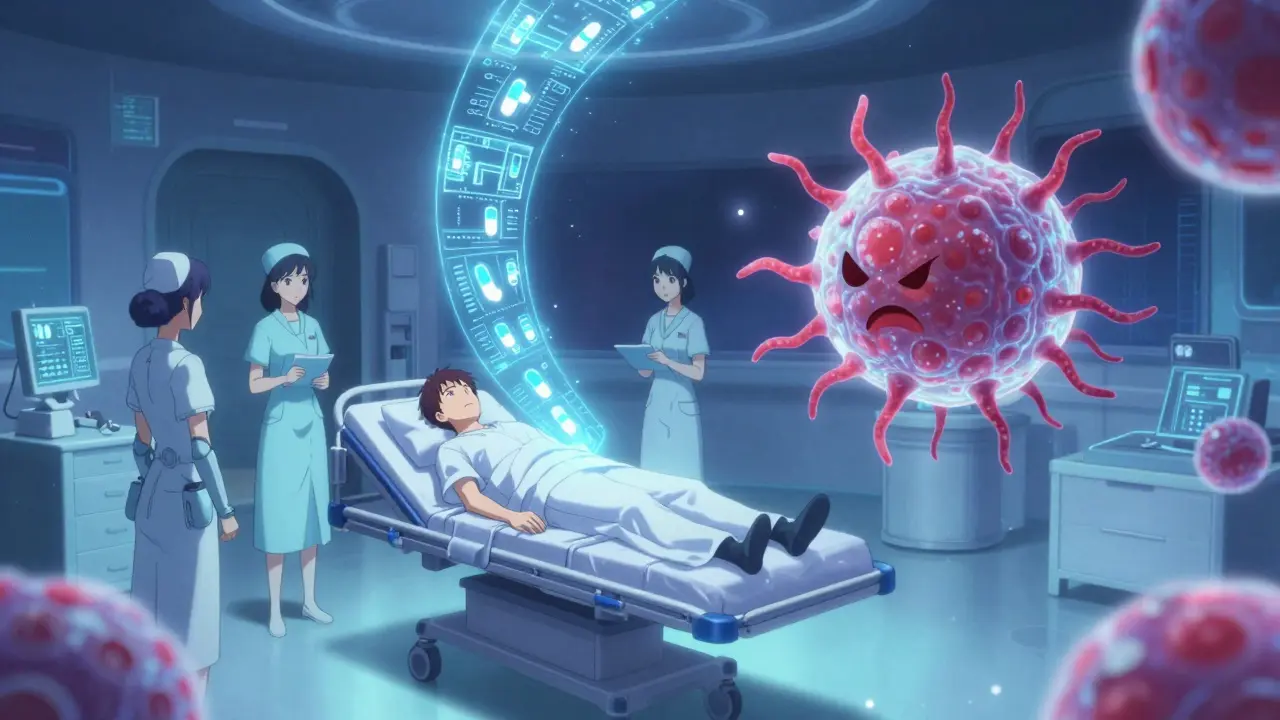
When you’ve had a serious allergic reaction to a medication-like hives, swelling, trouble breathing, or anaphylaxis-it’s natural to assume you’ll never be able to take that drug again. But what if that drug is the only one that can treat your cancer, your autoimmune disease, or a life-threatening infection? For many people, the answer isn’t stopping treatment-it’s drug desensitization.
What Is Drug Desensitization?
Drug desensitization is a controlled, medically supervised process that helps people with confirmed drug allergies safely receive the medication they need. It’s not a cure. It doesn’t remove the allergy. But it temporarily tricks the immune system into tolerating the drug long enough to complete treatment. This isn’t experimental. It’s been used for decades in major hospitals like Brigham and Women’s Hospital in Boston, where specialists have refined protocols for antibiotics, chemotherapy, biologics, and even aspirin. The American Academy of Allergy, Asthma & Immunology (AAAAI) officially endorses it in their 2022 guidelines. Success rates are over 90% when done correctly by trained teams.Who Needs It?
You might be a candidate for desensitization if:- You need a specific antibiotic for a severe infection and have no safe alternatives (common in cystic fibrosis or immunocompromised patients).
- You’re on chemotherapy or a targeted cancer drug like rituximab or cetuximab and developed a reaction.
- You have rheumatoid arthritis, Crohn’s disease, or another autoimmune condition requiring a biologic drug you’re allergic to.
- You need aspirin or an NSAID for heart protection or pain control but had a severe reaction.
- You’re scheduled for surgery and need a local anesthetic you’ve reacted to before.
It’s only considered when there are no other effective drugs available. If a similar medication works just as well, doctors will choose that instead.
How It Works: The Step-by-Step Process
Desensitization isn’t done in a clinic with a quick injection. It’s a slow, monitored climb up to your full dose. For intravenous drugs like antibiotics or chemotherapy, a typical 12-step protocol looks like this:- Start with 1/10,000th of your full therapeutic dose.
- Wait 20-30 minutes. Nurses check your blood pressure, oxygen levels, heart rate, and breathing.
- If no reaction, double the dose.
- Repeat every 20-30 minutes until you reach your full dose.
Most IV desensitizations finish in 5-6 hours. For oral drugs like aspirin or NSAIDs, the process is slower. Doses may be doubled every hour, and the full protocol can take days. That’s because reactions to oral drugs often involve different immune pathways and need more time to build tolerance.
At each step, you’re watched closely. If you start itching, develop a rash, or feel short of breath, the team will pause, drop back to the last safe dose, and extend the waiting time. Sometimes they’ll give antihistamines or steroids to calm the reaction before continuing.
Where It’s Done and Who Does It
This isn’t something you can do at home-or even at a regular doctor’s office. You need:- A hospital or specialized allergy clinic with emergency equipment on hand.
- A board-certified allergist or immunologist leading the process.
- A trained nursing team familiar with anaphylaxis management.
- Immediate access to epinephrine, IV antihistamines, corticosteroids, and oxygen.
Before the procedure, your medical team will review your reaction history in detail. They’ll write a custom protocol based on the drug, your past symptoms, and your current health. No two desensitizations are exactly alike.

What Drugs Can Be Desensitized?
Not all drugs can be safely desensitized. But for many critical ones, it’s the only way forward:- Antibiotics: Penicillin, cephalosporins, vancomycin, and carbapenems are common candidates, especially for patients with resistant infections.
- Chemotherapy: Platinum-based drugs like cisplatin, taxanes like paclitaxel, and targeted therapies like trastuzumab.
- Biologics: Rituximab, infliximab, tocilizumab, and omalizumab-drugs used for autoimmune diseases and cancer.
- Aspirin and NSAIDs: For patients with aspirin-exacerbated respiratory disease (AERD), which causes severe asthma and sinus polyps.
- Local anesthetics: Lidocaine or bupivacaine reactions, though rare, can be managed with desensitization before surgery.
Some reactions are too dangerous to attempt. You should never be desensitized if you’ve had:
- Stevens-Johnson syndrome
- Toxic epidermal necrolysis
- Erythema multiforme with blistering or skin peeling
- Drug-induced hepatitis or nephritis
- Serum sickness
These are tissue-damaging reactions, not IgE-mediated allergies. Desensitization won’t help-and could be deadly.
Why It’s Temporary
One of the most misunderstood things about desensitization is that it’s not permanent. Your body hasn’t forgotten the allergy. It’s just temporarily suppressed the response. If you stop taking the drug for more than 48-72 hours, the tolerance fades. If you need the drug again later, you’ll have to go through the whole process again. This is why it’s used for short-term needs-like a single course of antibiotics or a cycle of chemotherapy-not lifelong daily use. For patients who need daily aspirin, some centers use low-dose maintenance protocols, but that’s still being studied.What Happens If You React During the Procedure?
Reactions during desensitization aren’t rare-but they’re manageable. About 10-20% of patients experience mild symptoms like flushing, itching, or nausea. These are often treated with antihistamines and the protocol is paused. More serious reactions-like low blood pressure, wheezing, or swelling-happen in about 5% of cases. If they occur:- The infusion is stopped immediately.
- Epinephrine is given if needed.
- The patient is stabilized.
- Once stable, the team may restart at a lower dose with longer intervals.
Very rarely, the procedure must be abandoned. This happens if the reaction is severe and doesn’t respond quickly to treatment. That’s why having a team trained in advanced resuscitation is non-negotiable.
Success Stories and Real Impact
At Brigham and Women’s Hospital, patients with cancer who reacted to their chemotherapy were able to complete full treatment courses thanks to desensitization. In one study, 95% of patients with IgE-mediated reactions to carboplatin completed their planned chemotherapy without life-threatening events. For cystic fibrosis patients, desensitization to antibiotics like vancomycin meant they could avoid hospital stays and keep their lung function stable. For people with AERD, aspirin desensitization reduced sinus polyps and asthma attacks so dramatically that many no longer needed surgery. It’s not just about survival. It’s about quality of life. Being able to finish your cancer treatment, avoid a second surgery, or control your asthma without steroids changes everything.What Comes After?
After you complete the desensitization, you’ll be monitored for at least an hour. You’ll get instructions to watch for delayed reactions over the next 24-48 hours. If you’re on daily medication, you’ll be told never to skip a dose-because missing even one can reset your tolerance. You’ll also get a medical alert card or bracelet stating your drug allergy and that you’ve undergone desensitization. This is crucial if you ever end up in an emergency room.Is This Available Everywhere?
No. Desensitization is still a specialized procedure. It’s mostly offered at major academic medical centers with allergy/immunology departments. In Australia, it’s available in Melbourne, Sydney, and Brisbane-but not in smaller towns. If your doctor suggests it, ask if they have a referral to a center with experience. Don’t delay. Many of these procedures need to be scheduled weeks in advance, especially for chemotherapy or biologics.Bottom Line
A drug allergy doesn’t have to be a dead end. With the right team, the right protocol, and the right timing, you can safely receive the medication you need-even if your body once reacted to it violently. Desensitization isn’t magic. It’s science, patience, and precision. And for thousands of people every year, it’s the difference between life and loss.Can I try drug desensitization at home?
No. Drug desensitization must be done in a hospital or specialized clinic under direct medical supervision. Even mild reactions can quickly turn life-threatening. Epinephrine, IV fluids, and emergency airway support must be immediately available. Never attempt this on your own.
How long does a drug desensitization take?
For intravenous drugs like antibiotics or chemotherapy, most protocols take 5 to 6 hours. For oral drugs like aspirin, it can take several days, with doses given every hour or longer. The length depends on the drug, your reaction history, and how your body responds during the process.
Will I be allergic to the drug forever after desensitization?
No. Desensitization only creates temporary tolerance. If you stop taking the drug for more than 48 to 72 hours, your allergy typically returns. You’ll need to repeat the full process if you need the drug again later. It doesn’t change your underlying allergy.
What if I have a reaction during the procedure?
If you react, the team will stop the infusion and treat the reaction with medications like epinephrine or antihistamines. Once you’re stable, they may restart at a lower dose with longer breaks between steps. Most reactions are mild and manageable. Only in rare cases is the procedure abandoned.
Are there any drugs that can’t be desensitized?
Yes. Desensitization is not used for severe skin reactions like Stevens-Johnson syndrome, toxic epidermal necrolysis, or erythema multiforme with blistering. It’s also avoided for reactions that cause liver or kidney damage (hepatitis, nephritis) or serum sickness. These are not IgE-mediated allergies and carry high risks if re-exposed.
Is drug desensitization covered by insurance?
In most cases, yes. Since it’s a medically necessary procedure for life-saving treatments, most insurance plans-including Medicare and private insurers in Australia and the U.S.-cover it when performed in a hospital setting with proper documentation. Your allergist’s office can help you with pre-authorization.
Can children undergo drug desensitization?
Yes. Children with severe allergies to antibiotics or chemotherapy drugs can be desensitized, though protocols are adjusted for weight and age. Pediatric allergy centers with experience in this area handle these cases carefully, often using longer intervals between doses and closer monitoring.
What should I bring to my desensitization appointment?
Bring a list of all your current medications, your allergy history (including when and how you reacted), any previous test results, and a support person. Wear comfortable clothing. You’ll be sitting for several hours, so bring something to read or watch. Avoid eating a heavy meal right before, but stay hydrated.
Oh great, another ‘miracle cure’ for people who can’t follow basic allergy warnings. So let me get this straight - you’re telling me we can just slowly poison someone until their body gives up and stops reacting? Brilliant. Next they’ll desensitize people to opioids by giving them tiny doses until they’re addicted. This isn’t medicine, it’s Russian roulette with IV drips.
FWIW, the IgE-mediated vs. T-cell mediated distinction is CRITICAL here. Desensitization only works for Type I hypersensitivities - IgE-driven, mast-cell degranulation stuff. If you’ve got SJS/TEN, you’re dealing with CD8+ cytotoxic T-cells and keratinocyte apoptosis - no amount of incremental dosing will ‘trick’ that pathway. Seriously, stop conflating mechanisms. This isn’t just semantics - it’s life-or-death taxonomy.
THIS. IS. LIFE-CHANGING. 🙌
Imagine being told you’ll never get better - then finding out there’s a path, a *real* path, back to hope. I’ve seen patients cry after their first full chemo dose post-desensitization. Not because they’re ‘cured’ - but because they can finally finish treatment. This isn’t just science. It’s dignity. It’s survival. It’s the quiet heroism of allergists working 6-hour protocols while their patients hold their breath. Don’t underestimate this. It’s not magic. It’s mastery.
The clinical protocols outlined here are consistent with AAAAI guidelines and institutional standards at major academic centers. However, it is imperative that practitioners confirm the nature of the prior reaction through validated diagnostic testing prior to initiating any desensitization protocol. Misclassification of adverse drug reactions as ‘allergies’ remains a significant source of iatrogenic harm.
90% success rate? That’s nice. But what about the 10% who didn’t make it? Or the ones who got anaphylaxis mid-procedure and ended up in the ICU anyway? You’re glossing over the risks like they’re side effects. And why is this only available in big cities? So now if you’re poor or live in flyover country, you’re just supposed to die because your oncologist can’t get you to Boston? This isn’t medicine - it’s healthcare elitism wrapped in jargon.
Actually, you’re wrong about aspirin. Desensitization for AERD isn’t just for pain control - it’s disease-modifying. Regular daily aspirin after desensitization reduces nasal polyp recurrence by 70% and cuts asthma exacerbations by over 50%. It’s not temporary tolerance - it’s immunomodulation. The 48-72 hour window? That’s for *acute* exposure. Chronic low-dose regimens are totally different. Read the 2020 JACI paper by Castells before you parrot outdated info.
I just want to say how incredibly hopeful this is. I know people who’ve been told they can’t have chemo anymore - and then they went through desensitization and got to see their kids graduate. That’s not just medical progress - that’s family preservation. I know it sounds intense, but hearing these stories makes me believe in science again. Keep sharing this. Someone out there needs to know they’re not out of options.
You’re not alone. If you’re scared, that’s normal. I’ve sat with patients who shook through the whole 6-hour process. But here’s the thing - you’re not doing this alone. There’s a whole team watching you. Every minute. Every breath. You’re not a lab rat. You’re a person. And they’re fighting for you. You’ve got this. 💪❤️
Desensitization protocols must be individualized. In India, we lack standardized guidelines for biologics. Many hospitals still use outdated penicillin protocols for newer drugs. This article is accurate but lacks global context. Access is unequal. Training is insufficient. We need WHO-endorsed protocols for LMICs.
It’s irresponsible to promote this as a routine option. The risks are not trivial. If your doctor is pushing desensitization, ask them if they’ve done more than five procedures. If they haven’t, they’re playing with fire. This isn’t something you outsource to a resident. It requires decades of experience - and even then, mistakes happen. Don’t be a statistic.
OMG I just cried reading this 😭
My cousin did this for her lung cancer chemo - and now she’s dancing at her daughter’s wedding 🎉
They gave her 1/10,000th of a dose… like a whisper of poison… and now she’s alive. 🥹💖
Science is magic when it’s done right. Thank you for writing this. I’m sharing it with everyone.
I get why people are nervous - I was too. But I’ve seen this work too many times not to believe in it. The key isn’t just the protocol - it’s the team. The nurses who sit with you for hours. The allergist who stays past shift to make sure you’re stable. That’s the real treatment. The medicine is just the tool. The humanity is what saves you.
I’ve been through this twice. First with vancomycin for MRSA - then again with rituximab for lupus. The first time, I thought I was going to die. The second time, I cried when they gave me the first drop. Not because I was scared - but because I remembered how much I wanted to live. They don’t tell you how lonely it feels in that room, hooked up to monitors, waiting for your body to betray you again. But when you make it to the full dose… it’s like being reborn. I’m not cured. But I’m here. And that’s enough.