
How Natural Disasters Are Causing Drug Shortages - And What’s Being Done
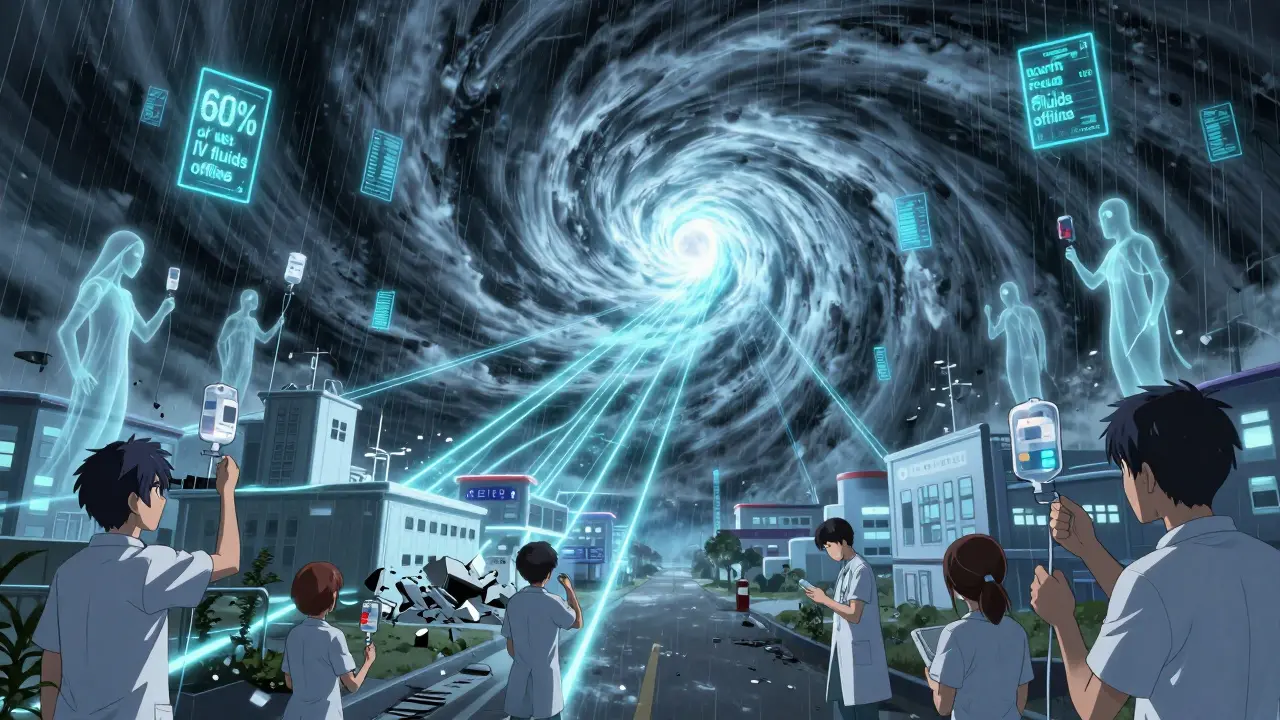
When Hurricane Helene hit North Carolina in September 2024, it didn’t just knock out power and flood homes - it shut down the largest supplier of IV fluids in the United States. Within 72 hours, hospitals across the country were rationing saline bags. Elective surgeries were canceled. Cancer treatments delayed. This wasn’t an accident. It was a predictable outcome of a pharmaceutical system built for efficiency, not resilience.
Why One Storm Can Break the Drug Supply
Most people think drug shortages happen because of factory errors or pricing disputes. But the biggest threat today is climate. Between 2017 and 2024, natural disasters caused 32% of all drug shortages in the U.S., according to the FDA. And it’s getting worse.
Puerto Rico used to make 10% of all FDA-approved drugs and 40% of sterile injectables - including insulin, antibiotics, and IV fluids. After Hurricane Maria in 2017, power outages lasted 11 months. Insulin shortages dragged on for 18 months. Patients died because they couldn’t get their medication. The island had 55 drug manufacturing plants. One storm took them all offline.
It’s not just Puerto Rico. The same pattern is playing out in North Carolina. Baxter’s plant in North Cove produces 60% of the nation’s IV fluids. When Helene hit, that plant went dark. No backup. No extra stockpile. No quick fix. The FDA warned the shortage would last until mid-2025.
The Hidden Geography of Risk
Over two-thirds of U.S. pharmaceutical manufacturing facilities are located in counties hit by weather disasters between 2018 and 2023. That’s not coincidence. It’s geography.
Western North Carolina is a hotspot. Spruce Pine supplies 90% of the high-purity quartz used in medical device chips. Marion hosts Baxter’s IV fluid plant. Rocky Mount was hit by a tornado in 2023 that shut down Pfizer’s production of 27 different medicines. Each of these places is a single point of failure.
And it’s not just hurricanes. Floods in Michigan in 2022 damaged Abbott’s infant formula plant - already in crisis. Wildfires in California have disrupted labs and warehouses. Even droughts in Texas can affect water-dependent drug manufacturing.
Unlike other industries, pharma can’t just switch suppliers overnight. It takes 6 to 12 months to build a new production line. Two to three years to install specialized equipment. And that’s assuming you can even get the parts - many are made in the same disaster-prone zones.
Why There’s No Backup
The industry runs on just-in-time inventory. No extra stock. No redundancy. Why? Because it’s cheaper. A single IV fluid bag costs less than $1 to make. But storing months of supply? That adds up.
78% of sterile injectable drugs in the U.S. have only one or two manufacturers. If one plant goes down, there’s no alternative. That’s why saline shortages after Maria lasted 14 months. Hospitals had to ration. Nurses had to choose who got fluids and who didn’t.
Compare that to something like aspirin - made by dozens of companies across the world. No shortage. But life-saving cancer drugs? Insulin? Antibiotics? Those are often made by one or two factories. And they’re all in the same high-risk zones.

Hurricanes Are the Biggest Threat - But Not the Only One
Hurricanes cause 47% of climate-related drug disruptions. Floods: 19%. Wildfires: 28%. Tornadoes: 6% - but they hit hard and fast.
Hurricanes destroy infrastructure: power grids, roads, water systems. That means even if the factory building is intact, it can’t run. No electricity. No clean water. No way to sterilize equipment. Insulin and IV fluids need ultra-clean environments. One power spike can ruin a whole batch.
Tornadoes are different. They don’t knock out entire regions - they hit one facility and obliterate it. The 2023 tornado in Rocky Mount wiped out Pfizer’s production of 27 drugs. No backup. No quick fix. Patients waited nine months for some medications to return.
And it’s not just the U.S. The 2018 earthquake in Iran killed 700 people and injured 10,000. Hospitals ran out of painkillers and antibiotics. But because Iran’s drug production is more spread out, the shortage didn’t last as long. The U.S. system is more fragile because it’s more concentrated.
What’s Being Done - And Why It’s Not Enough
The FDA now tracks climate risk as part of its drug shortage reporting. That’s progress. But tracking doesn’t fix anything.
After Maria, the FDA created an emergency pathway to import drugs from overseas. It took 28 days to get saline from Europe. In a crisis, that’s too slow.
Some hospitals are trying to build their own stockpiles. Mayo Clinic spent 8 months mapping every supplier - Tier 1, Tier 2, Tier 3. When a storm hit, they knew exactly which drugs were at risk and moved quickly. Their response time dropped by 65%.
But most hospitals can’t do that. Smaller clinics don’t have the staff, the tech, or the budget. That’s creating a dangerous gap. Big hospitals survive. Small ones don’t.
A pilot program in hurricane-prone states started storing emergency IV fluid reserves. During Helene, it cut shortage duration by 40%. But it’s still tiny - covering only a fraction of the country.
The Real Solution: Resilience, Not Just Reacting
Experts agree: the system needs to change. Not just react - but prepare.
Dr. Jagpreet Chhatwal from Massachusetts General says we need strategic reserves of critical drugs stored in geographically diverse locations. Not just in warehouses - but in places unlikely to be hit by the same storm.
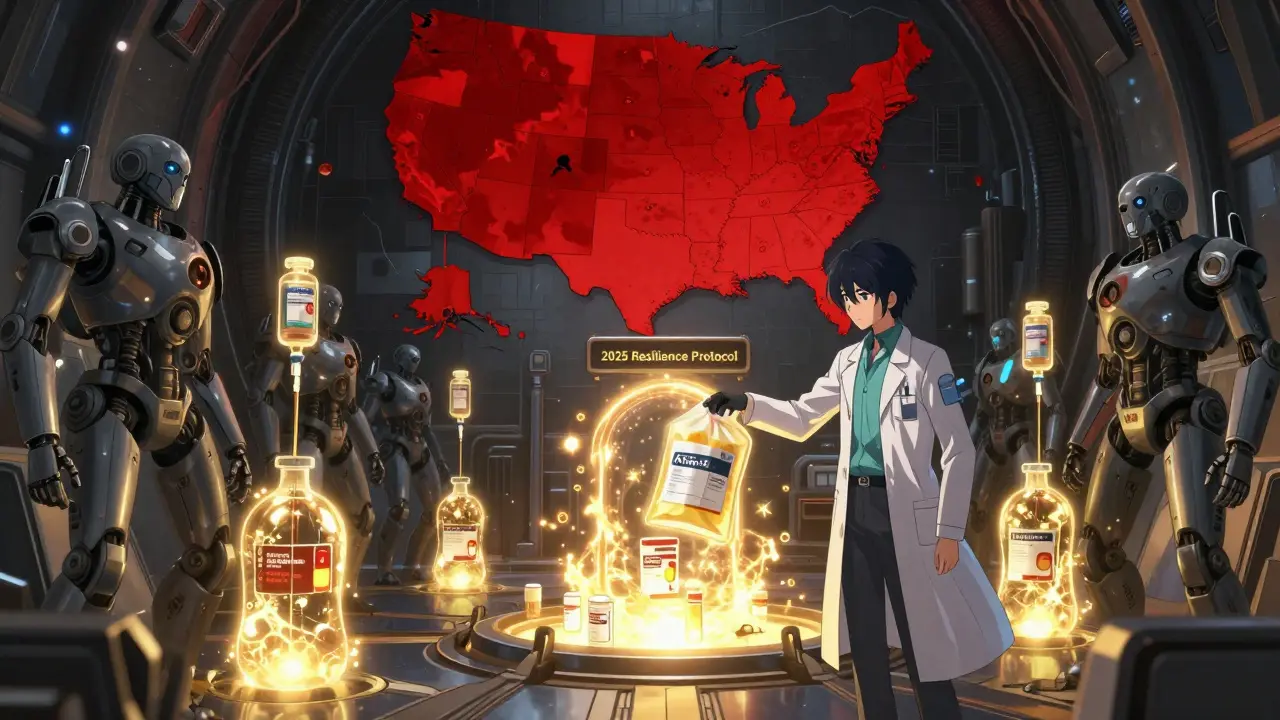
The FDA’s new 2025 rule requires manufacturers of critical drugs to keep 90-day emergency inventories and submit climate risk plans. That’s a start. It could prevent 60% of future shortages.
But it’s expensive. Production costs could rise 4-7%. Some argue that means higher drug prices. Others say the cost of not doing it - lives lost, surgeries canceled, cancer treatments delayed - is far higher.
Companies are starting to invest. The pharmaceutical supply chain resilience market is expected to grow from $4.2 billion in 2024 to nearly $10 billion by 2029. Big pharma is doing climate vulnerability assessments - 68% now, up from 22% in 2020. But only 31% have actually acted on them.
What You Can Do - And What Needs to Change
If you’re a patient on insulin, IV fluids, or other critical medications: talk to your pharmacist. Ask if there’s a backup plan. Know what alternatives exist. Keep a 30-day supply on hand if possible.
If you’re a healthcare worker: push for supply chain mapping in your hospital. Even basic tracking helps. Document where your drugs come from. Who makes them? Where are the factories?
But real change needs policy. We need:
- Government-funded emergency stockpiles for critical drugs
- Mandatory climate risk assessments for all drug manufacturers
- Incentives to build manufacturing outside disaster zones
- Fast-track approvals for alternative suppliers during crises
The American Society of Clinical Oncology warns that by 2027, cancer patients will face treatment delays during 8 to 10 major climate disasters every year - unless we fix this.
This isn’t about politics. It’s about survival. When the next storm hits, we can’t afford to wait for the FDA to catch up. The drugs we rely on are already on the front lines of climate change.
What’s Next?
The FDA’s Critical Drug Resilience Program launches in January 2025. It will fast-track approval for manufacturers who spread production across three climate-resilient zones. That’s the kind of thinking we need - not just more warehouses, but smarter geography.
Meanwhile, companies like Sensos are using AI to predict storms and alert hospitals 14 days in advance. That’s giving some time to secure emergency supplies. But it’s still a patch. We need a system.
The question isn’t whether another disaster will happen. It’s when. And how many lives will be at risk before we act.
The fact that one storm can shut down half the country's IV fluids is insane
i just read this and my heart sank. we cant keep acting like disasters are 'unpredictable' when the maps have been warning us for years. why are we still building factories in flood zones like its 1995?
So let me get this straight. We spend billions on fighter jets but can't afford to stockpile saline? Cool cool cool.
My grandma got her chemo delayed last year because of this. They gave her a plastic bag of water instead of saline. She cried. No one talked about it.
Man, this is like watching a house built on sand. You see the tide coming, you see the waves rising, but you still laugh and say 'it'll be fine'... until the whole thing washes away. And then you wonder why your kids are crying. The system ain't broken-it was designed this way. Cheap now, pay later. But who pays? The sick. The poor. The ones who can't scream loud enough.
They talk about 'resilience' like it's a buzzword. But resilience ain't a PowerPoint slide. It's backup generators. It's geographically scattered factories. It's real money spent before the storm hits, not after. It's saying 'this drug saves lives' and treating it like it matters.
Meanwhile, the CEOs are sipping bourbon in their penthouses, counting how much they saved by not storing extra stock. And we're supposed to be grateful they're 'tracking' the problem now? Tracking doesn't refill an IV bag.
It's not about politics. It's about who we are as a society. Do we value a life over a profit margin? Because right now, the math says no.
And if you think this is an isolated incident, you're not paying attention. The next storm won't be in North Carolina. It'll be in Ohio. Or Arizona. Or Florida. And the same factories will be there. The same lack of planning. The same silence.
We don't need more reports. We need action. Now. Before the next patient dies because someone thought 'it won't happen here.'
So many people don't realize how much of their meds come from one tiny town. I live in NC and had no idea Spruce Pine made 90% of the quartz for medical chips. Wild.
Also, I just checked my insulin bottle-made in Puerto Rico. 😳
Mayo Clinic’s approach is the model. Hospitals should be required to map their supply chains like they map their ER layouts. It’s not optional anymore. If you’re treating cancer patients, you need to know where every vial comes from. Period.
And if the FDA’s 2025 rule doesn’t force manufacturers to build redundancy, it’s just a press release. We need teeth. Penalties. Fines. No more ‘we’re working on it.’
This isn’t about cost. It’s about survival. If you’re a CEO who says ‘it’s too expensive,’ you’re not a leader-you’re a liability.
Why do we let one company make 60% of IV fluids? That’s like having one bridge to a city. If it falls, everyone’s stuck.
As a physician from India, I have witnessed firsthand how fragile pharmaceutical supply chains can be-especially in low-resource settings. But what strikes me most is the paradox: the U.S., with all its technological prowess and wealth, has created a system more vulnerable than many developing nations. We outsource resilience for profit, and then act shocked when the system collapses.
India, despite its own infrastructure challenges, has over 500 drug manufacturers spread across 18 states. We have redundancy by necessity. The U.S. has redundancy by choice-and chose not to exercise it.
The FDA’s new rule requiring 90-day reserves is a step, but it’s a baby step. Why 90 days? Why not 180? Why not mandate dual sourcing for all Class I drugs? Why not fund regional manufacturing hubs in climate-resilient zones like the Midwest or the Rockies?
And let’s not pretend this is only about hurricanes. Droughts in Texas? Wildfires in California? These aren’t ‘acts of God’-they’re climate consequences, and they are accelerating. The pharmaceutical industry must be held to the same standards as nuclear plants or airlines: zero tolerance for single points of failure.
Patients are not data points. Drugs are not commodities. When a child with leukemia waits for a life-saving antibiotic, and the only factory that makes it is underwater, that is not a supply chain issue-it is a moral failure.
Let us stop calling this ‘innovation.’ Let us call it what it is: negligence dressed up in corporate jargon.
Of course the government wants to spend billions on drug stockpiles. But who’s paying? The Chinese? The Mexicans? They’re the ones running all the factories anyway. This is just another socialist scam to make Americans dependent on the state. Let the market fix it. If you can’t get saline, maybe you shouldn’t be sick.
Yo I just realized my asthma inhaler is made in a plant 10 miles from where Hurricane Helene hit. I’ve been using it for 3 years and never thought about where it came from. That’s wild. We’re all one storm away from being in real trouble.
Also-why are we still letting companies build in flood zones? Are they just trying to save a few bucks? Because this is costing us way more in the long run.
So… what’s the point of this post? We already know the system’s broken.
Colleen’s comment is the exact reason we’re in this mess. Blaming immigrants for drug shortages while ignoring the corporate decisions that outsourced everything to disaster zones? That’s not patriotism. That’s ignorance with a megaphone.
The truth? The companies that moved production overseas didn’t do it because of China-they did it because they could cut costs and avoid regulation. Now they want to pretend it’s not their fault when the system collapses. It’s their design. Their risk. Their failure.
And if you think ‘letting the market fix it’ works for insulin or saline, you’ve never watched someone go into diabetic ketoacidosis because their pharmacy ran out. No market can fix that. Only policy can.