
Facial Flushing from Medications: Common Triggers and How to Find Relief
Medication Flush Checker
Enter your medication name to check if it commonly causes facial flushing and get management tips.
Result for
Flushing Risk
How It Works
Management Tips
When to Seek Help
When your face suddenly turns bright red, feels hot, and maybe even starts to tingle, it’s not just embarrassment-it could be your medication talking. Facial flushing from drugs is more common than most people realize, and it’s not always harmless. Whether you’re taking a pill for high blood pressure, a cholesterol-lowering niacin supplement, or even an antibiotic, your face might be sending you a signal. The good news? You don’t have to just live with it. Understanding what’s causing it and how to manage it can make a big difference in your daily life.
What Causes Medication-Induced Facial Flushing?
Facial flushing happens when blood vessels near the surface of your skin widen, letting more blood flow through. This makes your face, neck, and sometimes chest turn red and feel warm. It’s not an allergy-it’s a direct pharmacological effect. Different drugs trigger this in different ways, but the end result is the same: visible, sometimes uncomfortable redness.
Some medications cause flushing by relaxing blood vessels on purpose. That’s how vasodilators like nitroglycerin, hydralazine, and minoxidil work-they lower blood pressure by opening up arteries. But they don’t discriminate. The same effect that helps your heart also makes your cheeks glow. Calcium channel blockers like amlodipine and nifedipine do the same thing. If you’ve started one of these and noticed your face turning red within minutes, it’s likely the drug, not something you ate.
Then there’s niacin-vitamin B3. It’s used to lower bad cholesterol and raise good cholesterol, but its side effect is legendary. The niacin flush hits hard: intense redness, warmth, sometimes even itching. It’s caused by prostaglandins, chemicals that trigger inflammation and blood vessel dilation. Studies show aspirin can reduce it by about 30%, but not eliminate it. That’s why many people stop taking niacin, even though it works.
Opioids like morphine cause flushing too-but through a different path. They make mast cells in your skin release histamine, the same chemical involved in allergies. That’s why you might feel itchy along with the redness. It’s not a true allergy, but it feels like one. Vancomycin, an antibiotic, causes something called “red man syndrome,” which includes flushing, low blood pressure, and dizziness. Slowing down the IV drip can prevent it.
Other common culprits include:
- Corticosteroids like prednisone and triamcinolone
- Hormone therapies like tamoxifen, leuprorelin, and raloxifene
- ED drugs like sildenafil (Viagra)
- Chemo agents like doxorubicin
- Older diabetes drugs like chlorpropamide (especially with alcohol)
Even some supplements and recreational substances can trigger it. Amyl nitrite (“poppers”) and butyl nitrite are powerful vasodilators. Alcohol causes flushing in people with a genetic enzyme deficiency-common in East Asian populations-because their bodies can’t break down acetaldehyde properly. Combine that with certain meds, and the flush gets worse.
When Is Facial Flushing a Concern?
Most medication-related flushing is annoying, not dangerous. But there are red flags. If your flushing comes with:
- Difficulty breathing or throat tightness
- Swelling of the lips, tongue, or face
- Dizziness, fainting, or a rapid heartbeat
- High fever or rash spreading beyond your face
…then it could be a true allergic reaction or a serious condition like anaphylaxis or carcinoid syndrome. In those cases, stop the medication and seek medical help immediately.
For most people, though, flushing is a nuisance-not an emergency. The real problem is that it leads people to stop taking important drugs. If you’re flushing from niacin and quit because it felt unbearable, your cholesterol might be back up. If you skip your blood pressure pill because your face turns red, you’re risking stroke or heart damage. That’s why managing the flush matters more than ignoring it.
How to Relieve Medication-Induced Flushing
There’s no one-size-fits-all fix, but several proven strategies can help.
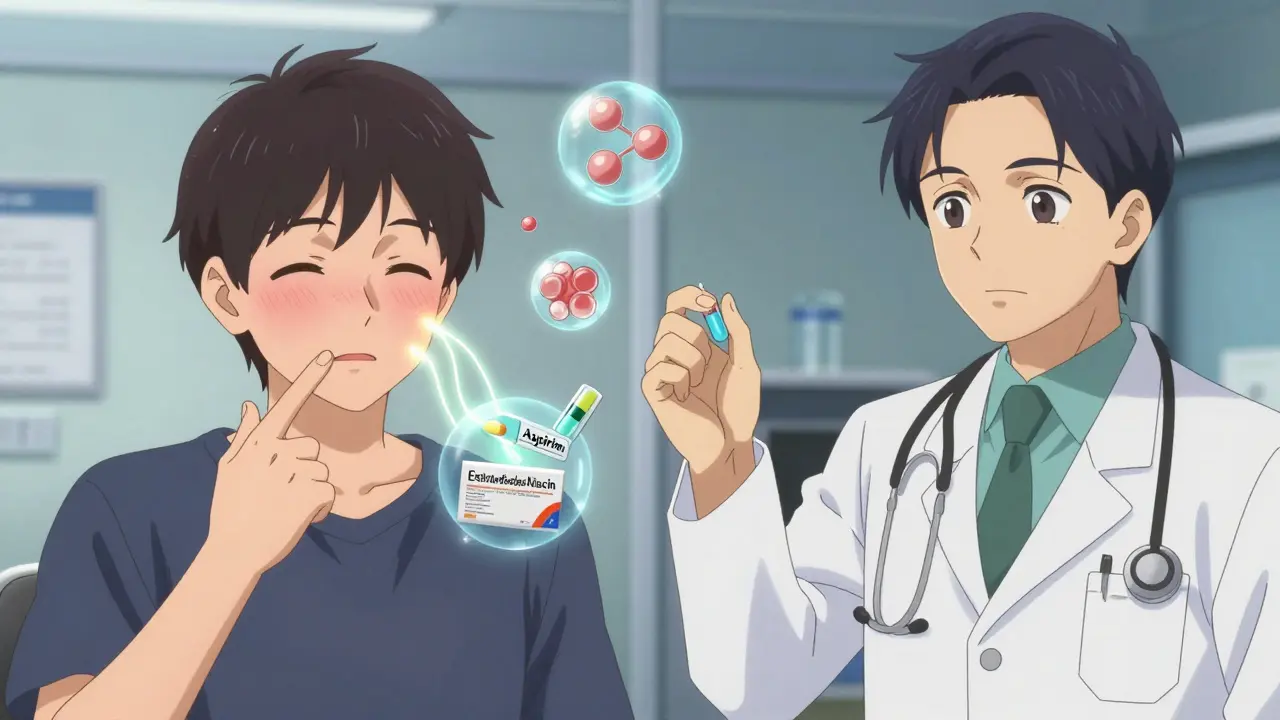
1. Take aspirin 30 minutes before your dose-especially if you’re on niacin. Low-dose aspirin (81 mg) blocks the prostaglandins that cause the flush. It won’t stop it completely, but it can cut it down enough to make tolerable. Don’t use this if you’re allergic to aspirin or have a bleeding disorder.
2. Use antihistamines for histamine-driven flushes. If your flushing comes with itching or feels like an allergic reaction (like with opioids or vancomycin), try an H1 blocker like cetirizine (Zyrtec) or loratadine (Claritin). Some doctors also add an H2 blocker like famotidine (Pepcid) for extra effect.
3. Adjust how you take the drug. For niacin, try the extended-release version-it flushes less. For vancomycin, make sure your IV is given slowly over at least 60 minutes. For blood pressure meds, taking them at night might reduce daytime flushing.
4. Try clonidine or beta-blockers. These aren’t approved for flushing, but doctors often prescribe them off-label. Clonidine works on your nervous system to reduce blood vessel dilation. Beta-blockers like propranolol or nadolol help if anxiety makes your flush worse. They’re not magic, but they can take the edge off.
5. Consider Botox or laser treatment. For severe, chronic flushing that doesn’t respond to meds, some patients turn to cosmetic procedures. Botox injections into the face can block nerve signals that cause flushing. Effects last 4-6 months. Vascular lasers target the small red blood vessels under the skin, reducing long-term redness. These aren’t cheap or covered by insurance, but for people whose lives are disrupted, they’re worth discussing.
Lifestyle Changes That Help
Medications might be the trigger, but your environment can turn a mild flush into a full-blown episode.
- Avoid hot drinks, spicy food, and alcohol. These all widen blood vessels on their own. Combine them with your meds, and you’re doubling down on the flush.
- Stay cool. Heat makes flushing worse. Use fans, avoid saunas, and wear breathable fabrics. If you’re outside, seek shade.
- Watch out for MSG. Monosodium glutamate, common in processed and Asian foods, can trigger flushing in sensitive people.
- Manage stress. Anxiety doesn’t cause medication flushing, but it can make it worse. Deep breathing, mindfulness, or even talking to a therapist can reduce the frequency and intensity.
- Don’t skip your meds. If flushing is making you want to quit, talk to your doctor. There’s almost always a workaround-different dose, different time of day, or a different drug altogether.

What to Do Next
If you’re experiencing facial flushing and you’re on any medication, start by keeping a simple log:
- What drug did you take?
- When did you take it?
- How soon after did the flush start?
- How long did it last?
- Did anything make it better or worse?
Bring this to your doctor. Don’t assume it’s normal. Some drugs can be switched without losing effectiveness. For example, if niacin is causing too much flushing, ezetimibe or a statin might be a better option for cholesterol. If your blood pressure med is flushing you, maybe a different class like an ACE inhibitor would work instead.
Also, ask about non-drug options. Many people don’t know that flushing can be managed with lifestyle tweaks and simple over-the-counter aids. You don’t have to suffer through every red face moment.
Bottom Line
Facial flushing from medication isn’t rare, and it’s rarely life-threatening-but it’s often underestimated. It can stop people from taking vital drugs, ruin confidence, and affect quality of life. The key is to recognize it for what it is: a predictable side effect, not a personal failure. With the right tools-medication adjustments, simple OTC aids, lifestyle changes, and sometimes medical procedures-you can take control. Talk to your doctor. Don’t just endure it. There’s almost always a way to reduce it.
Can facial flushing from medication be dangerous?
In most cases, no. Medication-induced flushing is usually harmless and caused by blood vessel dilation. However, if it’s accompanied by trouble breathing, swelling, dizziness, or a rapid heartbeat, it could signal a serious allergic reaction or another medical issue like carcinoid syndrome. Seek immediate medical help if you experience those symptoms.
Does niacin flushing go away over time?
For many people, yes. The intensity of niacin flushing often decreases after a few weeks of consistent use as the body adjusts. Taking it with food, using extended-release forms, or taking aspirin beforehand can help speed up this process. But some people never fully adapt, and switching to another cholesterol medication may be the best long-term solution.
Can I take aspirin to prevent flushing from my medication?
Aspirin can help reduce flushing caused by niacin and some other drugs that act through prostaglandins. A low dose (81 mg) taken 30 minutes before your medication can reduce the flush by about 30%. But don’t use it if you have a bleeding disorder, stomach ulcers, or an aspirin allergy. Always check with your doctor first.
Is facial flushing the same as rosacea?
No. Rosacea is a chronic skin condition that causes persistent redness, visible blood vessels, and sometimes bumps. Medication flushing is temporary and triggered by drugs. But medication-induced flushing can worsen rosacea symptoms, and the two can overlap. If you have rosacea and start a new medication, flushing may become more frequent or intense.
What should I do if my medication causes flushing and I want to stop taking it?
Don’t stop on your own. Many of these medications-like blood pressure pills or niacin-are critical for your health. Talk to your doctor instead. They can help you switch to a similar drug that doesn’t cause flushing, adjust your dose, or suggest ways to manage the side effect. Stopping abruptly can be risky.
Are there natural remedies for medication flushing?
There’s no proven natural cure, but avoiding triggers like heat, alcohol, spicy food, and stress can help reduce episodes. Cooling your face with a damp cloth, staying in air-conditioned spaces, and practicing relaxation techniques like deep breathing can also ease symptoms. These won’t stop the flush caused by the drug itself, but they can make it less severe.
Facial flushing from medication is not something you have to accept silently. With the right information and support, you can keep taking what you need without letting your face do all the talking.

Been on niacin for a year now. The flush still hits like a freight train, but I take my 81mg aspirin before bed and it’s way more bearable. Also, no alcohol. No spicy food. No hot showers. Life’s just… quieter now.
You people act like flushing is some rare side effect. It’s literally in every drug insert. If you can’t handle a red face, maybe you shouldn’t be on meds that affect your vasculature. My uncle took minoxidil for hair and his whole chest turned lobster-colored. He kept taking it. Got results. You want comfort? Go live in a cave.
I used to think I was allergic to everything until I realized it was just my blood pressure med. Took me six months to figure it out because my doctor kept saying ‘it’s normal.’ It’s not normal to look like you just ran a marathon in a sauna at 9am. I switched to lisinopril and now I can go to work without people asking if I’m drunk or dying.
As someone from India who grew up with niacin flushes from supplements sold at the local pharmacy, I can say this: the body adapts. But what’s more important is knowing your triggers. Alcohol + niacin = nuclear meltdown. Heat + vasodilators = instant tomato. Learn your chemistry. Your face will thank you.
Why are Americans so fragile? I’ve seen people in Mumbai take statins, beta-blockers, and chemo with zero complaints. You get a red face and suddenly it’s a crisis? Get a thicker skin. Or better yet, don’t take the meds if you’re that weak.
It is irresponsible to suggest aspirin as a universal solution without acknowledging contraindications. Bleeding disorders, peptic ulcers, pediatric use, and NSAID hypersensitivity are serious considerations. This article’s tone trivializes medical complexity. If you are experiencing medication-induced flushing, consult a licensed clinician-not Reddit.
People don’t realize flushing isn’t just physical-it’s emotional. It’s the way strangers stare. The way your partner asks if you’re okay. The way you start avoiding social events because you don’t want to be the ‘red-faced lady.’ It’s not just a side effect. It’s a silent shame. And no, aspirin doesn’t fix that.
Flushing is the universe whispering: ‘You’re not in control.’ Every time your face glows like a warning light, it’s your body screaming that you’re at the mercy of chemicals you don’t understand. We think we’re managing our health-but really, we’re just hostages to pharmaceuticals. Maybe the real question isn’t how to stop the flush… but why we let ourselves be this vulnerable in the first place.
It is imperative to emphasize that self-medication with aspirin or antihistamines, while seemingly benign, constitutes a significant deviation from evidence-based clinical protocols. The pharmacokinetic interactions between prostaglandin inhibitors and cardiovascular agents may precipitate unforeseen adverse events, including but not limited to renal impairment, platelet dysfunction, and drug-induced hepatotoxicity. Professional medical supervision is not optional-it is non-negotiable.