
Cold Sores vs. Pimples: How to Tell Them Apart and Treat Them Right
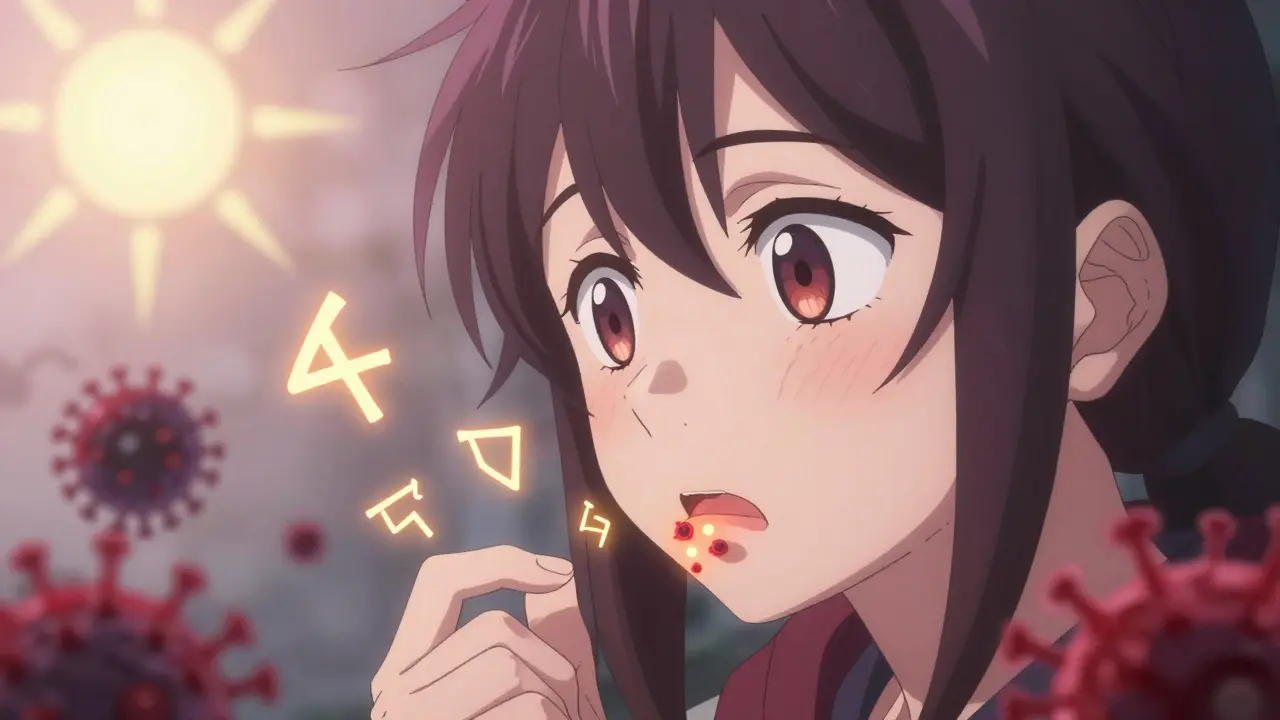
Ever looked in the mirror and seen a small bump near your lip, wondering if it’s a cold sore or just a pimple? You’re not alone. Thousands of people mix these two up every day - and that mistake can make things worse. Cold sores and pimples look similar at first glance, but they’re completely different conditions with totally different causes, treatments, and risks. Getting it wrong means you could spread a virus, irritate your skin more, or waste weeks waiting for a pimple treatment to work on something it can’t touch.
What Causes Cold Sores?
Cold sores are caused by the herpes simplex virus type 1 (HSV-1). This isn’t some rare infection - about 67% of people under 50 worldwide carry it, according to the World Health Organization. Once you get it, it stays with you for life. It hides in nerve cells and wakes up when your body is stressed, tired, sunburned, or sick. You don’t need to have had a visible outbreak to be carrying it. Many people never even know they have it until they get their first cold sore. The first sign? A tingling, burning, or itching feeling on or around your lip - usually 12 to 48 hours before you see anything. That’s your body’s warning. Then, small fluid-filled blisters appear, often in a cluster. They don’t just pop like a pimple. They break open, weep clear fluid, turn cloudy, then crust over into a scab. The whole process takes 7 to 14 days without treatment. If you catch it early - right when you feel that tingle - antiviral creams like acyclovir or valacyclovir can cut the healing time by a day or two.What Causes Pimples?
Pimples are part of acne, a condition caused by clogged pores. Your skin makes oil (sebum), sheds dead cells, and has bacteria living on it. When oil and dead skin cells pile up in a hair follicle, they trap bacteria - mainly Cutibacterium acnes - and your immune system reacts. That’s the red, swollen bump you see. Pimples can show up anywhere on your face, including your chin, forehead, nose, and yes - even on your lip if there’s a hair follicle there. Unlike cold sores, pimples don’t come with a warning. No tingling. No itching. Just a red bump that hurts when you touch it. Sometimes it has a white or yellow head - that’s pus, not virus. Pimples usually heal in 3 to 7 days, but deeper ones like cysts can last weeks. They’re not contagious. You can’t catch a pimple from someone else. You can’t spread it to your pillow, your phone, or your partner. It’s just your skin reacting to its own blockage.Key Differences You Can See and Feel
Here’s how to tell them apart - fast and for sure:- Location: Cold sores almost always show up on the edge of your lip - where the red part meets your skin. Pimples can pop up anywhere on your face, including the center of your lip, cheeks, or jawline.
- Appearance: Cold sores start as a cluster of tiny blisters. Pimples are single bumps. One blister? Could be a pimple. Three or four grouped together? Almost certainly a cold sore.
- Sensation: Cold sores warn you first. Tingling, burning, itching - that’s the real giveaway. Pimples? They just hurt when you poke them. No early warning.
- Contagious? Cold sores? Highly contagious. You can spread HSV-1 through kissing, sharing lip balm, or even touching the sore then touching your eye. Pimples? Zero risk. No virus. No transmission.
What Happens If You Treat Them Wrong?
This is where things go off the rails. If you treat a cold sore like a pimple - slapping on benzoyl peroxide, salicylic acid, or toothpaste - you’re not helping. You’re making it worse. These ingredients dry out and irritate the skin. That can rupture the blisters, release more virus, and spread the infection to your cheek, nose, or even your eye. One study found that 72% of people who used acne spot treatments on cold sores ended up with more irritation and longer healing times. And if you pop a cold sore? Don’t. You’re not squeezing out pus. You’re releasing live virus. That’s how people spread it to their fingers, towels, or their kids. The CDC says avoiding touching active sores cuts transmission risk by 75%. On the flip side, if you think a pimple is a cold sore and wait for antivirals to kick in? You’re wasting time. Benzoyl peroxide or salicylic acid works on acne. It doesn’t do anything to a virus. You’ll sit there for days while the pimple gets angrier and more inflamed.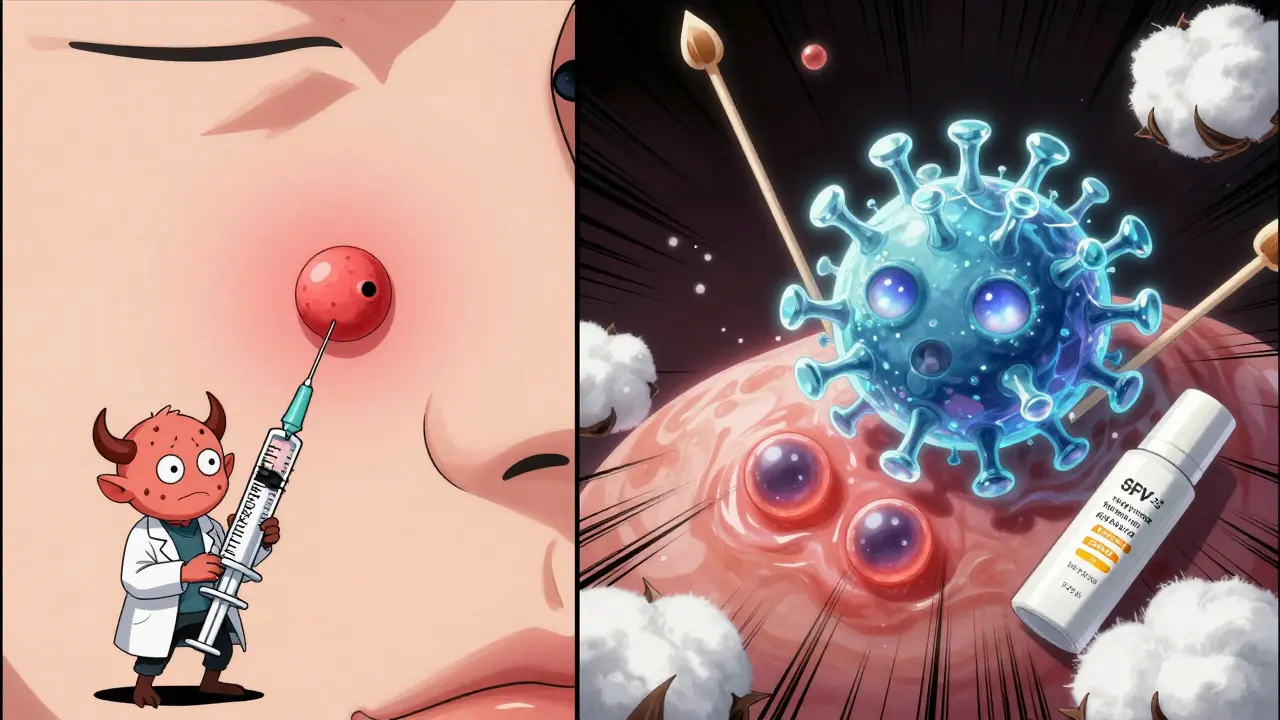
How to Treat Cold Sores Correctly
The best time to treat a cold sore is before you see the blister. Right when you feel that tingle.- Prescription antivirals: Acyclovir cream (Zovirax) or valacyclovir pills (Valtrex) are most effective if started within the first 24 hours. They can shorten the outbreak by 1-2 days.
- Over-the-counter: Docosanol (Abreva) is the only FDA-approved OTC option. It won’t cure it, but it can reduce healing time if used 5 times a day for 4-5 days.
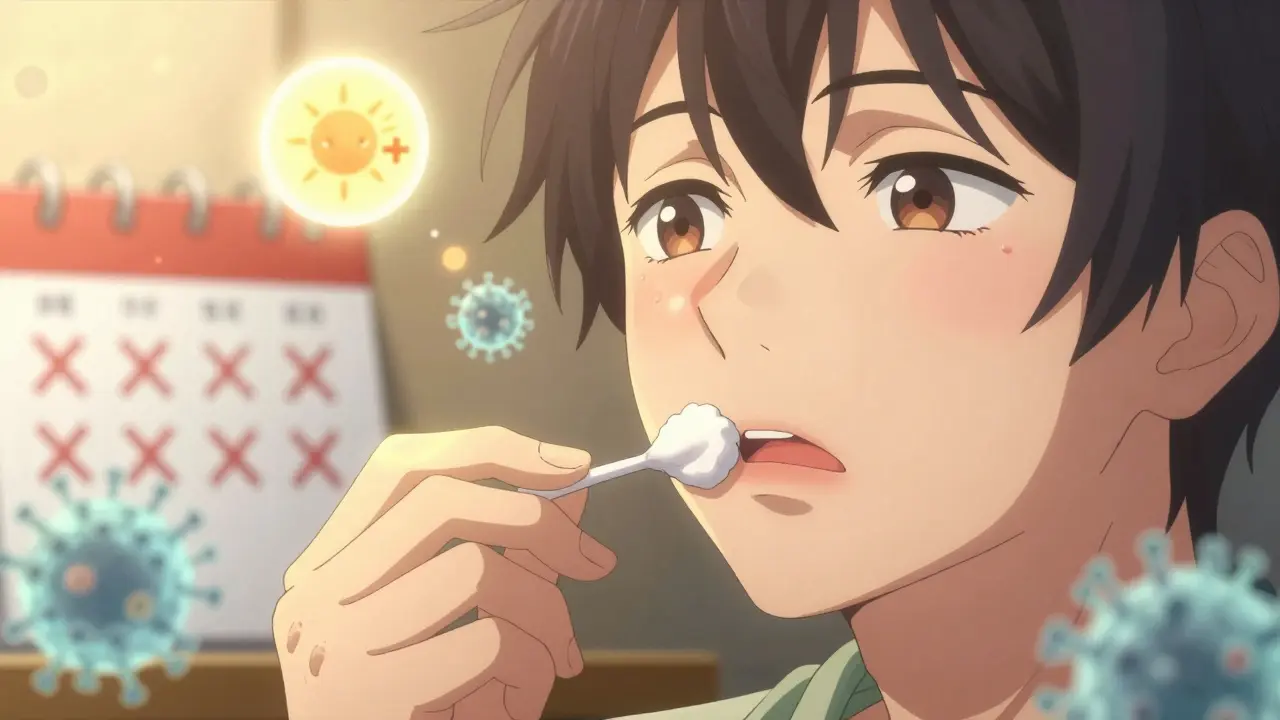
- Apply gently: Use a cotton swab, not your fingers. Wash your hands before and after.
- Don’t share: No lip balm, no utensils, no kissing. Even if you don’t see the sore yet, you can still spread the virus.
How to Treat Pimples Correctly
Pimples respond to consistent care, not quick fixes.- Benzoyl peroxide (2.5%-10%): Kills acne bacteria and reduces inflammation. Studies show it clears up 40-60% of inflammatory pimples in 4 weeks. Start with 2.5% - it’s just as effective and less drying.
- Salicylic acid (0.5%-2%): Unclogs pores. Great for blackheads and whiteheads. Use daily, not just when you see a pimple.
- Don’t pick: Picking leads to scarring and longer healing. Use a spot treatment, not your nails.
- Moisturize: Even oily skin needs hydration. Look for non-comedogenic labels.
What Triggers Cold Sores - And How to Stop Them
Cold sores don’t just appear out of nowhere. They’re triggered. And knowing your triggers helps you avoid them.- UV exposure: Sunlight triggers outbreaks in 32% of people. Use a lip balm with SPF 30+ every day, even in winter.
- Stress: High stress levels activate the virus in 28% of cases. Sleep, breathing exercises, and reducing workload help more than you think.
- Hormones: Women often get outbreaks before their period. That’s normal. Track it.
- Illness: A cold or flu weakens your immune system. That’s when HSV-1 wakes up.
When to See a Doctor
You don’t need to run to the doctor for every bump. But call one if:- The sore lasts longer than 2 weeks.
- You get sores inside your mouth or on your eyes.
- You have a weakened immune system (from cancer treatment, HIV, or steroids).
- You’re not sure what it is - and it keeps coming back.
Common Mistakes People Make
Here’s what not to do:- Applying toothpaste or baking soda to cold sores - it burns and delays healing.
- Sharing lip balm, razors, or towels during an outbreak - that’s how you infect others.
- Using alcohol-based toners on pimples - it dries skin, makes oil production worse.
- Waiting to treat a cold sore until it’s a big blister - you’ve already missed the window for fastest healing.
Final Takeaway
Cold sores and pimples look alike, but they’re not the same. One is a virus. One is a clogged pore. One is contagious. One isn’t. One needs antivirals. One needs acne treatments. If you feel a tingle near your lip - act fast. Use an antiviral. Wash your hands. Don’t kiss anyone. If you see a single red bump with a white head - reach for benzoyl peroxide. Don’t touch it. Give it time. Know the difference. Treat it right. Stop guessing. Your skin will thank you.Can a cold sore turn into a pimple?
No, a cold sore cannot turn into a pimple. They’re caused by completely different things - one by a virus, the other by clogged pores. But a cold sore can look like a pimple in the early stages, which is why people confuse them. The key is to look for clustering, tingling, and location on the lip border - those are signs of a cold sore, not acne.
Can you get a pimple on your lip?
Yes, you can get a pimple on your lip - especially along the edge where hair follicles are present. These are usually single bumps with a white or yellow head, and they don’t come with tingling or itching. If it’s a cluster of blisters, it’s not a pimple - it’s a cold sore.
Is it safe to pop a cold sore like a pimple?
No, never pop a cold sore. Unlike a pimple, the fluid inside contains live herpes virus. Popping it spreads the infection to other parts of your skin or to other people. It also delays healing by 3-5 days on average and increases the risk of scarring or secondary infections.
Can stress cause cold sores?
Yes, stress is one of the top triggers for cold sores. Studies show it activates the herpes virus in about 28% of people who carry HSV-1. Managing stress through sleep, exercise, or mindfulness can reduce outbreak frequency. It won’t cure the virus, but it helps keep it dormant.
Do I need to throw away my lip balm after a cold sore?
Yes, if you used the same lip balm during an active outbreak, throw it away. The virus can survive on the applicator for hours, even after the sore heals. Use a new tube after the scab falls off. Same goes for lip gloss, lip liners, and any other lip products.
Can sunscreen prevent cold sores?
Yes, UV exposure triggers cold sores in about one-third of people. Using a lip balm with SPF 30+ every day - even in winter - can significantly reduce outbreaks. Look for products labeled for sun protection on the lips, not just regular sunscreen.
Love this breakdown! I used to mix them up all the time until I got my first cold sore and realized toothpaste didn't fix it 😅 Now I keep Abreva in my bag like a superhero potion. Your tips on SPF and stress? Game changers.
Let’s be honest - this post is dangerously oversimplified. The WHO statistic on HSV-1 is misleading because it conflates seropositivity with active shedding. Most carriers never transmit it. Meanwhile, acne pathophysiology ignores the role of gut microbiome dysbiosis and insulin-like growth factor-1, which are peer-reviewed, clinically significant factors. You’re reducing a complex immunovirological condition to a BuzzFeed quiz.
Just got my first cold sore last week and I panicked until I read this. Seriously thank you. No more toothpaste. No more popping. Just calm vibes and antiviral cream. You’re right - catching it early is everything. I’m finally treating my skin like it matters.
How quaint. A post that treats dermatology like a Pinterest tutorial. You assume the reader is a 20-year-old with a $12 drugstore lip balm and zero access to a dermatologist. The real issue? The medical-industrial complex commodifies viral outbreaks into OTC products while ignoring systemic immune modulation. But sure, slap on Abreva and call it self-care.
While the clinical distinctions are technically accurate, the post fails to contextualize HSV-1 within the broader framework of neurotropic viral latency and immune surveillance dynamics. The assertion that 67% of the global population under 50 carries HSV-1 is statistically valid but lacks nuance regarding geographic prevalence stratification and asymptomatic shedding rates. Moreover, the recommendation for daily SPF use as a prophylactic measure is insufficiently supported by longitudinal cohort data.
I must say… I find it… profoundly… troubling… that so many people treat such a delicate, intimate, and emotionally charged condition - one that carries the weight of stigma, shame, and social isolation - as if it were merely a ‘bump’ to be managed with over-the-counter creams. Do you not see? This isn’t about acne. It’s about identity. It’s about fear. It’s about the quiet terror of being ‘contaminated’… and then… being blamed for it.
Thanks for writing this. I’ve had cold sores since I was 12 and never knew why they kept coming back. Now I know stress and sun are my triggers. I’m starting to use SPF lip balm every day. Small change. Big difference.
thank you for this post. i realy needed to read this. i used to think my lip balm was causing my pimples but now i know its the virus. i will try the acyclovir next time. i also will not share my lip gloss anymore. i hope i dont get another one soon.
THIS IS WHY AMERICA IS FALLING APART. PEOPLE DON’T KNOW THE DIFFERENCE BETWEEN A COLD SORE AND A PIMPLE? YOU’RE TELLING ME WE’RE LETTING VIRUSES SPREAD BECAUSE SOMEONE USED TOOTHPASTE ON THEIR LIP? THIS ISN’T JUST IGNORANCE - IT’S A PUBLIC HEALTH CATASTROPHE. WE NEED A NATIONAL CAMPAIGN. A TV SPECIAL. A PSA WITH DOLLY PARTON. THIS IS UNACCEPTABLE.
As a Black woman who gets cold sores before her period, I’ve been told ‘it’s just acne’ by 3 different dermatologists. This is the first time someone actually got it right. Thank you for naming hormones. For once, someone didn’t just hand me a tube of benzoyl peroxide and call it a day.
Wow. Just… wow. You actually believe Abreva works? That’s the same stuff that’s been around since 2001 and has a 12% efficacy rate in double-blind trials. Meanwhile, you ignore the fact that zinc oxide lysinate and lysine supplements have been shown in meta-analyses to reduce recurrence by 47%. And you didn’t even mention the link between HSV-1 and Alzheimer’s? The research is there. You’re just choosing to ignore it. Typical.