
Signs of Pediatric Medication Overdose and When to Call Poison Control
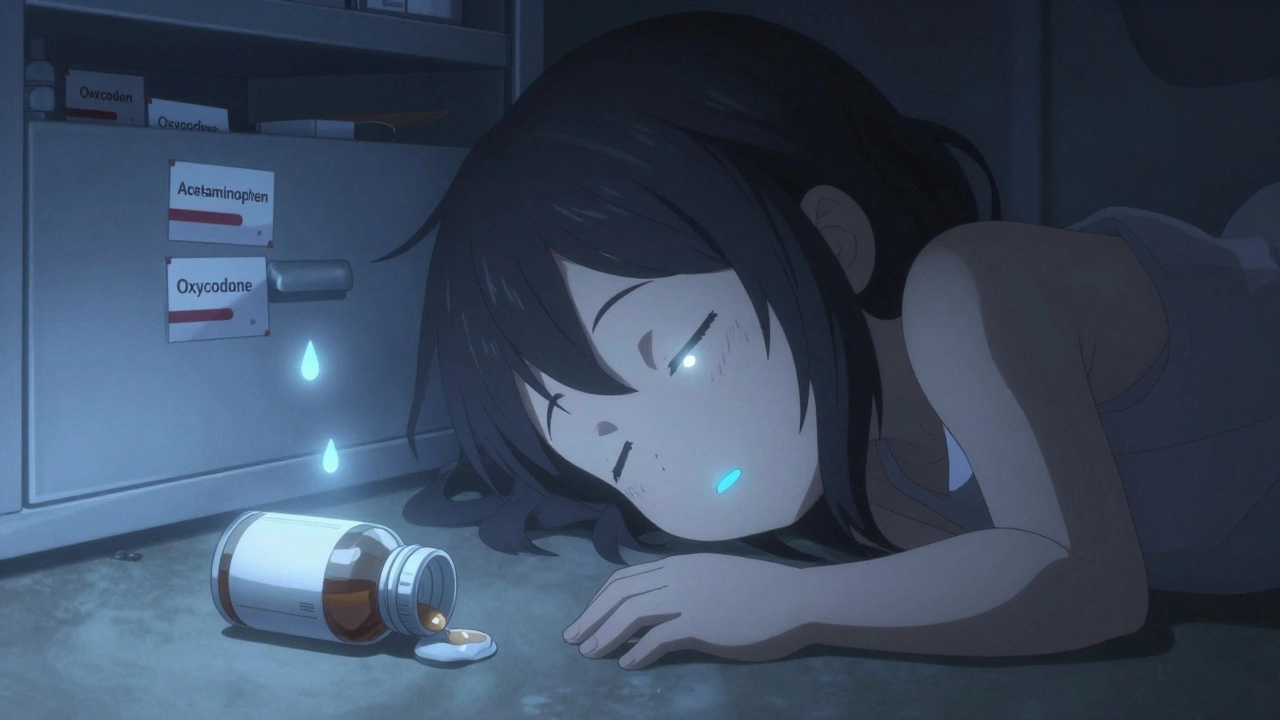
When a child swallows too much medicine-whether it’s a cough syrup, painkiller, or ADHD pill-their body doesn’t know how to handle it. Unlike adults, kids’ organs are still growing, and even a small extra dose can turn dangerous fast. You might think, ‘They just took one extra drop’ or ‘They looked fine after’-but that’s exactly when things can go wrong without warning. Medication overdose in children isn’t always loud or obvious. Sometimes, it’s silent. And waiting for symptoms can cost precious time.
What Does a Pediatric Medication Overdose Look Like?
The signs vary wildly depending on what was taken. There’s no single checklist that fits all cases. But there are clear red flags you can’t ignore.For opioids-like oxycodone, hydrocodone, or even fentanyl found in counterfeit pills-the body shuts down. Look for: tiny, pinpoint pupils; skin that’s cold and clammy; lips or fingernails turning blue or gray; slow, shallow, or stopped breathing; and a body that goes completely limp. If your child is unresponsive, even after shaking them or rubbing their sternum, this isn’t a nap. This is a medical emergency.
Acetaminophen (Tylenol) is the most common culprit in pediatric poisonings. It’s in so many products-cold medicine, fever reducers, combo pills-that parents often don’t realize they’re doubling up. The scary part? A child can seem perfectly fine for 12 to 24 hours after swallowing too much. Then, suddenly, they get nauseous, vomit, complain of belly pain, and start looking pale. By then, liver damage is already happening. The Cleveland Clinic says if treatment with N-acetylcysteine (NAC) starts within 8 hours, recovery chances are nearly 100%. After 16 hours, that drops to 40%. There’s no second chance if you wait.
Stimulant overdoses-think ADHD meds like Adderall or Ritalin-can cause a different kind of crisis. A child might become hyperactive, confused, or paranoid. They could have a racing heart, high blood pressure, seizures, or even hallucinations. Their body temperature can spike dangerously. In extreme cases, this leads to stroke or heart attack. These symptoms can come on fast and escalate within minutes.
Other signs across all types of overdoses include: extreme drowsiness, difficulty waking up, trouble swallowing, uncontrolled shaking, vomiting, diarrhea, chest pain, rapid or irregular breathing, and strange behavior like talking nonsense or acting aggressively. Even if your child seems okay after taking something they shouldn’t, don’t assume they’re safe. Some drugs take hours to show their full effect.
When to Call Poison Control-Not 911
This is a critical distinction. Many parents panic and call 911 right away. But that’s not always the right first step.If you suspect your child took medicine but they’re still breathing, awake, and responsive, call the Poison Control hotline at 800-222-1222. This number connects you to trained specialists-nurses and pharmacists-who know exactly what to ask and how to guide you. They can tell you if it’s a serious exposure, if you need to go to the ER, or if monitoring at home is safe. They handle over 120,000 cases a year through their online tool, webPOISONCONTROL®, and they’ve seen every scenario.
Don’t wait for symptoms. Don’t Google it. Don’t ask a friend. Call Poison Control immediately. Even if you’re unsure. Even if you think it’s a small amount. Even if your child seems fine. The poison center’s advice is free, confidential, and fast. They’ll ask for details: what was taken, how much, when, and your child’s age and weight. Have that ready.
When to Call 911-Right Now
If your child is unresponsive, not breathing, turning blue, having seizures, or showing signs of a fentanyl overdose (like pinpoint pupils and limpness), don’t call Poison Control first. Call 911. Immediately.If you have naloxone (Narcan) on hand and suspect an opioid overdose, use it. One spray in the nose. Wait 2-3 minutes. If there’s no improvement, give a second dose. Keep giving doses every 2-3 minutes until help arrives. Naloxone can save a life in minutes. But it’s not a cure-it’s a bridge to emergency care. Even if they wake up after naloxone, they still need to go to the hospital. The effects of fentanyl can return after naloxone wears off.
Don’t try to make your child vomit. Don’t give them milk or charcoal unless instructed. Don’t wait to see if they ‘get better.’ In overdose cases, seconds matter. Emergency responders are trained to handle this. Your job is to act fast and get help.
Why Kids Are at Higher Risk
Children under 6 account for nearly half of all medication exposures reported to poison centers. Why? They’re curious. They climb. They grab. They put things in their mouths. And they don’t understand the difference between medicine and candy.Parents aren’t always to blame. In 70% of acetaminophen overdoses, it’s because two different medicines both contained the same active ingredient. A parent gives Tylenol for fever, then gives a cold medicine later that also has acetaminophen. Boom-double dose. The FDA tried to fix this with unit-dose packaging and clearer labels, and it helped reduce overdoses by 19%. But mistakes still happen.
Another big issue: storage. Sixty percent of childhood poisonings happen in the child’s own home. Medicines left on nightstands, in purses, or on counters are easy targets. Even child-resistant caps aren’t foolproof-20% of poisonings still happen despite them. Kids can open them. They learn fast.
How to Prevent Overdose Before It Happens
Prevention isn’t just about being careful. It’s about building systems.- Keep all medications-prescription, OTC, vitamins, even topical creams-in a locked cabinet, out of reach and sight. Use a cabinet with a childproof latch.
- Never refer to medicine as ‘candy.’ Saying ‘this is medicine, not a treat’ matters. Kids mimic what they hear.
- Use the measuring tool that comes with the medicine. Never use a kitchen spoon. A teaspoon isn’t the same as a medicine cup. Dosing errors are the #1 cause of accidental overdoses.
- Keep a written list of all medications your child takes, including doses and times. Share this with caregivers, teachers, and babysitters.
- Check labels every time. Look for active ingredients. If two products say ‘acetaminophen’ or ‘ibuprofen,’ don’t give both.
- Dispose of expired or unused meds properly. Many pharmacies have take-back programs. Don’t flush them or toss them in the trash.
What Happens After You Call for Help
If you call Poison Control, they’ll likely ask you to monitor your child closely. They might tell you to watch for vomiting, drowsiness, or changes in breathing. They’ll tell you when to come in for blood tests-especially for acetaminophen, where liver enzymes need checking at 4, 8, and 24 hours.If you call 911, emergency crews will start treatment on the way. They’ll check vital signs, give oxygen, start IV fluids, and possibly give activated charcoal or naloxone. At the hospital, your child may get blood work, an EKG, liver function tests, or even a liver ultrasound. In severe acetaminophen cases, they might need NAC through an IV for up to 21 hours.
Most children recover fully if treated quickly. But delays can lead to liver failure, brain damage, or death. The data is clear: the sooner you act, the better the outcome.
What’s Changing in Pediatric Medication Safety
New rules are coming. By 2025, the FDA plans to require all liquid medications for kids to have standardized concentrations and built-in dosing tools. That should cut down on errors caused by confusing labels like ‘160 mg/5 mL’ versus ‘80 mg/5 mL.’Medical marijuana is a growing concern. Pediatric exposures to cannabis products jumped 1,475% from 2017 to 2022. Edibles look like candy-gummies, cookies, chocolates-and kids eat them fast. These can cause extreme drowsiness, low heart rate, and breathing problems. Parents need to store these like any other dangerous drug: locked up, out of sight.
And while fentanyl test strips are mostly used by adults, some poison centers now recommend them for households where prescription opioids are kept. If you’re worried someone might have swapped pills, a quick test strip can tell you if fentanyl is present. It’s not a guarantee-but it’s a layer of safety.
Final Thought: Trust Your Instincts
If something feels off, it probably is. You know your child better than anyone. If they’re acting strange, sleeping too hard, or not responding like they normally do-don’t wait. Don’t second-guess. Don’t hope it’s nothing.Medication overdose in children isn’t rare. It’s common. And it’s preventable. But only if we act fast, act smart, and act before symptoms show.
What should I do if I think my child took too much medicine but seems fine?
Call Poison Control at 800-222-1222 immediately-even if your child seems fine. Many drugs, like acetaminophen, cause silent damage that doesn’t show symptoms for hours. Poison Control experts can tell you if it’s dangerous and whether you need to go to the ER. Don’t wait.
Can I give my child ipecac to make them vomit after an overdose?
No. Ipecac is no longer recommended for home use. It can cause more harm than good, especially with certain poisons like petroleum products or corrosives. It can also delay proper treatment. Always follow the advice of Poison Control or emergency responders.
Is it safe to use a kitchen spoon to measure my child’s medicine?
No. Kitchen spoons vary in size and can give you too much or too little. Always use the dosing tool that comes with the medicine-like a syringe, cup, or dropper. If you lost it, ask your pharmacy for a new one. They’re free.
What’s the most common cause of pediatric medication overdose?
The most common cause is accidental double-dosing-giving two medicines that both contain the same active ingredient, like acetaminophen. Parents think they’re helping by giving a cold medicine and a fever reducer, not realizing both have the same drug. Always check the ‘Active Ingredients’ section on the label.
How quickly can acetaminophen cause liver damage in a child?
Liver damage from acetaminophen can begin within hours of ingestion-even before symptoms appear. The window for effective treatment with NAC is narrow: 100% effective if given within 8 hours, but effectiveness drops sharply after 16 hours. That’s why calling Poison Control right away is critical.
Should I keep naloxone at home if I have opioid medications?
Yes-if you keep opioids at home, keep naloxone too. Fentanyl is now found in many counterfeit pills and even in non-opioid drugs. Naloxone can reverse an overdose in minutes. It’s safe, easy to use, and available without a prescription in most states. Keep it where you keep your meds.
Can I rely on child-resistant packaging to keep my child safe?
No. Child-resistant caps are not child-proof. Studies show 20% of poisonings happen even with these caps. Kids learn how to open them quickly. The only reliable way to keep medications safe is to store them in a locked cabinet, out of sight and reach.
What should I do if my child swallows a pill I didn’t know was there?
Don’t panic. Don’t guess. Call Poison Control at 800-222-1222 right away. Have the pill container ready so you can describe it. Even if your child seems fine, some drugs take hours to show effects. Poison Control will guide you through the next steps-whether it’s monitoring, going to the ER, or doing nothing.
Let me be crystal clear: if you're still using kitchen spoons to dose your kid's medicine, you're one bad day away from a funeral. No excuses. No 'I thought it was close enough.' The difference between 5 mL and 7 mL can kill a 3-year-old. Stop being lazy. Lock it up. Use the damn syringe. This isn't parenting-it's negligence with a side of arrogance.
I get how easy it is to mix up meds-especially when you're exhausted and juggling work, kids, and life. I once gave my daughter Tylenol and a cold med without realizing both had acetaminophen. She was fine, but I nearly had a breakdown. Now I keep a printed list taped to the fridge. And I always check the active ingredients. It’s not glamorous, but it saves lives.
It’s profoundly disturbing how society has normalized pharmaceutical carelessness. The very notion that parents treat medicine like candy-then wonder why their child ends up in the ER-is a symptom of a deeper cultural decay. We’ve replaced discipline with convenience, vigilance with smartphone distractions, and responsibility with ‘it’ll probably be fine.’ The FDA’s new standards? Too little, too late. What we need is a moral reckoning, not another regulation. And for God’s sake, stop putting opioids on the nightstand like they’re bedtime snacks.
THIS. RIGHT HERE. I’m a nurse and I’ve seen too many kids come in because someone thought ‘it’s just one extra drop.’ One drop can be a death sentence. Don’t wait. Don’t Google. Call 800-222-1222. Right now. Even if your kid is giggling. Even if they’re sleeping. Even if you’re embarrassed. You don’t get a do-over. Your child does. And so do I. Let’s stop pretending we’re invincible. We’re not. We’re just lucky so far.
So let me get this straight-we’re supposed to trust Poison Control over 911? What if they’re wrong? What if they’re just some guy in a cubicle reading from a script? And why is it always the parent’s fault? What about the pharmaceutical companies that design bottles that look like candy? Or the fact that every damn cough syrup is laced with acetaminophen? This feels like victim-blaming wrapped in a public service announcement. Also, why are we still using the word 'overdose' like it's a moral failing? It’s a system failure.
Oh, brilliant. So now we’re all supposed to become amateur pharmacists because the state can’t be bothered to make labels legible? And let’s not forget the real villain: the fact that every single OTC medicine in the UK has the same bloody active ingredient as the one you took last Tuesday. Brilliant. Just brilliant. I’ll just put my kid’s meds in a locked vault and hope he doesn’t find the key… which, by the way, I keep in my pocket next to my keys to the car. Classic.
They don’t want you to know this, but 90% of these ‘overdoses’ are staged by Big Pharma to sell more NAC and Narcan. Think about it: why is acetaminophen in EVERYTHING? Why are the labels so confusing? Why is there no independent testing? And why do they always say ‘call Poison Control’ like it’s a church? They’re not saving lives-they’re building a profit pipeline. Lock your meds? Sure. But ask yourself: who really benefits when your kid gets sick?
Important clarification: child-resistant caps are not child-proof-this is not a suggestion, it is a fact backed by the American Academy of Pediatrics, the CDC, and the Consumer Product Safety Commission. Furthermore, the most common cause of pediatric acetaminophen overdose is not parental malice, but polypharmacy-simultaneous administration of multiple products containing the same active ingredient, often due to lack of labeling awareness. Therefore, the most effective prevention strategy is not only storage, but active education: every caregiver must be trained to read the ‘Active Ingredients’ section, and every pharmacy should provide a free, laminated dosing chart upon request. Also, dispose of unused meds properly-do not flush them. The environment is not a trash can.
I used to think I was careful-until my niece got into my husband’s Adderall. She was fine, but we didn’t know for 6 hours. I’ve since locked everything in a safe with a code. And I tell every parent I know: ‘If you’re not sure, call Poison Control. It’s free, it’s fast, and they won’t judge you.’ I’ve called twice. Both times, they told me to monitor. One time, they said go to the ER. We did. Turned out it was nothing. But I’d rather look silly than bury my child.
My daughter was 2 when she swallowed half a melatonin gummy. She slept for 14 hours. We called Poison Control. They said, ‘Watch her breathing. If she wakes up and acts normal, she’s fine.’ She did. We didn’t go to the hospital. I still think about it every night. I now keep all meds in a high cabinet with a magnetic lock. And I never, ever leave my purse on the couch.
As a mom of three and a former ER volunteer, I’ve seen too many parents panic and blame themselves. But here’s the truth: this isn’t about being perfect. It’s about being prepared. I keep a small notebook with my kids’ meds, allergies, weights, and the Poison Control number taped to the fridge. I’ve trained my babysitters. I’ve taught my kids: ‘This is medicine. Not candy.’ It’s not about fear-it’s about responsibility. And if you’re reading this and thinking ‘I’m not that careless’-you’re already one step ahead. Keep going.
From a neuropharmacological standpoint, the pharmacokinetic variance in pediatric populations is non-linear and highly dependent on hepatic enzyme maturation, particularly CYP2E1 and CYP3A4 isoforms, which reach adult levels only after age 6. This explains why even sub-therapeutic doses in children under 5 can produce toxic metabolites with delayed onset. Furthermore, the enterohepatic recirculation of acetaminophen prolongs its half-life in young patients, creating a dangerous window of asymptomatic hepatotoxicity. Consequently, the 8-hour therapeutic window for NAC administration is not arbitrary-it is a direct function of glutathione depletion kinetics. Delayed intervention results in irreversible mitochondrial dysfunction and centrilobular necrosis. This is not hyperbole. It is biochemistry.
Look, I get it. You want to feel like a good parent. But let’s be honest-this post reads like a guilt-trip pamphlet from the medical-industrial complex. You’re not a bad parent if you made a mistake. You’re a human. And yet, the tone here is so… performative. Like we’re all supposed to live in sterile, locked cabinets with color-coded pill organizers. What about the single mom working two jobs? The grandparent raising grandkids? The family living in a studio apartment? This isn’t prevention-it’s moral superiority dressed up as advice.
my kid got into my advil once and i panicked so bad i called poison control and they were so chill like ‘oh yeah we get this all the time’ and told me to just watch her for 2 hours and she was fine. i feel like a dummy now but also so glad i called. never gonna use a spoon again lol.
Just wanted to say thank you for this post. My brother-in-law is a pharmacist and he told me about how often they get calls from parents who didn’t realize their cold medicine had acetaminophen. I started labeling all my meds with a Sharpie now-‘Acetaminophen’ right on the bottle. Small thing. Big difference. And I keep Narcan in my glovebox. Just in case.