
Medication Therapy Management: How Pharmacists Optimize Generic Drug Use
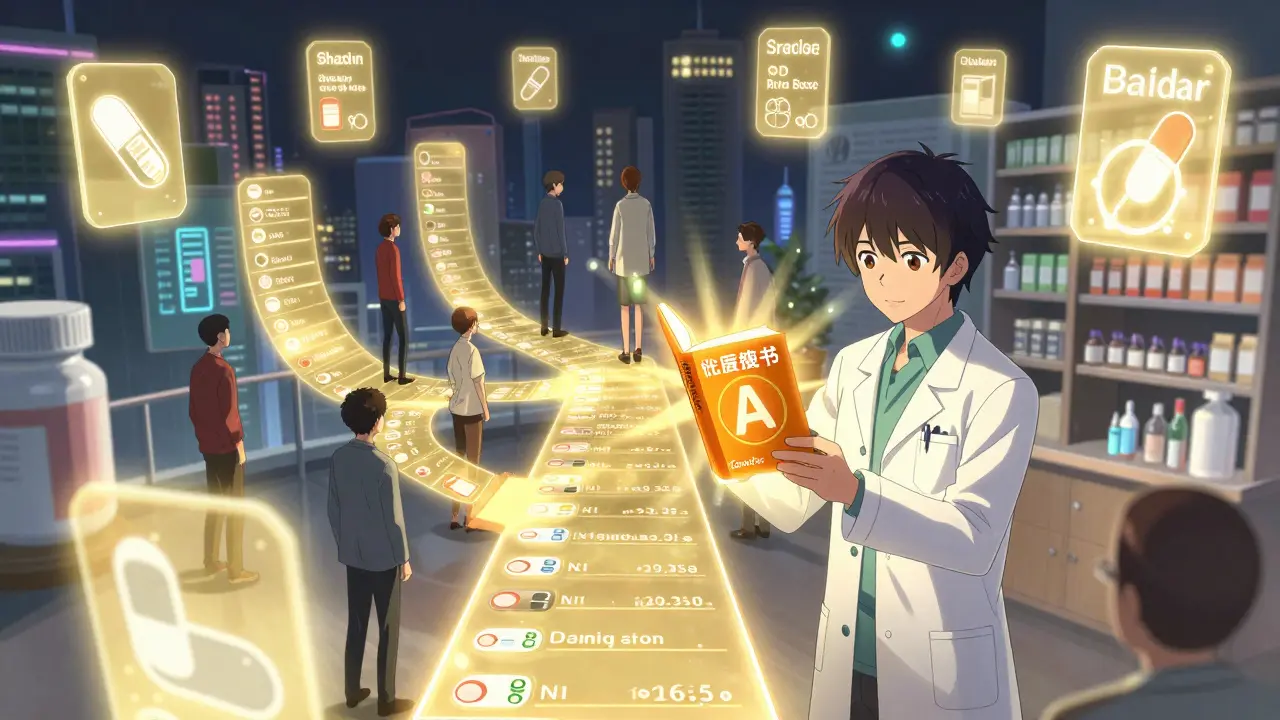
When you pick up a prescription, you might think the pharmacist’s job is done once they hand you the bottle. But for many patients, especially those on multiple medications, the real work starts after the transaction. That’s where medication therapy management (MTM) comes in - a proactive, patient-centered service led by pharmacists to make sure drugs are working safely, effectively, and affordably. And one of the biggest ways pharmacists improve care is by optimizing the use of generic drugs.
What Exactly Is Medication Therapy Management?
MTM isn’t just a fancy term. It’s a structured service recognized by the American Pharmacists Association as a core part of modern pharmacy practice. Think of it as a full health check-up for your medications. Pharmacists sit down with patients - usually for 20 to 40 minutes - and review every pill, patch, inhaler, or injection they’re taking. They don’t just look at what’s on the prescription list. They ask about over-the-counter meds, vitamins, supplements, and even herbal remedies. The goal? To catch problems before they become emergencies.
During an MTM session, pharmacists identify medication-related problems like duplicates, interactions, side effects, or doses that are too high or too low. On average, they find 4.2 issues per patient. That’s more than most doctors catch during a 15-minute visit. And here’s the kicker: nearly one in three of those problems involves a medication that could be switched to a cheaper generic version without losing effectiveness.
The Generic Drug Advantage
Generic drugs aren’t second-rate. They’re the exact same as brand-name drugs in active ingredients, strength, dosage form, and how they work in the body. The FDA requires them to meet the same strict standards. But they cost 80 to 85% less. That’s not a small difference - it’s life-changing for people paying $400 a month for a brand-name inhaler versus $15 for the generic.
Pharmacists are trained to spot these opportunities. They use the FDA’s Orange Book, which rates drugs as “A” (therapeutically equivalent) or “B” (not equivalent). For most drugs, an “A” rating means substitution is safe. But for drugs with a narrow therapeutic index - like warfarin, lithium, or levothyroxine - even tiny differences in absorption matter. Pharmacists know this. They don’t just swap blindly. They evaluate bioequivalence, patient history, and whether the patient has had problems with previous substitutions.
One study from HealthPartners found that when pharmacists actively recommended generic switches during MTM sessions, patients saved an average of 32% on their monthly drug costs. That’s not theoretical. Real people report saving $200 to $300 a month. One patient on Reddit shared how her MTM pharmacist helped her switch from a $400/month brand-name inhaler to a $15 generic - literally keeping her from choosing between medicine and groceries.
How Pharmacists Make It Work
MTM isn’t just about swapping pills. It’s about communication. Pharmacists use tools like the Medication Appropriateness Index (MAI), which checks 10 key factors: Is the drug needed? Is it effective? Is the dose right? Is it affordable? Is the patient taking it correctly?
They also build Medication-Related Action Plans - simple, written guides that tell patients what to do, when, and why. These plans include clear notes about generic switches: “Switched from Brand-X to generic levothyroxine. Same effect, $120 cheaper per month.”
And they don’t work alone. Good MTM programs connect directly with prescribers. If a pharmacist sees a patient is on two blood pressure drugs that do the same thing, they’ll call the doctor and suggest dropping one. If a generic isn’t working for a patient - maybe they had a bad reaction to a different manufacturer’s version - they’ll document it and recommend staying on the brand. It’s not about cutting costs at all costs. It’s about cutting costs smartly.
Why This Matters More Than You Think
Cost isn’t just a number. It’s a barrier to adherence. Studies show 26% of people skip doses or don’t fill prescriptions because of price. That leads to more ER visits, hospital stays, and even deaths. Pharmacists in MTM roles cut those risks. Research shows pharmacist-led MTM reduces hospital readmissions by 23% within 30 days and cuts medication errors by 61%.
And the savings add up fast. A 2022 review of 47 studies found that MTM services improved medication adherence by an average of 18.7 percentage points. That means more people are taking their meds as prescribed. And 37% of the total cost savings in those studies came directly from better generic drug use.
For Medicare beneficiaries, MTM is mandatory. Every Part D plan must offer it. But only 15 to 25% of eligible patients actually take part - mostly because they don’t know it exists. Pharmacies that schedule MTM appointments ahead of time, send reminders, and explain the value in plain language see participation rates jump.
The Real-World Impact
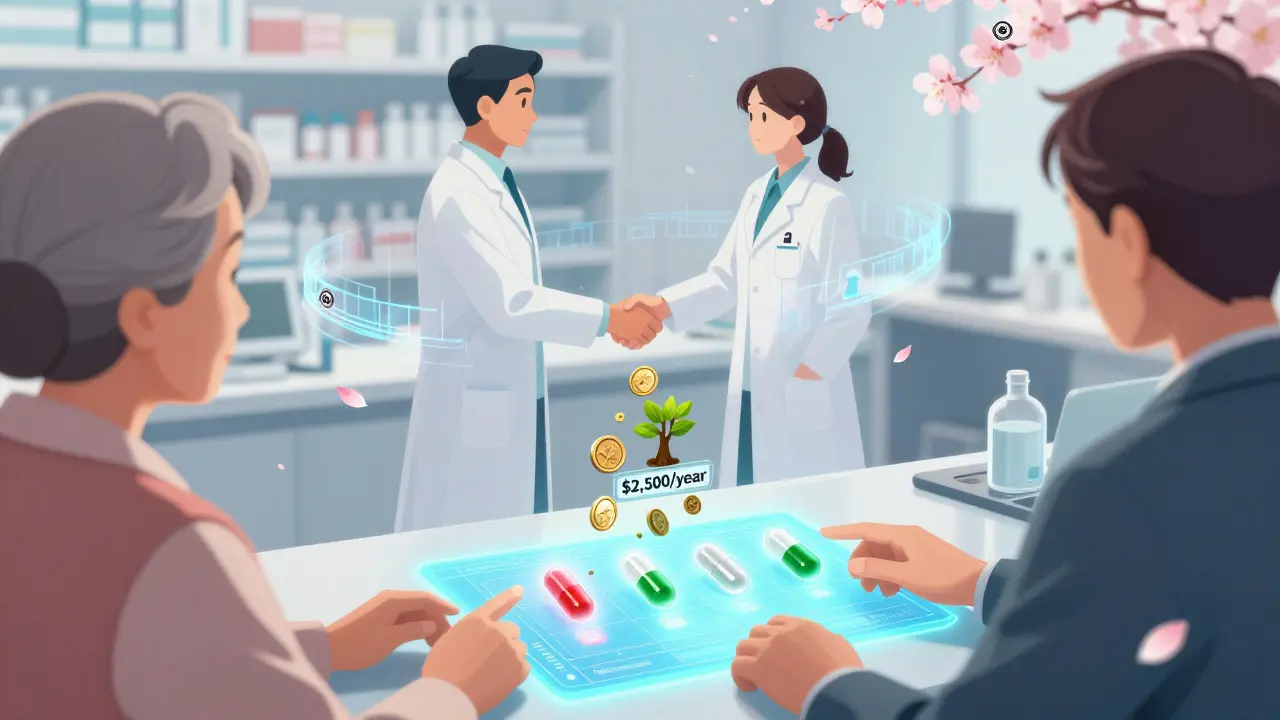
Take a 72-year-old woman on seven medications. She’s on warfarin, metformin, lisinopril, a statin, a diuretic, a calcium supplement, and an over-the-counter antacid. Her doctor didn’t catch that the antacid is reducing her calcium absorption. She’s also paying $210 a month for her statin when a generic costs $12. Her pharmacist spots both issues during an MTM session. They adjust her supplement timing, switch her statin, and call her doctor to reduce the diuretic dose because her labs show low potassium. The result? Fewer side effects, lower risk of falls, and $2,500 saved a year.
That’s not a rare story. A 2022 survey of over 1,200 MTM participants found 89% understood their medications better, 76% took them more consistently, and 68% paid less out of pocket. The average monthly savings? $214.37.
Barriers Still Exist
Despite the evidence, MTM isn’t everywhere. Only 42 U.S. states have laws letting pharmacists practice MTM without a doctor’s direct order. Reimbursement is a mess. Medicare pays $50 to $150 per session. Commercial insurers? Often $25 to $75. Many pharmacies can’t afford the time unless they get paid fairly. And 62% of community pharmacies still don’t have seamless electronic records integration - meaning pharmacists spend hours manually entering data instead of talking to patients.
Some patients still believe generics are inferior. Pharmacists spend time educating them. They show FDA data. They explain bioequivalence. They share stories - like the one about the inhaler that saved someone’s life.
What’s Next?
The future of MTM is growing. Telehealth is now part of it - 63% of programs offer virtual sessions. Pharmacogenomics - testing how your genes affect drug response - is starting to be integrated. That means pharmacists can now say, “This generic might work better for you because of your genetic profile,” instead of guessing.
By 2025, 78% of health systems plan to expand pharmacist roles in MTM. The Bureau of Labor Statistics predicts a 4.6% growth in pharmacist jobs through 2032 - mostly because of these clinical services.
But progress depends on awareness. Patients need to ask: “Do you offer MTM?” Pharmacies need to schedule time for it. Insurers need to pay fairly. And policymakers need to support laws that let pharmacists do what they’re trained to do.
What is medication therapy management (MTM)?
Medication Therapy Management (MTM) is a structured service provided by pharmacists to review all of a patient’s medications - including prescriptions, over-the-counter drugs, and supplements - to ensure they’re safe, effective, and being taken correctly. It includes identifying drug interactions, side effects, duplications, and cost-saving opportunities like switching to generic equivalents. MTM is typically offered as a 20- to 40-minute one-on-one consultation and is required for all Medicare Part D plans.
Are generic drugs really as good as brand-name drugs?
Yes. The FDA requires generic drugs to have the same active ingredient, strength, dosage form, and route of administration as the brand-name version. They must also be bioequivalent - meaning they work the same way in the body. The only differences are in inactive ingredients like fillers or dyes, which rarely affect effectiveness. Generics are tested to be within 90-110% of the brand’s absorption rate. For 95% of medications, this makes them interchangeable.
Can pharmacists switch my brand-name drug to a generic without my doctor’s permission?
In most cases, yes - but only if the prescription allows substitution and the drug is rated as therapeutically equivalent (an “A” rating in the FDA’s Orange Book). Pharmacists can substitute generics unless the prescriber writes “Dispense as Written” or “Do Not Substitute.” Even then, pharmacists can still recommend a switch to the doctor during an MTM session. The final decision to switch always rests with the prescriber, but pharmacists provide the data to support the change.
How much money can I save with generic drugs through MTM?
On average, patients save $214 per month through MTM-guided generic substitutions. In some cases, savings exceed $300 a month - especially for expensive drugs like insulin, inhalers, or cholesterol medications. One study showed MTM services reduced total annual drug costs by $1,247 per patient. The key is that pharmacists don’t just swap one drug - they review the whole list and find multiple opportunities for savings.
Why don’t more pharmacies offer MTM?
The main reason is reimbursement. Medicare pays $50-$150 per Comprehensive Medication Review, but many private insurers pay only $25-$75. For a pharmacy to offer MTM, they need to dedicate 30-60 minutes per patient and spend 5-15 minutes documenting it. If they’re not paid enough to cover staff time and systems, it’s not financially sustainable. Only 38% of community pharmacies have the electronic systems needed to track MTM efficiently. Without better payment models or state laws expanding pharmacist scope, many practices can’t offer it.

Generic drugs aren't just cheaper-they're rigorously tested. The FDA's bioequivalence standards are stricter than most people realize. I've seen patients switch from $300/month brand-name statins to $12 generics and experience zero difference in efficacy or side effects. The real issue? Lack of education. Not everyone knows that 'generic' doesn't mean 'inferior.'
I love how pharmacists are quietly revolutionizing healthcare. No fanfare, no headlines. Just someone sitting down with you, asking about your supplements, and realizing you're paying $200 a month for a pill that costs $15. It’s not glamorous-but it saves lives.
The Medication Appropriateness Index is a brilliant tool. It forces a systematic review-not just a glance. I work in a hospital pharmacy, and when we implemented MTM protocols, our readmission rates dropped noticeably. The data doesn't lie: structured pharmacist involvement = better outcomes.
This is why American healthcare is broken. We let pharmacists do the real work-catching errors, cutting costs, preventing hospitalizations-but we don’t pay them fairly. Meanwhile, doctors get paid to do 10-minute visits and call it 'care.' It's absurd.
I had my first MTM session last year. My pharmacist found I was taking two different antihistamines, one of which I’d forgotten I was on. She also switched me to a generic for my blood pressure med-saved me $180/month. I didn’t even know this service existed until she mentioned it. Why isn’t this advertised everywhere?
i used to think generics were sketchy till my pharmacist showed me the fda data. now i ask for them every time. saved me like 3k last year. also, the guy at the counter is way smarter than your doctor sometimes.
It’s wild how much power pharmacists have when given the chance. They’re not just dispensers-they’re clinical decision-makers. I’ve seen them catch dangerous interactions that doctors missed. Why aren’t they integrated into primary care teams? We’re leaving a weapon on the table.
The ethical imperative here is clear. If a patient cannot afford their medication, and a therapeutically equivalent generic exists, then failing to recommend it constitutes a failure of professional duty. MTM is not optional-it is a standard of care.
in india we dont have much of this but i wish we did. my mom was paying 2000rs for a brand name pill, switched to generic, same thing, saved half her monthly budget. pharmacists here just hand you the bottle. no talk. no care.
I’ve worked in community pharmacy for 12 years. MTM is the only part of the job that feels meaningful. The rest is just scanning and bagging. When I sit down with someone and explain why their generic works the same, and they cry because they can finally afford their insulin… that’s why I do this.
You’re all being manipulated. The pharmaceutical industry pushes generics because they’re easier to monopolize. Big Pharma owns most generic manufacturers. This isn’t about savings-it’s about control. The system is rigged.
I think we need to reframe this. It’s not just about cost. It’s about dignity. When someone has to choose between medicine and rent, that’s not a healthcare issue-it’s a moral one. Pharmacists are the quiet heroes who restore that dignity, one generic switch at a time.
While it is true that generic medications are bioequivalent in theory, the clinical reality is far more complex. Variability in excipients, manufacturing tolerances, and patient-specific pharmacokinetics can lead to clinically significant deviations in therapeutic outcomes. To assert blanket equivalence is to ignore the nuances of pharmacotherapeutics. Furthermore, the FDA's approval process for generics is not as rigorous as that for innovator products. The claim that generics are 'identical' is a misleading oversimplification.
I’m sick of this narrative that pharmacists are heroes. We’re not. This is just a cover for the fact that insurance companies refuse to cover brand-name drugs. It’s cost-cutting disguised as care. And don’t get me started on how they push generics even when patients have allergies to the fillers. This isn’t saving lives-it’s corporate efficiency.