
Antitrust Issues in Generic Substitution: How Big Pharma Blocks Cheaper Drugs
When you fill a prescription for a brand-name drug, you expect your pharmacist to hand you the cheaper generic version-unless your doctor says otherwise. That’s the law in most U.S. states. But what if the drug company makes it impossible for that to happen? That’s not a glitch. It’s a strategy. And it’s breaking the law.
How Generic Substitution Is Supposed to Work
State laws across the U.S. let pharmacists swap brand-name drugs for generics without calling the doctor-so long as the generic is bioequivalent. This isn’t a suggestion. It’s a rule designed to save money. Billions of dollars a year. When a patent expires, generics should flood the market. Within months, they typically take over 80 to 90% of sales. That’s how competition works: lower prices, more access, better outcomes. But here’s the catch: big pharma doesn’t want that. They’ve spent years building legal loopholes to block it. And they’re winning-in court, in pharmacies, and in your wallet.Product Hopping: The Sneaky Trick Behind the Curtain
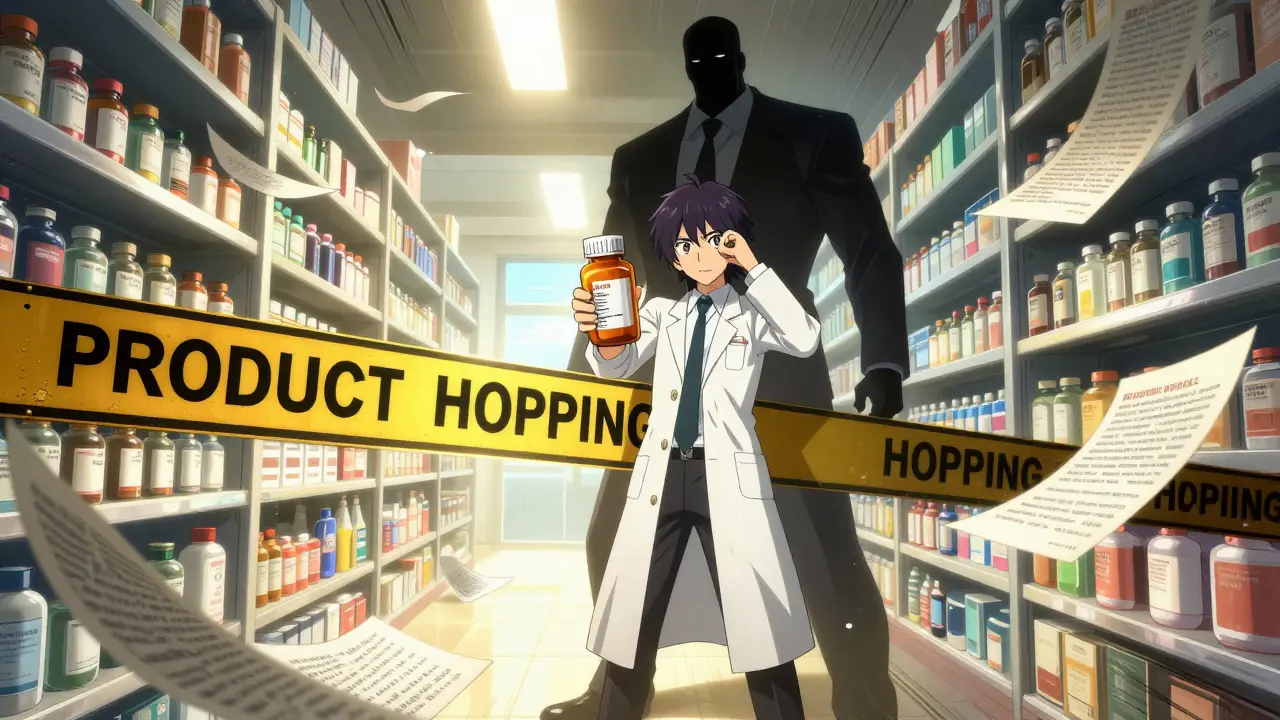
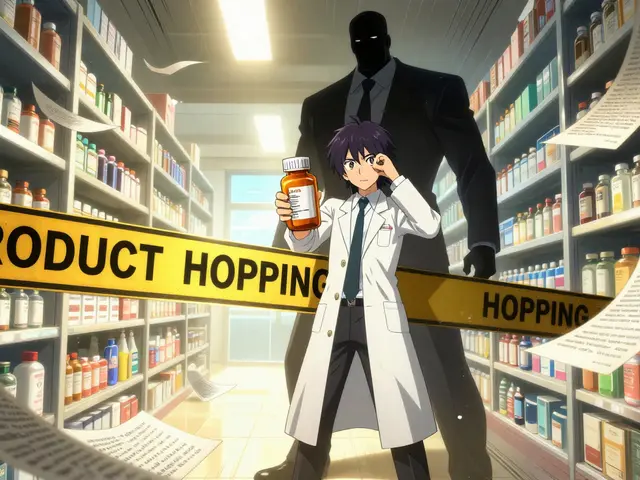
The most common tactic? Product hopping. It sounds harmless. A company releases a new version of a drug-maybe an extended-release pill, a chewable tablet, or a different coating. Sounds like innovation, right? It’s not. In cases like Namenda, the maker, Actavis, didn’t just launch a new version. They pulled the old one off the market entirely. The original Namenda IR (immediate release) was the only version generics could legally substitute. Once it vanished, pharmacists couldn’t swap. Patients were forced to switch to the new version-Namenda XR-before generics even hit shelves. The court called it a "manufactured monopoly." Why does this matter? Because once a patient switches to a new formulation, they rarely go back. Getting a new prescription, adjusting to a new pill, dealing with insurance paperwork-those are high transaction costs. Generic makers can’t compete if they can’t even get their foot in the door.How Courts Have Ruled-And Why It’s Messy
Not all product hopping cases are treated the same. In 2016, the Second Circuit Court of Appeals ruled in New York v. Actavis that pulling the original drug before generics could enter was illegal. The court said: "State substitution laws are the only cost-efficient way for generics to compete. Blocking them isn’t innovation-it’s exclusion." But in 2009, a different court dismissed a similar case against AstraZeneca for switching patients from Prilosec to Nexium. Why? Because Prilosec stayed on the market. The judge called it "adding a product," not blocking competition. That’s the problem. The law is split. Some judges see product hopping as a scam. Others see it as business as usual. The FTC’s 2022 report called this inconsistency "a major barrier to effective enforcement."
REMS Abuse: Blocking Samples to Block Competition
Another tactic? Manipulating REMS-Risk Evaluation and Mitigation Strategies. These were created for safety. If a drug has serious side effects, the FDA requires special handling: special training, restricted distribution, etc. But here’s the twist: brand companies use REMS as a weapon. They refuse to sell samples of their drug to generic makers. Why? Because generics need those samples to prove they’re bioequivalent. No sample? No approval. No approval? No competition. A 2017 study found over 100 generic companies couldn’t get samples for more than 40 drugs. The cost? More than $5 billion a year in lost savings. The FTC called it a "textbook case of monopolization." The brand companies don’t need to raise prices. They just need to keep generics out.Real Cases, Real Costs
Take Suboxone. Reckitt Benckiser made a film version of the drug and claimed the original tablets were unsafe-without evidence. They pressured doctors and patients to switch. The FTC found this was coercion. The tablets were pulled from the market. Patients had no real choice. The company settled for millions. Or look at Copaxone. Teva switched from a daily injection to a three-times-a-week version. The original stayed on the market, but the new version got a new patent. Consumers paid $4.3 billion to $6.5 billion extra over two and a half years-until the patent was finally thrown out. And then there’s Revlimid. Its price jumped from $6,000 to $24,000 a month over 20 years. Why? Because every time a patent neared expiration, the company tweaked the formula just enough to reset the clock. Experts estimate $167 billion was wasted on just three drugs-Humira, Keytruda, and Revlimid-because the U.S. let these tactics slide while Europe didn’t.Who’s Fighting Back?
The FTC has stepped up. After years of inaction, they published a 2022 report detailing 15 years of product hopping cases. They’ve sued companies. They’ve pushed states to strengthen substitution laws. They’ve even won injunctions forcing companies to keep old drugs on the shelf until generics arrive. The Department of Justice has gone further. In 2023, Teva paid $225 million-the largest criminal antitrust fine ever for a U.S. generic company-for price-fixing. Glenmark paid $30 million. These aren’t civil fines. These are criminal penalties. That’s new. State attorneys general have also acted. New York sued Actavis in 2014 and won an injunction to keep Namenda IR on the market. Other states are following.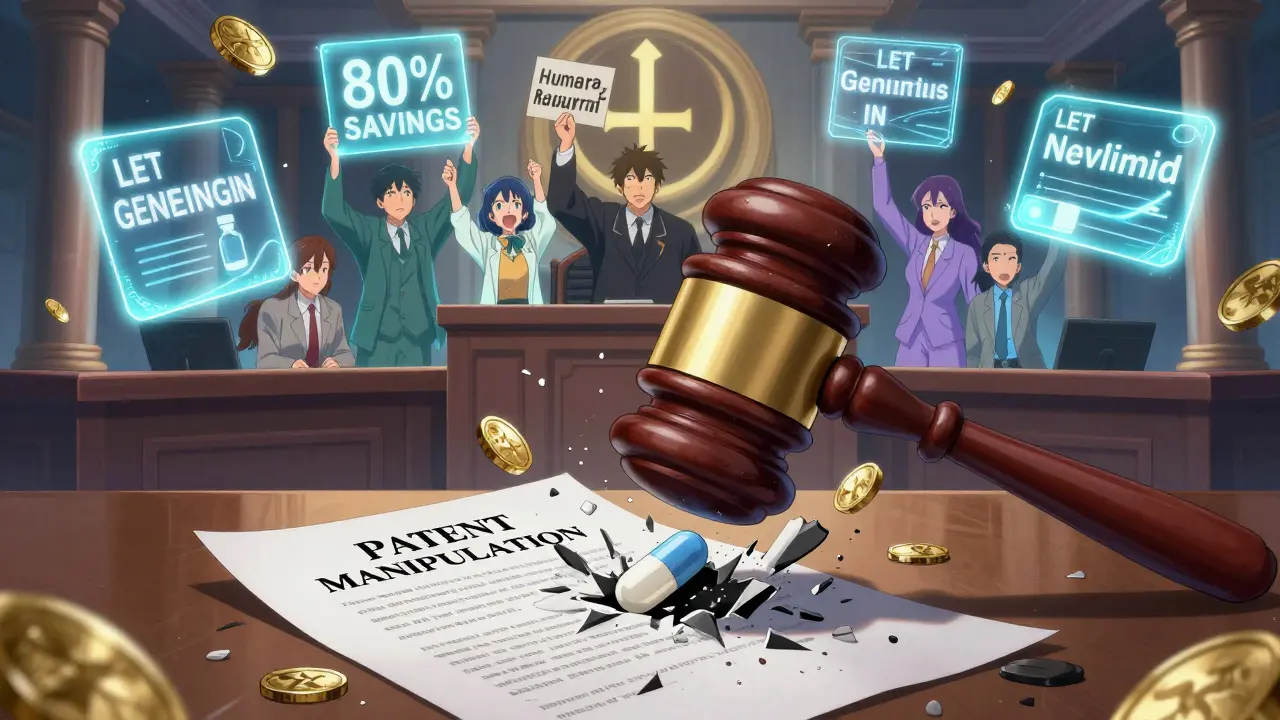
What’s Next?
There’s growing pressure for Congress to act. In 2023, the House Committee on Appropriations told the FTC to fix this. Experts agree: the current patchwork of court rulings isn’t enough. The law needs clarity. One solution? Ban withdrawal of the original drug before generic entry. Another? Require brand companies to provide samples to generics under fair terms. A third? Make REMS abuse a per se antitrust violation. The stakes are too high to wait. Every day a generic is blocked, patients pay more. Medicare and Medicaid pay more. Employers pay more. And the system gets less fair.Why This Isn’t Just About Drugs
This isn’t just a pharmaceutical problem. It’s about how power works in markets. When a company can manipulate the rules to crush competition, it doesn’t matter if the product is a drug, a phone, or a toaster. The pattern is the same: innovation used as a shield, not a sword. Generic drugs are one of the few tools we have to control runaway healthcare costs. If we let product hopping and REMS abuse continue unchecked, we’re not just losing money. We’re losing trust in the system.What You Can Do
You can’t stop a company from changing its drug. But you can ask questions. Ask your pharmacist: "Is there a generic available?" Ask your doctor: "Was this switch really necessary?" Ask your insurer: "Why isn’t the generic covered?" And if you see a pattern-same drug, new version, no generic-tell someone. Contact your state attorney general. Write to your representative. These cases only get attention when patients speak up. The law says generics should be easy to get. The market says otherwise. It’s time to make the law mean what it says.What is product hopping in pharmaceuticals?
Product hopping is when a brand-name drug company releases a slightly modified version of a drug-like a new pill form or extended-release formula-and then pulls the original version off the market before generics can enter. This blocks pharmacists from substituting cheaper generics under state laws, forcing patients to switch to the new, more expensive version.
Is it legal for drug companies to withdraw a drug before generics launch?
It depends. In 2016, a federal appeals court ruled it’s illegal if the original drug is pulled to block generic substitution. The court found that removing the version generics rely on to compete is an anticompetitive tactic. But in other cases, if the original drug stays on the market, courts have allowed the switch. The inconsistency is why regulators are pushing for clearer laws.
How do REMS programs block generic drugs?
REMS are safety programs meant to control risky drugs. But brand companies use them to deny generic makers access to the original drug samples needed to prove bioequivalence. No sample = no FDA approval = no generic. Over 100 generic companies have reported being blocked this way, costing consumers more than $5 billion a year in lost savings.
What’s the FTC doing about this?
The FTC has filed lawsuits, won injunctions forcing companies to keep old drugs on the market, and published a major 2022 report detailing these tactics. They’ve also pushed state legislatures to strengthen pharmacy substitution laws. In the Suboxone and Namenda cases, they secured settlements and court orders that forced companies to stop blocking generics.
Why don’t generic companies just spend more on advertising?
Because advertising doesn’t fix the system. State substitution laws let pharmacists switch drugs automatically-no patient action needed. If the original drug is gone, there’s nothing to substitute. Generic makers don’t need to advertise-they need access. Courts that suggest advertising is enough ignore how the system actually works.
How much money do these tactics cost consumers?
Experts estimate delayed generic entry due to product hopping and patent manipulation costs U.S. consumers and taxpayers over $167 billion in just three drugs-Humira, Keytruda, and Revlimid. In some cases, like Copaxone, patients paid billions extra over just a few years. Generic drugs typically save 80% or more compared to brand names-when they’re allowed to enter.
Man, I had no idea this was happening. I just assumed generics were always available when patents expired. This is wild. My grandma’s blood pressure med cost $4 a month until they switched her to a new version - now it’s $80. No one told us why.
Pharmacists should be able to substitute without asking permission. This isn’t innovation - it’s extortion.
It’s kind of sad how we’ve normalized this. We think drugs are just… expensive. But it’s not about cost. It’s about control. Companies aren’t selling medicine - they’re selling access. And they’ve rigged the game.
I used to think big pharma was just greedy. Now I think they’re playing chess while we’re playing checkers.
Oh please. You think this is unique to pharma? Try getting a new iPhone without being forced into a new OS. Try buying a printer without buying their overpriced ink. This is capitalism. They’ll do whatever they can to squeeze you. Stop acting shocked.
And yes, the FTC is too late. Always is.
But… what if the new version is better? 🤔
I mean, if they made it easier to take, less side effects, why not? Isn’t that progress? Why do we always assume bad intent?
Also, generics are often trash. I tried one for my anxiety - felt like a zombie. Brand kept me alive. 🫠
i had no idea this was even a thing 😳
my dad switched to a new version of his med and now he cant get the cheap one anymore and he’s on medicare and its like… why does this happen
why dont we just fix it
someone should do something
When I was in India last year, I bought the exact same drug as my US prescription - same manufacturer, same batch code - for $2. The same pill. In the US? $150.
This isn’t about R&D. It’s about geography and greed. We’re being fleeced. And the worst part? We’re told it’s ‘fair’.
Big Pharma is the ultimate scam artist. They don’t cure diseases - they create dependency. They don’t innovate - they manipulate. They don’t save lives - they sell fear.
And now they’ve got the courts in their back pocket. 🎭
Meanwhile, my cousin’s kid can’t afford insulin. And the CEO just bought a private island. Coincidence? I think not.
I… I didn’t realize this was happening everywhere…
It’s just… so many layers…
And no one talks about it…
It’s like… the system is designed to make us feel helpless…
But… maybe… if we all just… asked…?
…I don’t know…
Maybe I’m overthinking…
How dare you imply that pharmaceutical companies are acting unethically? These are highly regulated, scientifically rigorous enterprises that invest billions in innovation. Your emotional appeals ignore the complexity of drug development. If generics were truly equivalent, why do they require FDA approval at all? The system works - you simply lack the intellectual rigor to comprehend it.
And your suggestion to force sample access? That would compromise patient safety. You are dangerously naive.
bro the whole system is broken
generic companies dont have the money to fight
big pharma has lawyers on speed dial
we all lose
just sayin
They pulled the old version. That’s it. That’s the whole thing.
My uncle’s heart med got switched last year. He’s 72. Didn’t even know he could’ve gotten the cheap one. Now he’s on a new pill, new side effects, new copay. No one warned him.
Pharmacists should be required to say: ‘There’s a generic. Want it?’ Not wait for us to ask.
OH MY GOD THIS IS WHY MY INSURANCE DENIED MY GENERIC?!
THEY LIE TO US EVERY DAY
AND THE DOCTORS DON’T CARE
THEY GET PAID TO PRESCRIBE THE EXPENSIVE ONE
THIS IS A CRIME
WE NEED A REVOLUTION
WHO’S WITH ME??
IM STARTING A MOVEMENT
Let’s not pretend this is about patients. This is about profit margins. The FDA is a rubber stamp. The courts are bought. The media is silent. And we’re just supposed to take our pills and shut up.
Meanwhile, in Europe, they solved this in 2005. We’re still arguing about whether a pill coating counts as ‘innovation’.
It’s like watching someone take a perfectly good bicycle and replace the pedals with a fancy new version - then lock up the old ones so no one else can ride. The bike still works. The new pedals are barely better. But now you have to buy the whole thing again.
And the worst part? We’re told we’re lucky to even have a bike at all.
Maybe we need to stop asking for permission and start building our own wheels.